

Booze Gimmicks Are Best When They Can Admit They’re Gimmicks
We don't really need to pretend that "a bourbon blended from all 50 states" is anything other than a fun, silly gimmick.
Photo via Lost Lantern DrinksSplinter whiskey
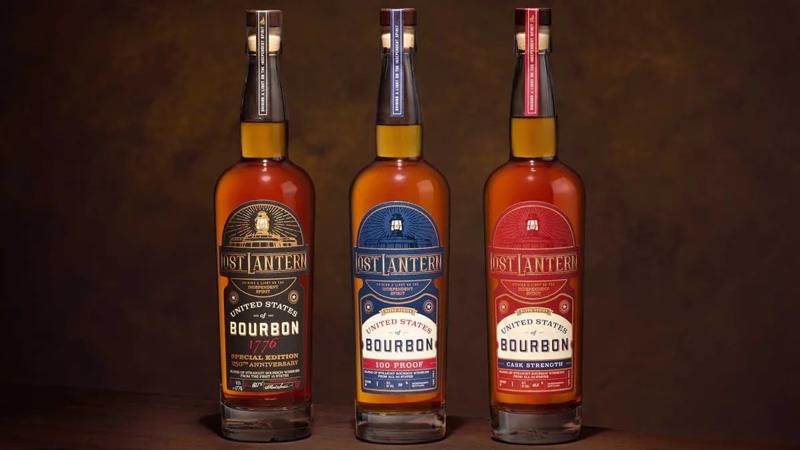
There’s nothing wrong with a booze gimmick, provided the gimmick is fun. That’s just the thing, though–it’s difficult to properly enjoy or have fun with gimmicks on a liquor bottle when the company presenting said bottle doesn’t want to be honest with the customer about what they set out to achieve. It’s okay to make a silly product for purely aesthetic, or symbolic reasons, or for no reason at all beyond “because we can.” That alone would be reason enough to say, create a bourbon blend combining whiskey from all 50 states, timed to coincide with the 250th birthday of the United States. Where brands fall into pitfalls is in bending over backward in an attempt to justify their actions as being not-at-all-based-on-gimmicks, but instead reflective of their deeply felt creative inspiration and striving for epicurean perfection. Can we just be honest about that? You don’t bring together 50 different bourbons in one bottle, including from states where your options are limited to “the only distillery in the state making bourbon,” because you genuinely believe it will create the most delicious $200 bottle available on the market. You do it because it’s a fun gimmick, and because it will sell. We all know this; why not just freely admit it?
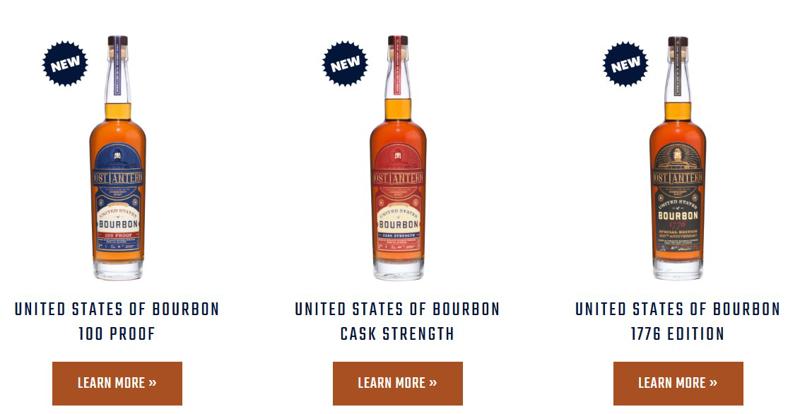
The product in question is called The United States of Bourbon (fun), from blending specialists Lost Lantern, located in the picturesque rurals of Vergennes, Vermont, near the New York border. As the name and my already-invoked description would imply, this is a crowded blend of bourbon from all 50 U.S. states, assembled by Lost Lantern into a handful of different expressions that run between MSRPs of $80-200. I’m sure it was a punishingly difficult undertaking, just in terms of logistics and inter-distillery agreements alone.
With that said, anyone who knows whiskey well, and blending in particular, knows that you don’t see blends of American whiskey with this many components (this may be the largest ever, in fact) because beyond the logistical nightmare involved, they don’t typically turn out to be all that interesting in the glass. Individual characteristics of any given spirit become impossible to pick out with so much chatter, while an extremely wide variety of mash bills (and maybe secondary cask finishes?) end up competing with each other to speak clearly. The result is typically just muddled, and less than the sum of its parts, like a drink a child makes by combining a squirt of each drink at a soda fountain.
With that said, do not get me wrong: The United States of Bourbon is a good product idea for the company to put in the considerable legwork to create and sell in conjunction with America’s 250th anniversary. Lost Lantern is a prolific blender of spirits, one whose products I’ve appreciated in the past. I’m sure it’s more objectively successful than the President’s Freedom 250 festival and its 90% cancelation rate, at the very least. But man, does the part of me that hates marketing BS prickle at some of the quotes that Lost Lantern gives about the product, styling it as something akin to high art rather than the entertaining gimmick it so clearly is. As Adam Polonski, co-founder and head of whiskey sourcing, put it to InsideHook: “We’ve actually had some retailers say to us, ‘If anyone else said they were doing this, that would be a gimmick, but because it comes from Lost Lantern…’ Nora has done a really good job on blending for years now, and this is a serious whiskey. We’re not just doing it because we can but because we also think it’s really good and special.” Ah, that must be why the same publication said a person could be tempted to think it “might come off as a novelty.” What this is, more than anything, is a denigration of the value that being “a novelty” does possess. Not everything has to be a work of unimpeachable artistic insight! If the film industry can have “popcorn movies,” then the whiskey industry can have equivalent products.
It’s not like large-scale blends are unprecedented on a wider global scale: Some of the biggest scotch whisky brands in the world are blended from dozens of component parts. It’s worth noting, however, that these blends reflect deep historical ties between companies and whisky producers, and have been refined in hundreds of batches over the course of decades or centuries, rather than put together a single time for a big anniversary. Likewise, I don’t think anyone is going to the blenders of Johnnie Walker or Famous Grouse and telling them “you’re creating a blend from every Scottish island, and we need you to use this brand new malt from the Isle of Canna.”
That is, more or less, what the blenders here had to do–according to Polonski speaking to InsideHook on the topic of states like the Dakotas, Nebraska and Wyoming, “those states have three or four distilleries each, and that means there has to be one that actually makes bourbon in-house that’s good enough for our purposes. Thankfully, all those states ended up being quite good.” Well, that’s certainly convenient! I’m glad it worked out, and that the states producing the least bourbon are actually producing some of the best. It would have been such a shame if one of those–like Hawaii, which apparently has ONE bourbon-producing distillery–was making a subpar product, but the company decided to blend it in anyway because this is a gimmick and no one company’s distillate actually matters all that much to how it eventually tastes. Thank God that every single place they found was exceptional! USA! USA!
If you’re going to trade in such gimmicks, then you might as well be loud and proud about it, rather than attempting to cling to a veneer of artistic purity. Say what you will of the MAGA grifter booze world; at least they barely even bother trying to pretend their products are conceived with quality in mind, rather than simple exploitation. Sometimes, “because it was a quixotic idea I had” can be enough.
 Keep scrolling for more great stories.