

This Christmas Was the Hottest Ever Recorded in U.S. History
Hundreds of U.S. cities recorded their hottest Christmas readings ever.
Image via National Oceanic and Atmospheric Administration Splinter climate change
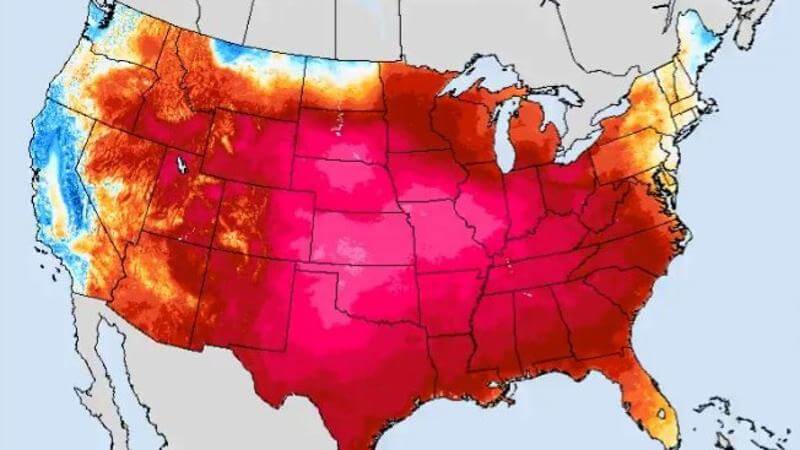
The Midwest finds itself being pummeled by a cold and windy bomb cyclone moving through the area as this week begins, but the arrival of genuine winter weather will unfortunately serve to frost over our quickly decaying memories before we can process the most significant climate headline of the holiday season: the United States just experienced its hottest Christmas Day ever on average. On Dec. 25, the contiguous United States registered an average high of 57.9 degrees Fahrenheit and average low of 36.6 degrees, both roughly 3 degrees higher than the previous record mark for Christmas Day. It was the capper to a week that saw heat records being shattered all around the country, ultimately making for one of the least “white” Christmases that we’ve ever recorded.
According to National Oceanic and Atmospheric Administration’s (NOAA) readings, all-time December heat records began being widely broken on Dec. 23, where new high-water marks were registered in cities like Lubbock, TX (85 degrees), North Platte, NE (78 degrees) and Tucson, AZ (85 degrees). The records continued being shattered on Tuesday, with more than 100 measuring stations registering records, in cities like Dallas, TX (82 degrees), Springfield, MO (73 degrees), or Shreveport, LA (83 degrees). And finally, Christmas Day also saw record highs in cities such as Oklahoma City, Charlotte, Tulsa, Salt Lake City, El Paso, Bozeman and Albuquerque. We’re talking about the highest numbers ever recorded in most of these cities since the 1870s or 1880s, when records began being kept.
A particularly strong high pressure blob was the primary culprit for the exceptional readings, although in our rapidly intensifying era of climate change catastrophe, such “exceptional” results have quickly become our new normal. Whether we’re talking about areas far hotter, drier and more flame-whipped than they should be, or climate change driving far too much water into other places it shouldn’t be, causing historic flooding, the pace of change has accelerated to a point where it’s questionable whether our species can possibly adapt in time. Even our ability to record such transformation as it happens has been intentionally impaired by the Trump administration, which has fired climate researchers and scientists tasked with assembling regular reports, seemingly in an effort to promote climate denialism, while naturally also stepping in to personally force the continued use of fossil fuels whenever possible.
Unseasonable warmth is forecast across a large portion of the Lower 48 this week. High temps will soar to 30-40 degrees above normal, with some areas as much as 50 degrees above normal. Dozens of daily temp records could be broken.
How warm will it be where you live this week? Check weather.gov.
— National Weather Service (@nws.noaa.gov) Dec 23, 2025 at 1:15 PM
One would hope that seeing states usually covered by Christmas snow on Dec. 25, would alert more U.S. residents to the climate change warning klaxons flashing in front of their eyes, but the arrival of more familiar cold air this week will likely push that realization out just as quickly as it may have arrived. According to NOAA’s mapping, only a handful of the northernmost U.S. states actually had widespread snow on the ground anywhere this Christmas, including North Dakota, Minnesota, Wisconsin, Maine, Vermont and New York, with scattered areas of snow out west in states like Montana and Idaho. Realistically, it’s more likely that the average American was out playing pickleball in unseasonable warmth this Christmas than sledding down a snowy hill, a reality that will only become more of a certainty on a yearly basis as we continue to record the hottest temperatures that the country has ever seen.
 Keep scrolling for more great stories.