

End of an Epoch: Understanding the Global Crisis with William I. Robinson
The biosphere itself cannot endure yet another round of capitalist expansion, he argues, so the capitalist system itself must instead be dismantled.
Image from Epochal Crisis by William I. Robinson Splinter Capitalism
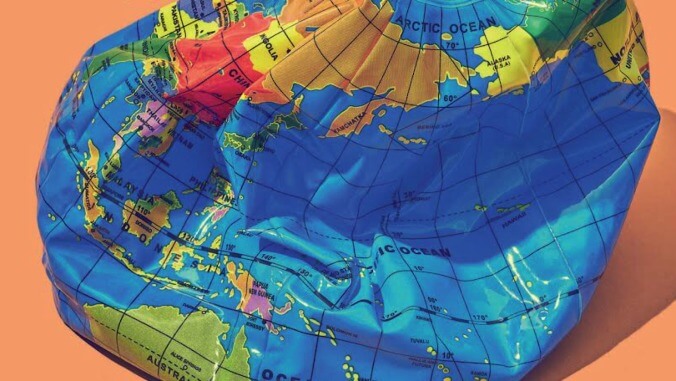
The centuries-long history of capitalism is one marked by repeated crises. Every decade or so, we can expect to experience a recession, otherwise known as a “cyclical” crisis, but, every 40 or 50 years, something much more serious will occur. A “structural” crisis runs far deeper, and it can only be resolved with a radical reorganization, and expansion, of the capitalist system itself. It is within such a crisis that we have found ourselves since the 2008 financial crash. It is a crisis that remains unresolved.
This is the thinking of William I. Robinson, a professor of sociology at the University of California, Santa Barbara, and the author of the recently published book, Epochal Crisis: The Exhaustion of Global Capitalism. Robinson, in the text, characterizes the present crisis as one of over-accumulation—that is, the ruling class, or the transnational capitalist class (TCC), has accumulated more capital than it can reinvest—and of chronic stagnation and a declining rate of profit. As global inequality reaches ever more preposterous extremes, the wealthy hoard ever greater amounts of wealth as consumer-driven growth stagnates and mass markets shrink. The increasingly desperate popular classes, meanwhile, become more liable to revolt, and it thus becomes the task of the ruling class to keep them under control.
During the last structural crisis of the 1970s, the ruling class launched globalization, which, in effect, was a restructuring of the system that freed capital of its nation state confines and allowed it to expand to all but a few pockets of the world. It is Robinson’s contention that this capitalist epoch of globalization has since become exhausted—that global markets are saturated—and that, thus, the system must restructure in such a way as to create new profit-making opportunities for the transnational capitalist class.
Capitalists seek to transfer the costs of crises onto workers by reducing their wages and degrading their working conditions to render them easier to exploit. But they may also seek to replace workers entirely with new technologies, which, in light of the development of AI, is a process that is only set to intensify. Digital labor is becoming increasingly devalued, with workers toiling more and more within low-wage, alienating, and precarious situations. Alternatively, they are pushed out of the workforce altogether, with many of those displaced digital workers, unable to be absorbed into other areas of the economy, joining the global ranks of “surplus humanity”—that is, people for whom capital has no use—that also includes people displaced by conflict, economic collapse, and climate change.
But it is not enough for capital to solely weaken and replace labor. It must, too, crack open new spaces for profitable investment, with AI-driven technologies themselves representing one such investment opportunity. Another is war, which has always served as an outlet for surplus accumulated capital, and another still is what Robinson terms the “global police state,” which is to say the systems of mass surveillance, warfare, social control and repression that are becoming ever more present in our lives today.
The global police state, in addition to providing the TCC with a temporary solution to its over-accumulation crisis, serves an additional purpose. As the numbers of surplus humanity rise, so, too, does the threat of revolt that they pose to the ruling classes. Thus the power of the global police state is deployed against them. Mass surveillance and mass incarceration are expanded, as we see most chillingly with the opening of mega-prisons around the world, such as the 40,000-capacity Terrorism Confinement Centre in El Salvador. At the even more extreme end of the spectrum, surplus humanity can be simply exterminated, as in Gaza.
These are, indeed, complex phenomena, and a variety of factors shape them. But Robinson’s analysis of capitalism’s latest epochal crisis does provide clarity on many of the dramatic and, at times, seemingly contradictory developments playing out across the world today. In the following conversation, he sets out his case, describing the ways in which the capitalist system is being restructured in response to the crisis of our time, and elaborating on the implications of that restructuring for workers, women, and the wider ranks of surplus humanity, especially the Palestinians of Gaza. The biosphere itself, he argues, cannot endure yet another round of capitalist expansion, so the capitalist system itself, far from merely being reformed, must instead be dismantled.
His responses have been lightly edited for clarity and length.
How does your contention that we are living through a “structural” crisis of over-accumulation help us to make sense of global politics today?
If you are a transnational capitalist, you only have one interest: to make profit. To accumulate. Not just to make the same amount of profit, but to constantly expand your accumulation. But this crisis is presenting the transnational capitalist class with a situation where the rate of profit is declining. As are opportunities to reinvest all of this over-accumulated capital. So they turn to states and they say, ‘Give us opportunities. Use your state power to open up access to resources.’
Let me give you an example. Trump, out of nowhere, says he wants to annex Greenland. And he even threatens that he could do that militarily. So, yes. Trump is crazy. He’s a megalomaniac. We can say all of that. But there’s a bigger story here. Underneath Greenland are concentrated deposits of rare earth minerals. Why is that significant? Because new digital technologies need those rare earth minerals. The Danish government [which retains control over the island] does not allow mining in Greenland, so Danish control over Greenland is blocking access to those resources. If the Danish government says, sure, any transnational corporation can come in and mine those resources, then Trump probably wouldn’t care about incorporating it into the United States.
For the new outward expansion, you have to seize new resources, open up new markets. You have to feed these new technologies that are going to supposedly rekindle accumulation and profit-making. In this case, it’s rare earth technology. You need the political conditions for that to be allowed to happen. That, in this case, is Trump saying, ‘We want to annex and take over Greenland.’
It’s no coincidence that Trump’s doing that. He’s doing that because there is this new block of power emerging, which is big tech capital coming together with military, industrial and transnational finance capital. Trump and the tech billionaires need the rare earth minerals for their AI, for their new technologies. So you can see here how the headlines are explained by this larger analysis of capitalist restructuring and crisis.
How does war, and the development of what you term the “global police state,” serve the ruling class’ interests in light of the structural crisis?
These are tremendous outlets for unloading all of that surplus accumulated capital in the absence of other opportunities for profit-making. Look at Gaza. The genocide itself is unbelievably profitable. There is a report [by the U.N. Special Rapporteur on the occupied Palestinian territories, Francesca Albanese] called From Economy of Occupation to Economy of Genocide, and in that she points out that there are billions of dollars in profit being made by the genocide. I learned just a couple weeks ago that the Israeli government issued around $20 billion in war bonds from October of 2023 to July of 2025. Those war bonds were snatched up by transnational investors.
But it does not just involve wars. It involves the systems of repression. The war being waged on immigrants right now here [in the United States] is so brutal and so in your face, but it’s wildly profitable. Creating the new systems of mass incarceration is wildly profitable. Building up border walls. It’s accumulation through repression. Repression of rebellious populations is also profiteering.
There is going to be a runoff election in early December in Chile. The leading candidate, [José Antonio] Kast, has promised all these giant walls in northern Chile to block off Bolivia and Peru, and he’s promised to deport hundreds of thousands of transnational migrants that are in Chile. All of that activity, you contract it out to private corporations and then corporations themselves invest in this. So global police state is not just about wars. It’s all of these activities associated with control, repression, conflict.
There is another function of the global police state, besides generating profit, and that is to control populations that may pose a threat to the ruling classes. Could you speak about this?
The ruling classes face a crisis of social control. Inequality is simply unprecedented. People can’t survive, conflict is on the rise, class consciousness is on the rise, there are mass uprisings—so the second thing that the ruling groups need to do with the global police state, putting aside the profitable aspect of it, is to fine-tune and extend their methods of control. They have to figure out how to keep under control this explosive situation in which billions of people are dissatisfied and are rising up.
The ’60s and ’70s were a time of mass troubles all around the world. Everything from the decolonization movements, third world liberation movements, the student movement, the feminist movements, radical workers movements around the world, the demands for a new international economic order—all of that. The ruling groups responded by going on the offensive.
They launch globalization, and here, in the United States, you get deindustrialization. When you have deindustrialization, some industrial workers are absorbed into the service sector and into the new financial sectors, but a good portion are simply left un- or underemployed. That’s, at least at the beginning, disproportionately Black workers, because they were the last hired and the lowest runners. But [the ruling classes] need to socially control them. So Nancy Reagan says, ‘Just say no to drugs,’ and Reagan launches his ‘war against drugs.’ Part of that ‘war’ is a massive expansion of mass imprisonment. Everyone knows that story.
But now the problems that the ruling groups have—of insecurity and too much surplus humanity— are all over the world. Capitalism generates the conditions for millions of people to have no choice but to turn to survival strategies such as petty drug deals or joining up with cartels. You can criminalize them, and then you’re dealing with a problem in the way capital wants to deal with it. You’ve criminalized surplus humanity and you lock them up.
Now link that to global police state. Prisons are built by construction companies. The food that goes into the prisons is from the global agro-food industry. The guards wear clothing and get weapons. So mass incarceration is itself profitable, and it resolves a problem of how you clear out surplus humanity from society and lock them away in some remote place.
In extreme instances, surplus humanity can also simply be exterminated, as evidenced in Gaza. Can you explain how the Gazan population came to fall within the ranks of surplus humanity in the first place, and, furthermore, what this insight reveals about the dynamics underlying the genocide?
It’s related to the restructuring, transformation, and crises of global capitalism. Let’s look at what’s happened since the 1970s. The 1970s was the last big structural crisis, and the capitalist response was to restructure the whole system. To launch globalization, and to have this new wave of expansion. That historic process involved the uprooting of hundreds of millions of people. That’s the big story of the last 50 years: the uprooting of hundreds of millions who become migrants. They may migrate within their own country, but also they migrate transnationally.
The United Nations reported [in 2024] that there were 304 million transnational migrant workers around the world. That’s a huge amount. But the point here is that, as part of this process, there has emerged a global labor market, meaning that anywhere around the world, capitalists can now dip into this new system of transnational migrant labor recruitment. The whole global economy is much more dependent on transnational migrant labor. So now let’s go to Israel and see how that helps explains the genocide.
There’s the Nakba in 1948. There’s the expulsion of 800,000. They go into exile. They have to leave to Jordan, et cetera, or to the West Bank or Gaza. But another process going on is the utilization of those expropriated Palestinians as cheap labor in the Israeli economy. That was what happened in the 1950s, ’60s, ’70s, ’80s, ’90s, into the turn of the century. The Palestinian displaced people had to work in the Israeli economy—in the agro-industrial sector, in the service sector, in construction, and so forth.
You always have a tension from 1948 until the 2000s between the need to expropriate and expel, or to expropriate and exploit their labor. A system of apartheid allows you to do the latter. But in the 1990s, the Israeli leaders and capitalists looked around the world and said, ‘Look, there’s a new system of transnational labor recruitment that’s been created by globalization. We can import transnational migrant labor. We don’t need to use Palestinian labor. Transnational migrant labor can’t say they have a claim to this land. They can’t say they should have voting rights and full political rights and claims to the state. So let’s switch out Palestinian labor and replace that with transnational migrant labor.’
That’s what happens in the 1990s, the 2000s, the 2010s. This builds up to a situation where, now, it’s strictly about appropriation and expulsion, which generates pressure for genocide because Palestinians are resisting. The key point here is that once the Palestinian proletariat’s labor is no longer needed, then they are subject to this genocide. They become surplus humanity.
In the case of the Gaza genocide, there are two things that come together. One is just the inherent nature of the Zionist project, which is to get rid of Palestine, take over all of Greater Israel. That project moves to this new stage when you don’t need Palestinian labor. But the other thing going on is the capitalist crisis and the need for expansion.
Before October 2023, the transnational capitalist class was already looking at the Middle East and saying, ‘Where can we expand to now?’ The problem with expanding in the Middle East is that the Palestinians are in the way. They’re a political thorn in the side of the transnational capitalist class. In order for global capitalism to have this dramatic expansion in the Middle East, you need to change the political situation. You need to culminate the normalization [of Arab-Israeli ties]. You first had Egypt normalizing in 1980, then Jordan in 1994. Then you have the Abraham Accords [the set of agreements intended to establish diplomatic normalization between Israel and several Arab states] signed in 2020.
The Abraham Accords were supposed to have expanded to include Saudi Arabia and other countries. That is, the full normalization of Israel and its Arab neighbors, especially of Saudi Arabia. This is supposed to create the political conditions for a dramatic new expansion of global capitalism and investment in the whole region. But you then have the Hamas attack, and now global capitalism is pushed towards supporting genocide as part of its project of expansion in the Middle East. The Palestinians in Gaza have to leave. That opens the doorway to this dramatic expansion of investment opportunities throughout the entire region.
How does the capitalist system’s increasing reliance on transnational migrant labor help us to make sense of Trump’s deportation regime? It may be tempting to view his policies as a genuine attempt to boost American wages, at least for full citizens, but would you argue instead that Trump still wants to keep American wages low by exploiting migrant labor—but under even stricter conditions than before?
Precisely that is what’s happening. Until now, the system for exploiting transnational migrant labor has been people informally crossing that border. You capture some of them, but not all of them. You want them to enter the economy and be the cheapest sector of the exploitable labor force here in the United States. They’re undocumented. They’re vulnerable. They can’t demand their labor and civil and political rights. They don’t vote. They’re clustered in construction and the agro-industrial sector and meatpacking plants and so forth. They can’t really fight, although immigrants—workers—always do. But that system is too problematic for many reasons we don’t have time to discuss now.
For a number of years, before Trump even came around, some among the employer class and the intellectuals that work with the state have been talking about a different type of system: the Kafala system, which is in the Middle East. The Kafala system is where you come in on a visa and you turn your passport over to your employer. You come in, you work with only one employer. When you’re done, or if you don’t want to continue there, you have to go back. That’s exactly what’s happening under Trump. We’re moving towards the U.S. version of the Kafala system.
Could you speak about the particular ways that women are affected by our epochal crisis?
There’s always historically been a link between women’s role in reproduction—literally, having children and tending to them so they grow to become workers—and the needs of capital. The system has to make sure that women are having babies and producing a new generation of workers to go and work in the capitalist system. Capital needs to control the reproductive process, and that means control of women.
But what happens when you have this expansion of surplus humanity—when capital has all of the labor that it needs—the relationship between capital and women’s reproductive process shifts, because women are now producing babies that are not going to be needed for capitalist exploitation. Their labor is not going to be needed. They’re going to become surplus humanity that could potentially be dangerous to the system. That’s the structural underpinning for the degradation [of women’s rights].
Then there’s the larger issue of social reproduction. Because of the unequal nature of the capitalist societies we live in, social reproduction—that is, having kids, raising them, and guaranteeing food for your house—falls on individual families. But, within families, that falls on women. Women raise children, women have to figure out how to feed them, et cetera.
So, as capitalism spins into crisis, why are states cutting back spending on social reproduction—spending on public health, on education, on subsidies for popular consumption? Why all these vicious attacks? Because it doesn’t matter that families have kids who will be hungry, because they’re not producing healthy workers that are going to be needed for the capitalist economy.
There’s a link here, then, between the vicious attacks on social spending and women, and the crisis of global capitalism.
Why do you believe that the capitalist system must be dismantled outright, rather than simply be reorganized on more favorable terms to the working classes?
Capitalism must expand outward constantly. That’s the nature of the system. But every time you expand, you’re expanding into both human and extra human nature. We’ve gotten to a point where these latest rounds of expansion, the ones underway right now, have involved a very radical seizure of extra human nature. This impulse towards outward expansion is reaching a point where there are very few ways that you can expand without bringing about a collapse of the biosphere.
There’s an illusion that “green” capitalism would transition to non-fossil fuel energy sources, and that will resolve the problem. It won’t. Even if we have no oil and coal—and it would be great if we could make that transition—the transnational capitalist class will still need to, say, get underneath the glacier in Greenland [to access the rare earth minerals used in renewable technologies]. Those so-called “green” sources of making energy are not really green. There’s no way out of it.
Why, for example, does the U.S. support [Argentina’s so-called anarcho-capitalist president, Javier] Milei? Because Milei says that he will open up to copper mining. Argentina has maybe the biggest deposits of copper in the world, but it can’t be touched because of environmental regulations stating that you cannot get to the copper underneath the Andean glaciers. Milei is the political agent to change that. This means further accelerating the destruction of the Andean glaciers.
Moreover, artificial intelligence is now driving the whole global economy. It’s involving this vast restructuring just getting underway now, with major implications for everything. Artificial intelligence requires massive amounts of energy. Governments are trying to legitimate oil and gas and nuclear power to give all of that energy to these data centers that are springing up all over the world.
We’re not going to be able to survive if we have a system that has to expand constantly. That’s why, at this point, it’s not about reforming capitalism.
William I. Robinson’s Epochal Crisis: The Exhaustion of Global Capitalism is available now from Cambridge University Press.
 Keep scrolling for more great stories.