

Malaysia and Indonesia Apparently Care More About Banning Grok’s CSAM Than the United States
The U.S. may not stop Twitter from being overrun with sexualized deepfakes, but at least some countries care enough to do something.
Photo via Unsplash, Salvador Rios Splinter Twitter
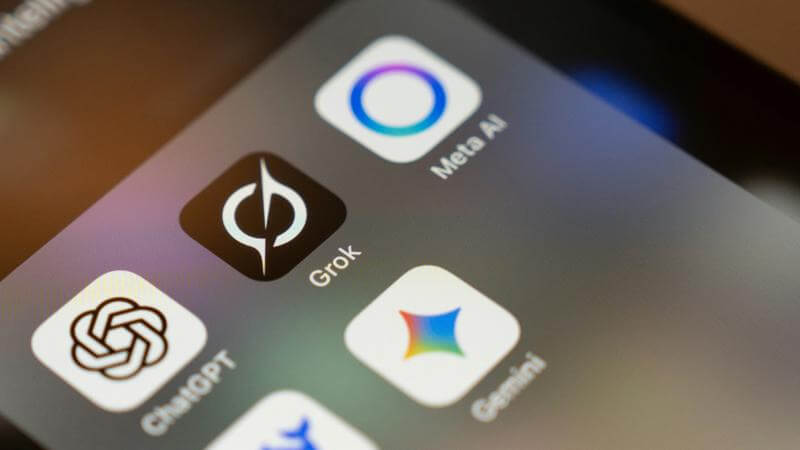
If you’ve been fortunate enough to be entirely removed from the orbit of Elon Musk’s X in the last few weeks to the point that you’ve somehow missed the story as it developed: Let’s just say it’s been a rough news cycle for the flaming debris that was once Twitter. Embroiled now in what one shudders to type out as a “digital undressing scandal,” the company’s AI chatbot Grok has been the source of outrage after it was found to be generating and sharing AI images of both underage girls and digitally altered photos of real people, contorted into sexual situations. The saga, which has seen Musk and co. doubling down on “free speech” claims rather than admitting any kind of culpability, while simultaneously restricting Grok to only paying customers, has intensified long-simmering calls for users to abandon the platform entirely if they want to pretend at the least bit of morality, with seemingly little traction in terms of getting U.S. elected officials or regulators to do anything about it. Internationally, however, it seems to be another story: Both Malaysia and Indonesia today announced that they would block all user access to Grok over the proliferation of sexualized deepfakes, and the legislators of the United Kingdom simultaneously announced that an existing law making the creation of nonconsensual, intimate images illegal would “come into force” this week, effectively saying that they would be enforcing the law against both users and potentially Twitter itself.
Statements from both southeast Asian countries said they would no longer tolerate the fact that Grok–which once dubbed itself “MechaHitler,” I trust you will recall–had been used to produce copious amounts of pornographic, nonconsensual images involving women and underage children, otherwise known as child sexual abuse material or CSAM. Malaysia noted that it had sent notices to Twitter “to seek tighter measures after it found repeated misuse of Grok to generate harmful content,” but that Twitter/X in its response instead focused on reporting individual users, rather than the fact that it was supplying the tools to allow those users to generate CSAM. This has generally been Twitter’s go-to move in responding to the clear issues with its AI chatbot. To the BBC, the company claimed the following: “Anyone using or prompting Grok to make illegal content will suffer the same consequences as if they upload illegal content.” And yet, the problem is now worse on X than ever, despite Musk having claimed since 2022 when he acquired Twitter that it was his number one priority.
🚨🚨This is the way: Malaysia and Indonesia block #Musk’s #Grok over explicit deepfakes. 🧵
www.bbc.com/news/article…— Jacob Öberg (@profjacob.bsky.social) Jan 12, 2026 at 3:22 AM
In the U.K., Technology Secretary Liz Kendall addressed the Commons today, saying that the government would start putting some enforcement/teeth behind its existing law that criminalizes the type of content that Grok has recently been used to generate. Intriguingly, the BBC reports that Kendall said “the government would also seek to make it illegal for companies to supply the tools designed to create such images,” which certainly seems to imply that it would effectively make it illegal for X to continue offering Grok to its users in the U.K.
Only hours earlier, meanwhile, the government’s Office of Communications (Ofcom), the regulatory authority for broadcasting and internet industries in the U.K., announced that it was also investigating Grok and X over the same sexualized deepfakes. According to the BBC, the investigation into “deeply concerning reports” of Grok’s abuses could result in Ofcom issuing a fine to Musk’s company of “up to 10% of its worldwide revenue or £18 million, whichever is greater,” if it is found to have broken the law. Ofcom could also seek a court order that would force internet service providers across the U.K. to simply block all access to Twitter, stripping the company of one of its major markets.
“Today I can announce to the House that this offense will be brought into force this week,” said Kendall to the assembled MPs. “The content which has circulated on X is vile. It’s not just an affront to decent society, it is illegal. Let me be crystal clear—under the Online Safety Act, sharing intimate images of people without their consent, or threatening to share them, including pictures of people in their underwear, is a criminal offence for individuals and for platforms. This means individuals are committing a criminal offense if they create or seek to create such content including on X, and anyone who does this should expect to face the full extent of the law.”
There’s no telling if Musk and co. will manage to simply dodge and juke out of culpability here as they always seem to do, but just imagine if U.S. legislators and regulators showed the same kind of scrutiny to the smut peddlers over at X as they do in England, or in Malaysia. Even if it U.S. regulators did nuke Grok, we’re long past the point where any return is possible to the Twitter of old, the site where one could once upon a time expect to find the best user-reported breaking news coverage in a crisis (or an Oscar night). Personally, I’d settle for an algorithm that isn’t frying users’ brains, but even that is no doubt asking far too much.
 Keep scrolling for more great stories.