

Same-Sex Behavior Likely Predates Humanity Itself, New Study Suggests
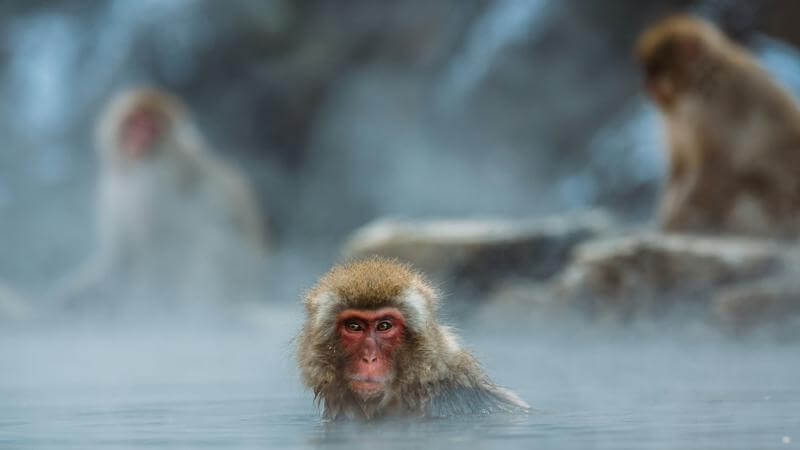
More than 59 different species of primates have been observed participating in same-sex behaviors, making them quite common.
Photo via Unsplash, Steven Diaz Splinter LGBTQ
A new study, published today by the scientific journal Nature Ecology & Evolution, provides an interesting overview of the relative frequency in which same-sex behaviors have been observed in an ever-growing number of primate species on Earth. It represents the most comprehensive overall review to date of same-sex behavior in primates, challenging prior assumptions on the rarity of same-sex behaviors and instead suggesting that these behaviors are both evolutionarily common in primates, and serve concrete social and evolutionary purposes. In other words, the study effectively suggests that same-sex behaviors and sexual activity have likely been with primates from the start … and likely have been a part of the human evolutionary tree for longer than homo sapiens itself. You can read the full study here.
“What we found shows that same-sex is not like something bizarre, aberrant or rare,” said Vincent Savolainen, an author of the study who is director of the Georgina Mace Centre for the Living Planet at Imperial College London, to NBC News. “It’s everywhere, it’s very useful, it’s very important. People haven’t realized same-sex, as a behavior, is as important for the functioning of a society as feeding, fighting, making babies, looking after your offspring.”
The study in Nature Ecology & Evolution involved meta-analysis of existing research and observation of nearly 500 primate species, looking to documented accounts of same-sex sexual behaviors. These were apparently found in 59 nonhuman primate species that included chimpanzees, bonobos and macaques, with the behavior potentially considered “common” in at least 23 of those species.
One of the most interesting findings of the study is the apparent correlation between same-sex behavior in primates and times when that primate community is in need of “social cohesion to deal with harsh environmental conditions.” Which is to say: When a tight-knit primate community is under stronger pressure or duress, be it from predators, or environmental stresses, or social conflict, same-sex behaviors in both males and females seem to emerge more readily, as a means of helping members of the community bond, dispel stress and pull together for a common goal. The study theorizes that “sex could help individuals manage competition, build alliances and avoid intergroup aggression,” regardless of whether that sex is between males and females or is same-sex. On some level, this hardly feels revelatory, the idea that sex can be used by primates to alleviate tension and bring us closer together. Is that not a core human characteristic of sex? At the same time, however, politically tinged science has all too often been eager throughout human history to cast same-sex attraction and activity as inherently aberrant, a behavior that does not occur naturally, which is a depiction that makes such behavior easier for governments to punish and repress. Socially, we likewise tend to consider sex primarily from an emotional/relationship standpoint, rather than considering the wider evolutionary principles (beyond the obvious of reproduction) that underpin it. But given that humans have sex with each other for an extremely wide array of reasons, does it not make sense that many primates (including our ancestors) would as well, including same-sex activities?
Gay sex significantly correlated with increased lifespan across 491 primate species – new paper in Nature Ecology & Evolution.
— Dr. Dominic Ng (@dominicng.bsky.social) Jan 12, 2026 at 12:13 PM
“Sexual behavior is often about more than reproduction, and that’s certainly true in our species,” said Marlene Zuk, a University of Minnesota evolutionary biologist quoted by NBC News who also researches same-sex behavior in animals. “But, people don’t tend to think that it’s also true in other species. They have this idea that in all animals, except for people, that they’re old-fashioned Roman Catholics and they can only have sex briefly when it’s going to result in an offspring and with the lights off, you know? And that’s just not how animals are either.”
Perhaps the biggest hurdle for such a study is that the data they’re analyzing has been compiled by other researchers and scientists over the course of decades who in almost all cases were not specifically looking to study (or document) same-sex activity in primates. It’s impossible to say how many instances of this kind of behavior simply weren’t recorded because they weren’t the focus of research that was happening at the time, or instances that could have been intentionally omitted by researchers not wanting to touch a subject with potential political entanglements inherent to it. Few studies have ever been conducted, meanwhile, with the stated intention of observing same-sex behavior in primates specifically because it’s difficult to get that kind of research funded, particularly when you’re seeking grants from government agencies. Do you think the Trump administration would allow a single dollar to be spent in research on evolutionary same-sex animal behavior in primates? They’d probably just direct the grant seeker to the Book of Leviticus in response.
Regardless, individual observations have long suggested that in species such as macaques and bonobos (one of our closest primate relatives), same-sex activities are quite common and undeniably normal. The new study simply expands the scale of these observations, leading us inexorably in the direction of a conclusion that seems quite obvious: Humans have likely always engaged sexually with members of their own biological sex, for many of the same reasons as other primates did before us. From before we had language, harnessed fire, or lifted a tool, we were almost certainly gay.
 Keep scrolling for more great stories.