

Trump’s First Second-Term Vetoes Deny Clean Drinking Water and Return of Native Land
Both the vetoed bills had passed through Congress more or less unanimously, setting up a pending override showdown.
Photos via Unsplash, Elijah Mears SplinterTrump Administration congress
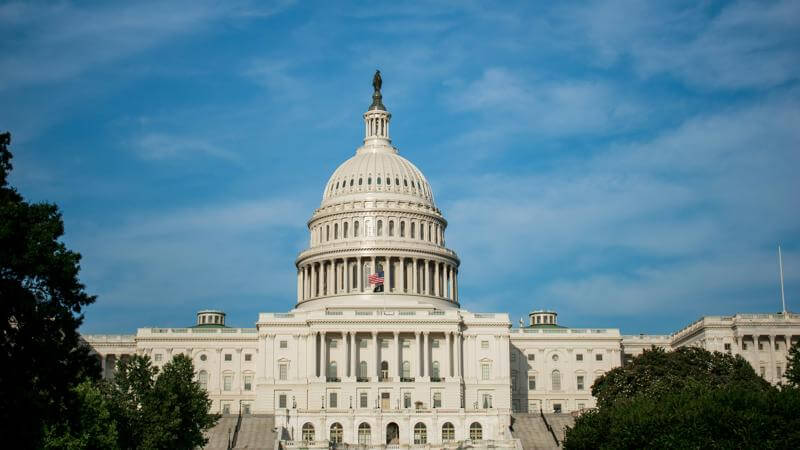
It took almost a full year, perhaps unsurprising at a time when Congress is getting almost nothing accomplished despite a Republican trifecta, but Donald Trump has issued the first pair of Presidential vetoes of his second term. What issues, you might wonder, motivated a President typically more interested in dropping bombs on mainland Venezuela or dreaming up new, impractical classes of navy warship, to take notice of what little work Congress is actually doing? Would you believe that “denying clean water to his own supporters in Colorado,” and “denying native Americans a small area of land in the Florida Everglades” were the subjects that apparently prompted him to take action? Oh, and by the way: Both bills had more or less unanimously passed through both halls of Congress with exceedingly rare bipartisan support.
Which is all to say: This reads like a vintage Donald Trump power play, choosing a few vetoes for a combination of personal retribution and authority flexing, just to see if he can make Congressional Republicans fall in line as they pretty much always do. Perhaps in the wake of some high-profile defections, such as the case of the now shit-talking Marjorie Taylor Greene, Trump feels like he needs to do something to reassert his will over the party, and has chosen a few bills he feels are of relatively little consequence–things he can veto without inspiring many dissenters in either chamber. Still, his choice to veto two unanimously passed bills will set up an interesting loyalty test and override showdown as Congress debates whether to override his vetoes, which would require a two-thirds majority in each chamber. Unlikely, perhaps, but at a time when Trump’s approval and support are badly frayed, this could be a low-stakes proxy for how willing Republican members of Congress are to break with the President.
During his first term from 2017-2021, Trump issued a total of 10 vetoes, but it’s notable that only one of them (H.R.6395 – National Defense Authorization Act for Fiscal Year 2021) was ultimately overridden by Congress. It’s also deeply tied to when it happened: Dec. 29, 2020, when Trump was already a lame duck following the Nov. 2020 election, and only days before he would goad on the insurrection of Jan. 6, 2021. Republican members of Congress in that moment clearly felt more free to defy Trump, rather than abruptly reversing face on every issue as they had during the previous vetoes of the first Trump administration. An override of Trump’s vetoes now would be a significantly more significant rebuke of the President’s capricious meddling.
The first of the bills vetoed by Trump in the 119th Congress is H.R. 131, which revolves around lessening the financial burden of small Colorado communities for the finishing of the in-progress construction of the Arkansas Valley Conduit, a pipeline designed to deliver water from the Pueblo Reservoir to 39 southeastern Colorado communities. The Congressional Budget Office estimated that the bill, which would give small towns 100 years to pay back no-interest federal loans for their share of project expenses, would ultimately cost the federal government less than $500,000, while providing “reliable municipal and industrial water” that supporters say is desperately needed. Southeastern Colorado Water Conservancy District Senior Policy and Issues Manager Chris Woodka described the completion of the conduit as not some “frivolous project,” saying “It’s a project that meets federally mandated standards for water quality to ensure that 50,000 people are drinking clean, not carcinogenic, water.”
“Carcinogenic” would be a reference to the project’s stated goal to eventually stop groundwater withdrawals from the area, which produce water that can be tainted by potentially dangerous radioactivity from elements like radium.
The orange felon has vetoed a clean drinking water project in Colorado, a needed project in MAGA lunatic Lauren Boebert’s district.
This cruelty comes not long after she voted to release the Epstein files.
I truly hate him.
— Ricky Davila (@therickydavila.bsky.social) Dec 31, 2025 at 12:52 AM
Trump, meanwhile, justified his veto of clean drinking water for Coloradans by saying that it was effectively too expensive despite the Congressional Budget Office estimate, sending a statement to Congress containing the following: “Enough is enough. My Administration is committed to preventing American taxpayers from funding expensive and unreliable policies. Ending the massive cost of taxpayer handouts and restoring fiscal sanity is vital to economic growth and the fiscal health of the Nation.”
So, what would cause Trump to suddenly want to punish residents of southeastern Colorado, one of the areas of the state most densely populated with his own supporters? Smart money would be on personal retribution against figures such as Democratic Gov. Jared Polis, with whom Trump has recently butted heads over the state’s inaction on releasing 2020 election denier Tina Peters, who was convicted of nine felonies for breaching election security systems in 2021. Trump granted Peters a full federal pardon, which has no legal effect on the woman’s Colorado state charges or convictions, but Trump has demanded her release regardless. In the wake of Colorado and Gov. Polis standing firm on the issue, Trump has already begun a seeming campaign of retribution against the entire state, with actions such as the announced closure of the Boulder, CO-based National Center for Atmospheric Research, which conducts research and maintains supercomputers for the federal government and 129 universities.
In targeting the state, however, Trump threatens to stir up more MTG-like rabble rousers. Republican Rep. Lauren Boebert, long one of the House’s most purely embarrassing members and a MAGA super zealot, has increasingly found herself emulating the path of criticism that eventually led Greene to her fall from grace in Trump’s eyes, including similar support for the release of the Epstein Files. The H.R. 131 bill was sponsored by her, and is likely the most consequential thing she’s actually done for the state of Colorado since first elected in 2021. Her loud criticism of Trump’s veto lends credence to the idea that some Republicans might be up for a rebuke.
“President Trump decided to veto a completely non-controversial, bipartisan bill that passed both the House and Senate unanimously,” said Boebert in a statement to media. “If this administration wants to make its legacy blocking projects that deliver water to rural Americans; that’s on them. I sincerely hope this veto has nothing to do with political retaliation for calling out corruption and demanding accountability. Americans deserve leadership that puts people over politics.”
The second bill vetoed by Trump, meanwhile, was H.R. 504, which likewise passed unanimously through the House of Representatives and the U.S. Senate. It was designed to expand Florida’s Miccosukee Reserved Area, the land granted to the Miccosukee Tribe of native Americans, to include a small portion of Everglades National Park known as Osceola Camp, historically part of Miccosukee land. The bill also instructs the Department of the Interior, in consultation with the tribe, to “take appropriate actions to protect structures within the Osceola Camp from flooding,” such as assisting with the building of raised structures. Florida’s Rep. Carlos Gimenez, the bill’s sponsor, said the following:
“This bipartisan legislation ensures that the Miccosukee Tribe has the legal authority to manage, protect, and preserve their land and continue their traditional way of life. The Osceola Camp is not only home to Tribal members, but it is also a site of historical and cultural importance. Including this land in the reserved area will empower the Tribe to protect their community, manage water flow into the Everglades National Park, and raise structures within the camp to prevent catastrophic flooding.”
Trump’s stated reasoning for vetoing that likewise unanimously passed bill, meanwhile? Well, it’s a little hard to parse, but his memo to Congress claims that the Miccosukee Tribe both has no legitimate claim to the Osceola Camp area, and also that the tribe has “sought to obstruct reasonable immigration policies,” with no explanation of what the hell that is supposed to mean. As Trump’s statement puts it:
“Despite seeking funding and special treatment from the Federal Government, the Miccosukee Tribe has actively sought to obstruct reasonable immigration policies that the American people decisively voted for when I was elected. My Administration is committed to preventing American taxpayers from funding projects for special interests, especially those that are unaligned with my Administration’s policy of removing violent criminal illegal aliens from the country. Ending the massive cost of taxpayer handouts and restoring fiscal sanity is vital to economic growth and the fiscal health of the Nation. This principle carries especially heavy weight here; it is not the Federal Government’s responsibility to pay to fix problems in an area that the Tribe has never been authorized to occupy.”
And it is plainly stated in Trump’s veto message that he vetoed the Miccosukee flood remediation in retaliation for the Miccosukee Tribe opposing Trump’s draconian immigration policies and specifically opposing the construction of the ICE concentration camp in the Everglades
/5
— ❀°。Der Siebenschläfer *.゚✿ ⋆ (@sababausa.bsky.social) Dec 31, 2025 at 9:28 AM
How, exactly, are the Miccosukee Tribe preventing the federal government from “removing violent criminal illegal aliens”? Because they live near and have lobbied against the detainment torture camp known as Alligator Alcatraz? How is denying them access to a small, ancestral area of the Everglades helping to “restore fiscal sanity”? These seem like the kinds of things that might have been nice for the President to bother including in his rationale for why he was vetoing the bill, do they not?
As 2025 comes to a close and we look forward to another year of Congressional malaise in 2026 that is capped by the midterm elections, hopefully we’ll see a robust coalition forming of GOP members of Congress who see some value in standing up against Trump on these issues. If he comes to be seen as more of a weight around the neck of the average Republican representative, rather than an invincible kingmaker, then the next three years could get pretty interesting.
 Keep scrolling for more great stories.