

Will Trump Bomb Iran Again?
Iranian protests have exposed the regime's fragility, and its future is in the balance
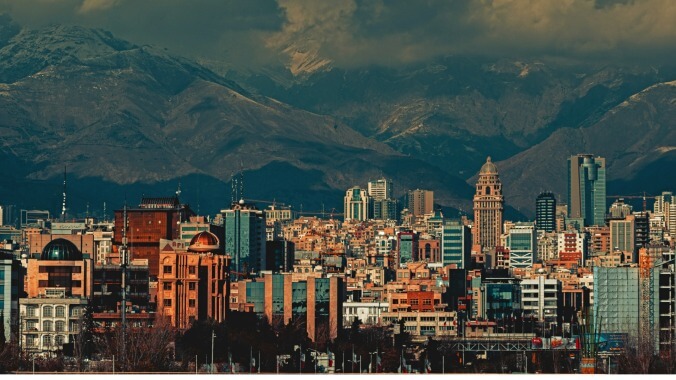
Photo by Sajad Nori on Unsplash Splinter Iran
A weeks-long communications blackout continues in Iran, but the world is beginning to piece together the brutality of the Iranian regime’s protest crackdown. Videos of security forces shooting protesters and a trickle of eyewitness accounts are just a small window into the staggering toll of state repression. More than 6,100 people have been killed, and more than 41,000 arrested, according to the Human Rights Activist News Agency (HRANA), a news association of Iranian human rights activists. HRANA says another 17,000 deaths are under investigation. Two Iranian health officials told TIME Magazine that 30,000 may have been killed on January 8 and January 9 alone.
As of about January 12, Iranian security forces have largely quashed the demonstrations, which began late last year in Tehran’s bazaars and soon engulfed the entire country. But Iran remains in a precarious position. Iranians at home and abroad face the uncertain aftermath of the regime’s ruthless protest crackdown. Iran’s economy remains in shambles, and a corrupt and regionally diminished regime has no clear remedy to the public fury. And the threat of U.S. force against Iran still looms, with President Trump warning just this morning that a “massive Armada” is headed toward Iran.
“The whole country is on standby mode, because they are looking for Trump to see what he will do and what will happen,” said Hossein Kermani, a senior researcher at the Political Communication Research Group of the University of Vienna, who studies social media repression and digital organizing, including in Iran.
“Trump kind of is unpredictable. He could attack Iran right now, or he could just cancel every military intervention. People in Iran right now are waiting for that.”
Iran’s protests exposed the regime’s fragility
Tehran’s bazaaris, deeply struggling after Iran’s currency collapsed last year, began closing their shops and protesting the country’s economic mismanagement in late December. The resistance expanded, with groups like university students joining in. The protests then began spreading across the country, including to areas previously more loyal to the regime and Ayatollah Ali Khamenei. The protests also morphed into a broader pushback against the regime’s corruption and foreign adventurism, including the repressive measures that followed Israel’s 12-day war against Iran in June, which included U.S. bombings of Iran nuclear facilities.
That 12-day war shattered Iran’s implicit pact with the Iranian public. The regime justified its repression at home with the promise that it would protect its citizens from threats abroad—and the attacks on Iran exposed its failure to uphold that bargain. Indeed, more than 1,000 Iranians were killed, including civilians, in the June conflict between Israel, U.S. and Iran, according to HRANA, with many thousands more injured.
The Iranian regime also had external enemies in mind, linking these protests to foreign interference, specifically Israel and the United States. Israel didn’t totally dispute this idea, and Trump’s threats of intervention added some fuel to the accusation. But as experts at Clingendael, a Netherlands-based research institute, noted, these foreign-interference accusations further undermined the legitimacy of the regime. If “unrest is now war, where is the security that justified years of sacrifice?” wrote Hamidreza Aziz and Erwin van Veen.
Further shattering that contract was the Iranian regime’s decision to respond to these protests with overwhelming force. Evidence is mounting of a massacre. Amnesty International said that in decades of its research on Iran, “January 2026 marks the deadliest period of repression by the Iranian authorities.” An Iranian doctor, using the pseudonym of Ahmadi, told The Guardian that he started seeing protesters who suffered from gunshot and severe stab wounds, including to the chest, eyes, and genitals.
“Ahmadi and his colleagues are hesitant to provide a figure for the toll but agree “all publicly cited death tolls represent a severe underestimation,” The Guardian reported. “Comparing the number of dead they witnessed with hospital baselines, they estimate it could exceed 30,000, far surpassing official figures.”
Taken together, Iran watchers doubt that the forces unleashed during this upheaval can be fully contained indefinitely. “The legitimacy crisis facing the regime is extreme,” said Rosemary Kelanic, director of the Middle East Program at Defense Priorities, a think tank that promotes U.S. restraint.
The fallout from that legitimacy crisis is much harder to predict. “The crisis phase began well before these protests and is bound to continue,” Luigi Toninelli, a junior research fellow at the Middle East and North Africa Centre at the Milan-based Istituto per gli Studi di Politica Internazionale wrote in an email. He added, however, that even if protests returned, he said they did not appear “destined to bring about the collapse of the system of power.”
The Iranian regime has responded to previous instances of political and social upheaval by making small concessions—for example, economic protests in 2019 prompted the government to hand out some subsidies. The regime tried something similar in early January, promising $7 subsidies to quell the unrest, though that would likely do little to ease the economic pain of most citizens.
Ellie Geranmayeh, senior policy fellow and deputy head of the Middle East and North Africa programme said on a Quincy Institute panel on January 12, that one of the questions was whether the Iranian regime would present some kind of reconciliation offer from state to citizen.
“I think this is a key question, because the off ramps right now are limited for a system that is facing huge economic problems, so long as sanctions remain, and so long as the corruption networks continue to lead the way on the economy. But also on social and political freedoms, the system may have hit a ceiling in what it can do under the current Supreme Leader,” she said.
The other question was whether this bottom-up pressure from the protests, combined with the top-down pressure from Trump, would force a recognition that “the status quo cannot continue and something has to give.”
Will the U.S. attack Iran?
On Wednesday morning, Donald Trump exerted some of that external pressure on Truth Social.
“A massive Armada is heading toward Iran. It is moving quickly, with great power, enthusiasm and purpose.” Trump described the fleet as larger than the one dispatched to Venezuela, but like with Venezuela “it is ready, willing, and able to fulfill its mission, with speed and violence, if necessary.”
Weeks have passed since Trump threatened to hit the Iranian regime “very hard where it hurts” over its aggressive protest crackdown. “Iranian Patriots, KEEP PROTESTING – TAKE OVER YOUR INSTITUTIONS!!!… HELP IS ON ITS WAY,” Trump wrote on Truth Social on January 13.
But the U.S. did not have the assets in the region, and only now has the U.S.S. Abraham Lincoln carrier strike group – part of this so-called “armada” – arrived in the region from the Indo-Pacific. Now that it has, Trump is also escalating his rhetoric.
In June 2025, the U.S. struck Iranian nuclear facilities in “Operational Midnight Hammer”, part of that broader 12-day war that Israel launched against Iran’s nuclear and military infrastructure. On Wednesday, Trump warned that if Iran did not make a deal, the next attack on the country “would be far worse. Don’t make that happen again!”
“Operation Midnight Hammer” was the kind of action the Trump administration has favored in his first year back in office – a targeted show of incredible force that lets the administration flex (see: the Maduro extraction in Venezuela), but doesn’t require the long-term commitment of U.S. troops. But an intervention in Iran now would be far more unpredictable, especially since it is not clear, exactly, what the U.S. truly seeks to accomplish.
Trump’s warnings to the Iranian regime against killing protesters did not prevent the Iranian regime from massacring civilians. Some people around Trump are salivating for regime change in Iran, but Trump himself never really had the appetite to get dragged into a potentially protracted conflict – nor does he have any affinity for the old-school neocon mission of spreading democracy.
Trump’s rhetoric, including his most recent Truth Social threat, has focused on the idea that Iran must make a deal with the U.S. on its nuclear program. That has little to do with Iran’s domestic upheaval, other than that it might have exposed the regime’s current vulnerability. Trump previously claimed that June U.S. strikes had “completely and totally obliterated” Iran’s nuclear facilities, though the Pentagon assessed the program had been set back one to two years. Iran has vowed to rebuild its program, though an independent expert assessment from November said Iran appears to have made “minimal progress” in reconstituting its facilities. Also, it’s worth remembering that no nuclear deal currently exists between the U.S. and Iran because Trump pulled out of the one that did in his first term.
If Trump does attack nuclear or potentially military facilities, such an operation would seem unconnected from the protests, the initial rationale for escalating U.S. threats. But if Trump does attempt something more expansive – say, a Venezuela-type move to decapitate the regime or Iranian leadership, including Ayatollah Khamenei – then that becomes a far more dangerous gamble for Iran and the region and the U.S.
Officials in the Middle East, including Israel and the Gulf States, had warned Trump away from attacking Iran earlier in January, fearing a regional escalation that could also leave them vulnerable – especially since the U.S. lacked the military assets in the region it had in June. Iran has warned that it will retaliate against any American attack. After “Operational Midnight Hammer,” Iran attacked a U.S. base in Qatar, but had given enough pre-warning to avoid casualties and de-escalate. There are no guarantees Iran will be as measured if U.S. action is a threat to the regime and its rule over Iran.
“Bombing Iran, or overthrowing a regime because of these protests is also totally optional for the United States,” Kelanic said. “We don’t have to do this. There’s not an abiding US security interest in doing it. In fact, you can make lots of arguments that this is going to hurt U.S. security interests.”
Sure, Trump could pull this off again, strike nuclear or military sites, declare total victory, hope Iran takes an off-ramp, and temporarily distract the public from his federal agents murdering U.S. citizens. But it also could backfire on the U.S. in all sorts of ways. A foreign attack might bolster a regime that was on the brink. Or it could topple it, leading to – well, who knows what. Collapse, chaos, a different kind of authoritarian state. Whatever that outcome, it will unlikely be limited to the borders of Iran.
Some Iranians, at home and in the diaspora, might be willing to embark on that gamble, seeing no other option but outside intervention to end the regime, no matter the risks. Kermani likened it to a terminal cancer patient, who had a choice of dying, or rolling the dice on an experimental treatment. It might kill him faster, but it offered a chance, at least.
The Iranian protests represented a remarkable act of civil defiance against a rotten regime. Yet as powerful as they were, the opposition at home and in exile remains divided. “We have clearly seen a multiplicity of voices taking to the streets. There were those protesting against the worsening economic conditions in the country, and these were not necessarily anti-regime protests; there were those calling for the end of the Islamic Republic, and those calling for the return of the Shah,” Toninelli wrote. “These are not the same thing, since those who praise the Shah represent only a portion of those who oppose the current system.”
Abroad, the Iranian opposition is also split. Reza Pahlavi, the eldest son of Iran’s former shah is emerging as one of the more credible opposition voices in exile, but it is tempered by his own familial baggage – the former, pro-American shah was not exactly a liberal democratic reformer, and skepticism of his blueprint for Iranian democracy remains. And of course, that all rests on the hope that Iran would have that opportunity, rather than a regime reshuffle or authoritarian replacement. Trump himself has invoked the specter of Venezuela, where he swapped out the country’s dictator for his second-in-command, ultimately leaving the regime apparatus in place. What the Iranian people ultimately deserve might not be achievable or attainable through force, no matter how big the “armada.”
 Keep scrolling for more great stories.