

Just How Drunk Should a Cruise Ship Allow You to Be?
The answer is apparently "14 shots of tequila" drunk.
Photo via Unsplash, Cody McLain, Steve Davison Splinter cruises

Two things can be true at once:
1. Many American tourists go on Caribbean cruises with the explicit intent of getting very, very drunk and rowdy at sea–behavior that the mainstream cruise industry actively fosters by offering all-you-can-guzzle unlimited daily drink packages and designing their ships as hedonistic, floating booze dispensers and adult playgrounds.
2. Cruise ships, and the companies that run them, have at least some burden of responsibility to keep the patrons on them safe, which means being able to make a judgement call when someone has been overserved alcohol, cutting them off before they can hurt themselves, and ideally preventing those people from being a danger to themselves or others. This is easier said than done.
This cannot be an easy line for your average cruise bartender to straddle, and frankly I empathize with these service workers. They’re being asked to facilitate the bacchanalian revelry of hundreds of people who have all determined they’re going to “cut loose for a change” on this vacation, and simultaneously prepare to engage in a potential screaming match with any one of those people when they’re informed that they’ve been cut off. This is a job that requires a certain capacity both for a plastered smile and the ability to confront a drunken douchebag who is singing off-key and demanding yet another piña colada. It ain’t a job I would want.
All the same, there must be a limit, somewhere, to what is considered acceptable or unacceptable to serve to the patrons who are demanding to get sloshed. And judging from a Miami federal jury’s recent decision, that limit might be somewhere in the vicinity of 14 shots of tequila. That’s what a 45-year-old patron named Diana Sanders was reportedly served, albeit over the course of nearly nine hours, while aboard a Carnival Radiance ship in January of 2024, according to a lawsuit she eventually filed against Carnival Cruise Line. Unsurprisingly quite intoxicated at the end of the day, Sanders eventually fell while roaming the ship and suffered significant injuries, which formed the basis of the lawsuit, alleging that bar staff should have become aware of her intoxication and cut her off in order to protect her. A jury in Miami agreed this week, awarding Sanders $300,000 in damages. The jury found that crew members had to at least some extent not lived up to the “reasonable duty of care” toward Sanders that a patron can expect, “to supervise and/or assist passengers aboard the vessel who Carnival knew, or should have known, were engaging, or were likely to engage in behavior potentially dangerous to themselves or others aboard the vessel.” They found that Carnival was “60% at fault” for the incident, with Sanders “40% at fault,” which is apparently the correct ratio to still receive a significant payday.
Carnival Cruise Line must pay $300,000 to a former passenger after a Florida jury found the company was negligent in serving the California woman more than a dozen tequila shots before she fell down stairs and suffered a possible traumatic brain injury.
— CBS News Sacramento (@cbsnewssacramento.bsky.social) Apr 16, 2026 at 1:00 AM
According to the woman’s legal representation, this was both a rare case and a rare outcome–lawyer Spencer Aronfeld said he had served as representation in numerous overservice cases related to cruise ships, but never one that had actually gone to a full trial. The client, Sanders, apparently felt pretty strongly about seeing it through to the end over the course of 17 months of litigation, in which Carnival Cruise Lines was naturally attempting to dismiss the proceedings. She alleged that she had fallen down a staircase somewhere around midnight, causing “severe injuries” that included “a concussion, headaches, back injuries, tailbone injuries, bruising, and a possible traumatic brain injury.” Personally, I like how every media story here includes the phrase “possible” traumatic brain injury, as if that’s something no doctor could possibly have verified in the last 17 months.
Regardless, Aronfeld said his client “woke up, not knowing exactly how she got there at the bottom of the staircase in the crew area.” Sanders likewise claimed the crew was something less than helpful in her ordeal, saying the following: “Waking up after blacking out and going to the crew and asking them for help and asking them to tell me what happened was extremely frustrating. They gave me conflicting information, they treated me like a criminal. I felt bullied, I felt like everything they did was to either mentally torment me or financially torment me. It was a lot over the last two years.”
“Financial torment” aside, it begs the question of what should genuinely be considered the aforementioned “duty of reasonable care.” The law as it pertains to cruise ships is not quite the same in this regard as it would be on dry land: For conventional bars and restaurants, so-called “dram shop” liability laws allow a business to be held responsible if a customer is served when merely “visibly intoxicated.” Cruises operate in more of a gray area under federal maritime jurisdiction, which can make it more difficult for someone to sue in cases of overserving of alcohol. According to injury lawyers specializing in these cases: “To succeed in a maritime negligence claim, you must prove the cruise ship staff knew, or should have known, that a passenger was intoxicated yet continued to serve them.”
And honestly, when you’re the Carnival bartenders in question, just how many times a day are you interacting with clearly intoxicated patrons? What percentage of the people you’re talking to are already sloshed? Should every single one of them be denied further drinks, leading to constant confrontations and arguments with management? From a perspective of pure responsibility and safety? Sure, they should probably all get cut off. From a perspective of running a giant, floating party business? The answer seems a bit less obvious, because you’ll immediately be out of business if you operate that way. You are dealing with a clientele that intends to be intoxicated, none of whom are holding back because they have to drive home at the end of the night, merely stumble back to their rooms. I find it difficult to blame individual bartenders in what must be a truly heinous service job.
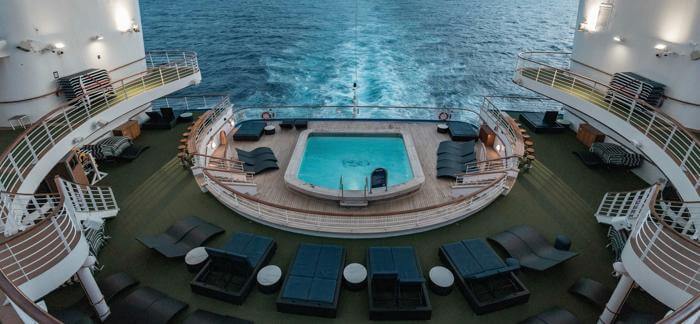
As for Carnival the corporation, on the other hand, there’s little doubt that they tried to wriggle their way out of responsibility in a way that was fairly disingenuous and insulting. They attempted to get the case dismissed, for instance, by saying that because Sanders couldn’t identify the specific crew member who over-served her, they couldn’t be held liable, saying “Therefore, the over-service of alcohol count should be dismissed for failure to sufficiently identify a negligent employee.” The jury was apparently less than convinced by these mental acrobatics.
Nevertheless, a limit must eventually exist somewhere, because the final outcome can be a whole lot worse than merely being injured falling down a flight of stairs. Case in point: The death of 35-year-old Michael Virgil, who in late 2024 was on a Royal Caribbean cruise ship with his fiancée, son and other family members, when he was somehow served “at least 33 alcoholic drinks” over the course of a day, which (shockingly) resulted in Virgil becoming erratic and unmoored from reality. The cruise line contends that Virgil then began attacking its staff, causing them to tackle and pin him to the ground, potentially leading to his death via asphyxiation, which the Los Angeles County Medical Examiner ruled as a homicide. His family is likewise suing the cruise line in a wrongful death suit, alleging that the ship’s negligent overserving of alcohol led to the death … to which it’s effectively impossible to disagree. I very much doubt that man would be dead, if he hadn’t consumed “at least 33 alcoholic drinks” that day.
Man who died on cruise ship served 33 alcoholic drinks “in a matter of hours,” lawsuit alleges
Royal Caribbean is being sued after allegedly serving a passenger 33 drinks “in a matter of hours,” according to a lawsuit. The family of Michael Virgil is accusing the cruise giant of negligence. At one…
— virtualnews360.bsky.social (@virtualnews360.bsky.social) Dec 9, 2025 at 9:20 AM
Ironically, though, it’s the plaintiffs in the lawsuit who point out the most obvious defense of the company, which is the ubiquitous, universally acknowledged centrality of drinking to the experience. As the lawsuit puts it, the cruise ships are deliberately designed to ensure that alcohol-serving stations are “in every nook and cranny,” and the ship “does as much as possible to encourage and facilitate alcohol consumption” by those on board.
Yeah, exactly … and that’s most likely why the man wanted to be there, much as the woman who downed 14 shots of tequila no doubt wanted to be in the kind of setting where one can down 14 shots of tequila and no one bats an eyelash. A huge, floating pleasure palace of debauchery appeals to the consumer who is determined to “get their money’s worth,” and god help you if you come between them and their quarry. A cruise ship does indeed have a responsibility to look out for its guests, but we shouldn’t be surprised when things go too far in a business model not only built for excess, but financially dependent upon it. You can have your all-you-can-drink package, or you can have a careful watchdog of your health … but you probably can’t have both.
 Keep scrolling for more great stories.