

FIFA Owes a Round of Applause to Nettie Honeyball, the Victorian Pioneer of Women’s Soccer
“There is no reason why football should not be played by women,” Honeyball told a newspaper at the time.
Photo: Wikimedia In DepthSports Soccer
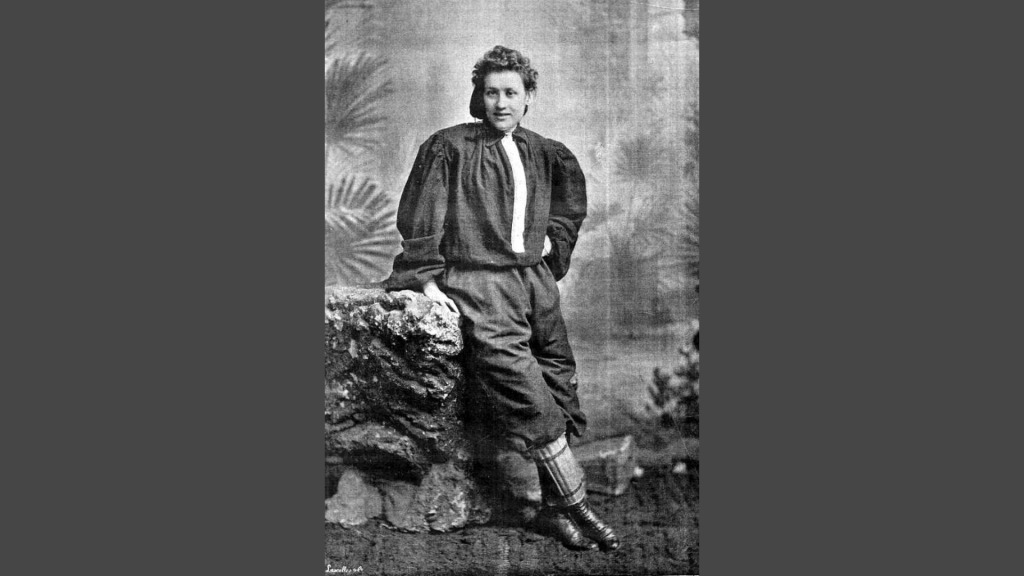
We’re in full-blown World Cup season, and much as I’d love to be Team USA during these (sigh, trying) FIFA times, the truth of the matter is… the U.S. Men’s team is frankly not worth getting my flag out for. Not like the U.S. Women’s team—that is—which has won the Women’s World Cup exactly four times—more than any other in the tournament—and which is home to a number of the best female players in the world.
Unfortunately, the women’s team won’t be playing until the Women’s World Cup happens in Brazil next year—so for another 365 days until then, we have but the stories of yore to get us through. And by that I mean 1895—the year Nettie Honeyball founded the very first professional women’s soccer club in Victorian England.
Now, before we kick off (ahem), first things first: not much is known about Honeyball, and even the question of whether her crazily apt name was a pseudonym remains contested. Most historians believe her real name was Mary Hutson, and she was born in Dublin, Ireland, before moving to London. And while the game of soccer had likely been played by women for centuries before her time—with even Mary Queen of Scots perhaps owning the oldest soccer ball to ever exist—she was the first to establish an actual team.
Honeyball founded the British Ladies Football Club in 1894 and advertised it in newspapers, recruiting about 30 young women from ages 15 to 26 to join. While none of the women had played the game before, they eventually found a groove—and would play in a match organized by Honeyball between North and South Londoners. The game, which occurred in Crouch End, gathered about 10,000 spectators and ended with the North winning 7-1.
According to some accounts, the match was met with jeers from spectating men, who couldn’t stop laughing when they saw women in shorts—and not the steel hooped skirts, ankle-length dresses, and corsets that was custom for the times. (Oh, if they could see us now…) Across news headlines, the game was covered as a “farce” and “joke,” and the women were mocked for how they dressed.
Still, Honeyball asserted that the women were capable of playing—and especially so when they weren’t constrained by their garb. “There is no reason why football should not be played by women, and played well, too, provided they dress rationally and relegate to limbo the straight-jacket attire in which fashion delights to clothe them,” Honeyball wrote to a newspaper.
It was still an uphill battle to get women’s soccer taken seriously, however—and more than 10 years prior, in 1881, a couple of women’s matches were played in Edinburgh and Glasgow—though the latter game was interrupted when hundreds of men (ugh) invaded the pitch, forcing players to flee and escape on busses. Totally unfragile behavior, guys.
After the historic Crouch End game, the team went on tour thanks to its president and bankroller Lady Florence Dixie, a feminist writer from Scotland. The team played at various fields and stadiums, garnering more esteem as they went. Of course, it didn’t take long for some men to ruin it all, and when one of Honeyball’s players organized her own team and tour, they didn’t make it far before a game with a men’s team led to riots and violence. Sigh.
It’s not certain what ever happened to Honeyball, or whether she kept playing soccer until the team’s activities ended in 1896, amid funding struggles. But as far as theories go, I just hope she spent the rest of her days enjoying life in soccer shorts.
 Keep scrolling for more great stories.