

In Defense of Being Level 9570 on Candy Crush
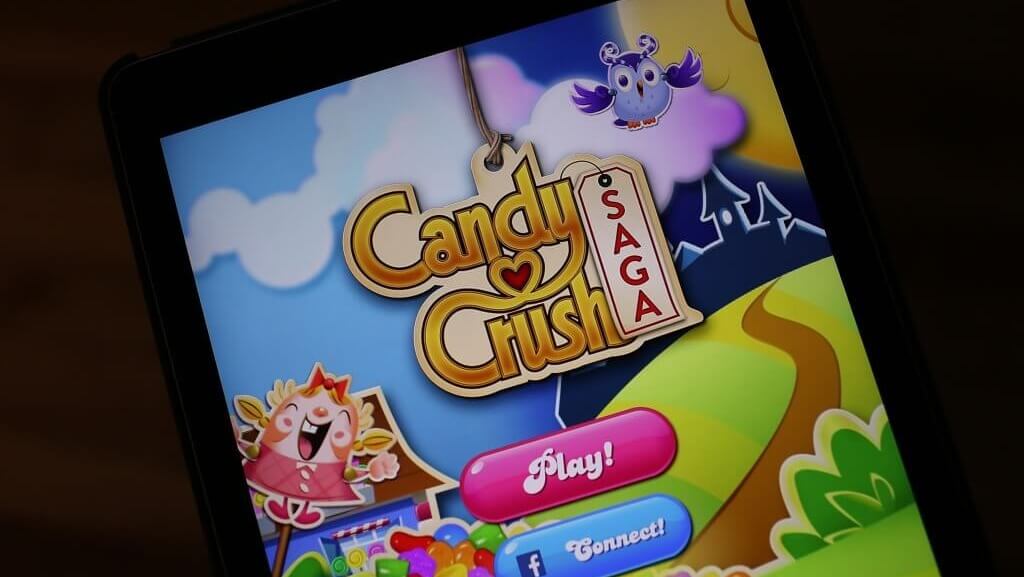
Saturday Night Social: There’s no fix quite like puzzling little pops of candy away.
Photo: Getty Images GamesSaturday Night Social Saturday Night Social
Welcome back to Saturday Night Social.
I can’t recall the very first game of Candy Crush I ever played, but what I do know is that at the time, I had a yellow iPhone 5C, a schoolbus to catch on weekday mornings, and way fewer responsibilities.
9570 levels later, I’m still here and as you can imagine, a lot has changed. :-(. Unfortunately, I had to ditch the iPhone in 2015 after I accidentally dropped an entire mug of hot cocoa all over it at my local library—particularly devastating because I always thought it looked like it was naturally cased in a hard candy shell.
I first discovered I was in an embarrassing percentile of Candy Crush players a few years back, when a friend quirkily chirped, “I play Candy Crush. Like, a lot.” Sensing a challenge, I creatively asked, “Have you gotten to the ‘swedish fish’ levels?” She hadn’t; and was aghast to find I was about 2000 levels ahead.
And yes, I’ve heard it all. “OK, boomer.” “You’re like one of those moms they need to make extra levels for.” “Someone needs to find love.” Funny! But you can’t hurt me. Not like level 7563 did. And honestly, there’s no fix quite like puzzling little pops of candy away.
Now, for those of you who’ve never bit into the candy-apple of Eden, here’s a brief explainer: in each level, players are given a puzzle consisting of rows and columns of different colored candies, and have to “match 3” every time they want to clear the candy. Levels feature their own unique sets of obstacles and rules, and can require anything from clearing 50 blue bon-bons in one level—or clearing the entire board, multiple times. Oh, and there’s a three-star scoring system that you might care about until, say, Level 812—and then you’ll either ragequit… or progress to Level 9570.
As you progress, the puzzles get harder and the obstacles become more varied—and there are “series competitions” to pit you against other players, in which you can win boosters and gold medals to help you through harder games.
Candy Crush was originally released in 2012, and has since become a gaming (ahem) behemoth, generating more profit than Grand Theft Auto and Call of Duty—albeit generating less social clout than either of the two. None of this has been without controversy: King, the maker of the game, has been repeatedly accused of intellectual theft, copying, and rigged gameplay—and, most infamously, for trademarking the word “Candy.” (It attempted to do the same with “Saga,” but was unsuccessful.)
At its peak in 2015, Candy Crush was also one of the most-connected apps to Facebook—which has, unfortunately, developed into some serious data-mining allegations. It also then had about 327 million monthly active users, a number that’s since shrunk to 170 million—of which I am a morsel to the pie.
Throughout the years, there’s been plenty of think-pieces trying to decipher Candy Crush’s enduring popularity, whether it be because it’s been a (mostly) unchanging aesthetic in a highly volatile world; a high-stimulant fix for gratification junkies; or a serotonin fix in a bleak timeline. As for myself? Guilty of all three.
 Keep scrolling for more great stories.