

How a Measles Outbreak Begins, Featuring the State of Colorado
Exposures at two Colorado schools look to be leading into another potentially large-scale measles outbreak.
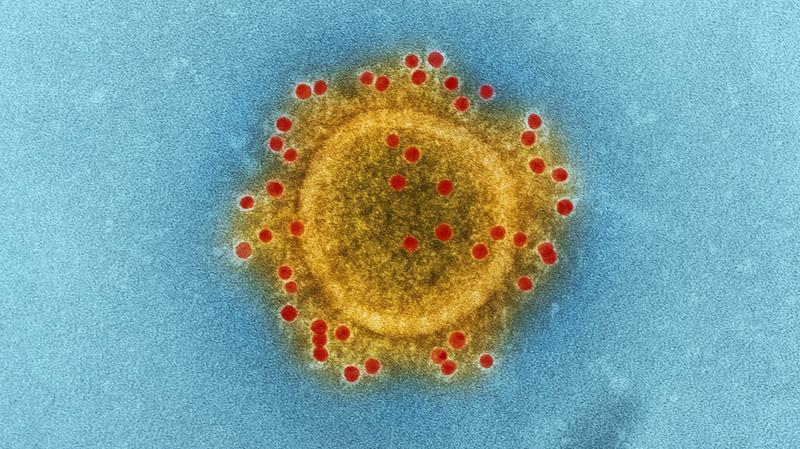
Photo via Unsplash, CDC Splinter measles
When you read the weekly updated CDC statistics on the country’s ongoing measles resurgence, the sheer volume of numbers have a tendency to make one’s eyes glaze over. To date, there have been 1,281 confirmed measles infections in the country in 2026 through the first week of March, a pace that is running well ahead of the 2,283 confirmed measles cases that were recorded in the country last year, a mark that was already the highest in 34 years, unseen since the last major measles wave of the early 1990s. Most of these cases happen via “outbreaks,” which is not just a colloquial term, but an epidemiological one, implying local spread of linked cases in three or more people. Outbreaks are how waves of a highly infectious disease like measles begin, so in order to understand what it’s like when local health officials are trying to fight the spread of such a disease, let’s get in on the ground floor: The brand new measles outbreak that is currently happening in the state of Colorado.
Nearly every state in the U.S. reported at least a handful of measles cases in 2025, and Colorado was no exception, with 35 total cases. This may be linked to the fact that it borders three states that saw some of the highest figures for measles last year, in the form of Arizona, Utah and New Mexico, themselves likely victims of the huge Texas outbreak that kicked off this whole thing and left several children dead. In Texas, by the way, there’s an ongoing outbreak at ICE’s infamous Camp East Montana immigrant detention facility, the same place where a detainee was killed in a case that has been ruled a homicide.
ICE confirms a measles outbreak in the nation's largest detention facility in Texas
— Raider (@iwillnotbesilenced.bsky.social) Mar 4, 2026 at 9:16 PM
In 2026, however, the state of Colorado seemed to have a good hand on measles, with no reported cases in January or February … and then March rolled around. This new outbreak, one of 12 reported by the CDC in 2026 so far, began in a pair of suburban Denver schools and was of unknown origin–the first kid to get sick had not recently traveled out of the state or come into contact with any other known outbreaks of measles, which suggests other unknown infections that have been flying under the radar. Always a good sign. The schools in question are Broomfield High School and Broomfield Heights Middle School.
Those schools have subsequently taken the interesting and probably prudent measure of telling any of their unvaccinated students not to come back to school for at least 21 days, which is roughly the gestational period of the measles virus, part of what makes tracking it difficult. Rather than simply trying to quarantine anyone who has had any form of contact with the students who were infected, the schools are trying to cut off receptive hosts for the virus by ostracizing the students who aren’t vaccinated against measles. Unlike many places in the U.S. these days, the vaccination rates here (likely because this is blue-leaning Denver) are actually pretty good, as roughly 97% of the students at the schools are reportedly vaccinated, above the 95% threshold that is usually cited as being necessary for herd immunity. With a virus as incredibly infectious as measles, however, it has an uncanny ability to find the unvaccinated in order to perpetuate its spread, which is the reasoning for telling those kids to stay at home for three weeks.
“This is not a punitive measure, it is a protective one,” said Hope Shuler, a spokesperson for Colorado Department of Public Health and Environment. “By keeping susceptible individuals away from potential exposure, we stop the virus from finding new hosts and prevent a localized, containable incident from becoming a community-wide crisis.”
It would seem, however, that those measures, though sensible, have not been enough to contain the virus from beginning to spread elsewhere in Colorado, in incidents that are already linked to the initial Broomfield school exposures. According to The Denver Post today, four more individuals have been diagnose with measles cases in the last few days, linked to the Broomfield schools–and at least one of those people may have exposed a wide array of travelers and potential disease carriers at the Denver International Airport, which is the kind of incident that can seed outbreaks in many other locations when an unknowingly infected person who won’t show symptoms for three weeks travels to another city. All four of the new infections were in people who were not fully vaccinated, which is the case for 96% of total measles infections in the U.S. in 2026. That brings Colorado’s total to at least 7, a number that is running ahead of the CDC’s figure, because state agencies report their data first.
A person with a confirmed case of the measles traveled through Denver International Airport and attended a church service in Littleton over the weekend while they were infectious, Colorado public health officials said Tuesday.
— The Denver Post (@denverpost.com) Feb 25, 2026 at 12:08 AM
In these cases, local state health department officials and state-employed epidemiologists and doctors must combine the skills of a detective and a phone banker, in order to catalog all the locations that an infected person may have visited while they were infected, and then inform as many of those individuals as possible, while also publishing announcements in the media that will hopefully be seen by those to whom they apply. This can be seen in the Denver Post piece, which lists locations both large (the international airport) and small (an Arby’s fast food restaurant) as potential places that other exposures may have taken place. It can be so specific as to become rather surreal: A Coldstone Creamery location in the suburb of Westminster, Colorado is listed on Feb. 19 and Feb. 22 for a handful of hours, suggesting that perhaps one of the students worked there? Regardless, if you happen to be a Denver-area resident who was visiting the Westminster location of Coldstone Creamery on Feb. 19 at 8 p.m., well then … you might want to keep an eye out for whether you have measles?
Neighboring Utah, meanwhile, offers an example of what outbreaks can look like as they metastasize and spread out of control. The state has now experience more than 350 measles cases since its first one in June of 2025, and in 2026 they’re in second place overall with 184 cases through the first week of June, behind only the large-scale outbreak in South Carolina. In Utah, the spread has been driven by southwestern counties with low vaccination rates. Amanda Jocelyn, a pediatric nurse who works there in a small town called Hurricane, told reporters this week that she had never treated a measles case in her life until now. She’s subsequently seen more than a dozen.
“Many people think that measles is just a virus that most children recover from if they’re otherwise healthy,” said Jocelyn to the Salt Lake Tribune. “The children I am seeing in the clinic with measles are very, very ill. And in several cases, their parents and their caregivers get ill as well.
State epidemiologist Dr. Leisha Nolen, meanwhile, said she frequently hears the same thing from parents, who wish after the fact that they had vaccinated their children against measles.
“Over and over again, what I heard from these people who had measles, as well as the providers, was that measles is so much worse than what they expected,” Nolen said. “It is not a mild infection, it is not a mild virus, it is severe illness.”
So when a new outbreak mounts, as it is this week in Colorado, the question isn’t whether people will get seriously ill. It’s how far the serious illness will ultimately spread, and who will ultimately pay the price.
 Keep scrolling for more great stories.