

Texas Has a New Required Reading Assignment: The Bible
A sweeping new K-12 reading list has preschoolers reading David and Goliath picture books and high schoolers reading about Adam and Eve.
Photo by Aaron Burden on Unsplash Politics Texas
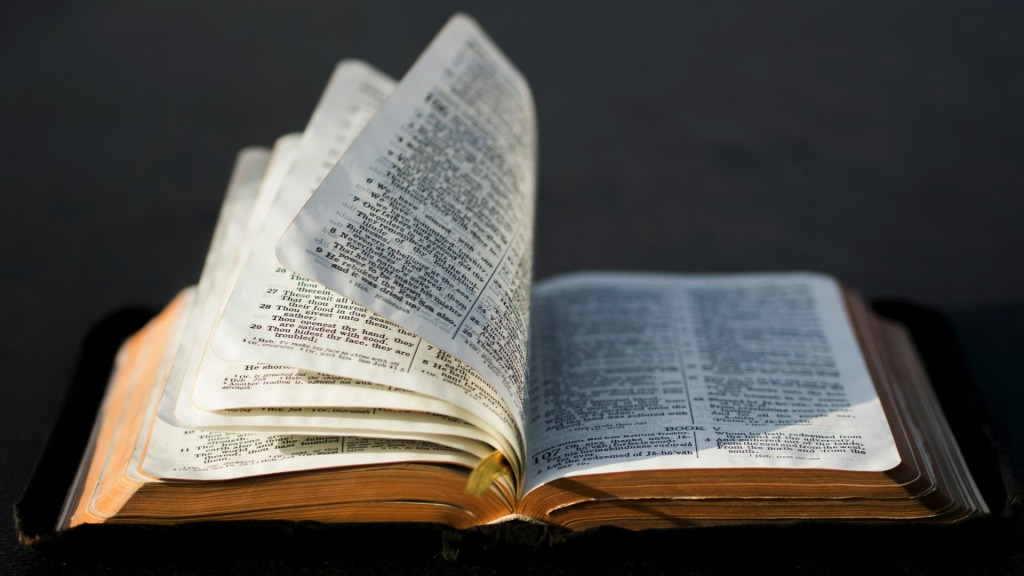
After years of treating school libraries like hazardous waste zones and banning books at a record pace, Texas has finally found a text it deems safe for the youth: the Holy Bible.
On Friday, the Republican-controlled Texas State Board of Education is expected to give final approval to a sweeping new K-12 reading list. If passed, the Lone Star State will become the first in the nation to force every single public school student—more than 5 million children, or roughly 11% of the entire U.S. public school population—to study biblical passages as part of their standard English curriculum. The rollout is slated to hit classrooms by the 2030 school year, giving everyone just enough time to process the sheer audacity of it.
To be clear, the Bible isn’t just making a cameo in these lesson plans. It is thoroughly baked into the curriculum from the playground to prom.
According to the proposal, elementary schoolers will kick things off with picture-book retellings of David and Goliath, as well as Daniel and the Lion’s Den. Middle schoolers will move on to the Sermon on the Mount—specifically dissecting Jesus’ instruction to “seek first the kingdom of God”—paired with a profoundly heavy lesson connecting the Book of Lamentations to the Holocaust.
By high school, teenagers will be unpacking the Bible’s ultimate rom-dram—Adam and Eve—analyzing the parable of the prodigal son, and studying First Corinthians’ famous “definition of love” side-by-side with Jane Austen’s Pride and Prejudice. Because nothing says British Regency romance quite like New Testament theology.
Naturally, Texas education officials are insisting this is just standard literary appreciation.
Supporters are aggressively leaning into the “it’s just history!” defense: “There is a difference between proselytizing and utilizing great pieces of literature,” Mandy Drogin of the conservative Texas Public Policy Foundation assured the board, apparently with a straight face. State officials are echoing the sentiment, claiming that Judeo-Christian traditions are simply too foundational to our history to leave out of English class.
Shockingly, critics are not buying what they’re selling.
Opponents point out that the list doesn’t just casually blur the line between church and state—it completely bulldozes it, favoring Christianity and leaning into a specific, evangelical interpretation of scripture. David Segal, a rabbi with the Baptist Joint Committee for Religious Liberty, warned the board that the curriculum’s heavy reliance on translations like the King James Version risks crossing over into “an unconstitutional endorsement” of religion.
Of course, none of this is happening in a vacuum. Texas has been auditioning to be the ultimate Christian-nationalist testing ground for a while. Just last year, it became the largest state to mandate that the Ten Commandments be plastered on every public school classroom wall. It also aligns perfectly with Donald Trump’s repeated campaign promises to inject right-wing religious expression back into education nationwide.
But what’s perhaps just as notable is what students won’t necessarily be reading.
The roughly 200-text curriculum includes classics like Charlotte’s Web, Night, and Hamlet. But two of the most commonly assigned novels in American high schools—The Great Gatsby and Romeo and Juliet—don’t make the cut. Nor does Harper Lee’s To Kill a Mockingbird—a book that has spent the last few years playing defense against conservative censorship boards.
Whether you see this as literary education or a state-sponsored Sunday School takeover, one thing is clear: Texas has moved from banning books to prescribing them.
 Keep scrolling for more great stories.