

The U.S. Can’t Bomb Away Iran’s Nuclear Risks
Instead, its spiraling war is increasing the threat in Iran, and around the globe.
Photo by Majid Saeedi/Getty Splinter Iran
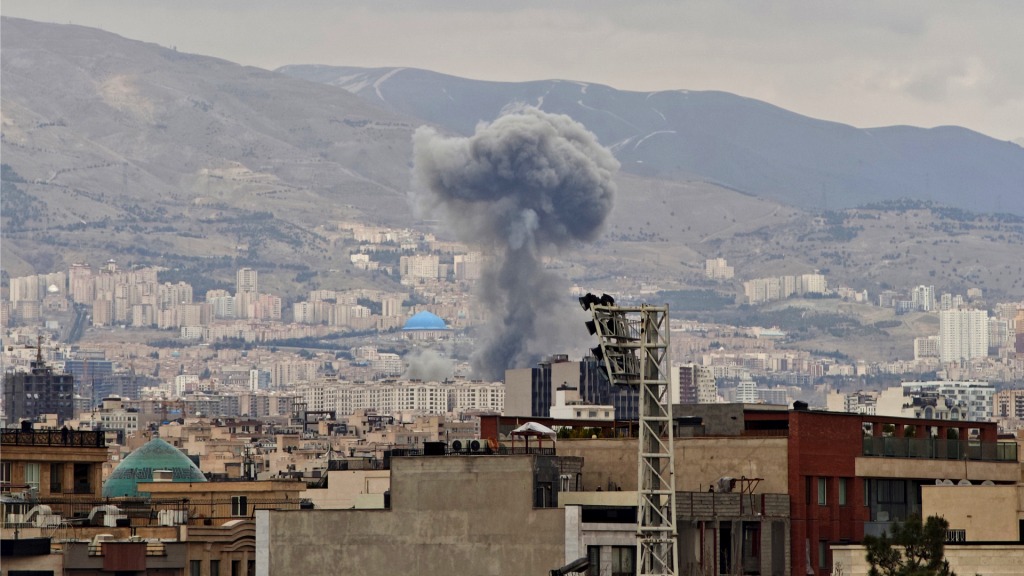
The Trump administration declared in June that the U.S. strikes had “obliterated” Iran’s nuclear facilities.
“The impact of those bombs is buried under a mountain of rubble in Iran; so anyone who says the bombs were not devastating is just trying to undermine the President and the successful mission,” said Secretary of War (“when someone shows you who they are, believe them the first time”) Pete Hegseth.
Yet, less than a year later, the U.S. and Israel are waging war against Iran. At least one of the ever-shifting objectives is to prevent Iran from ever obtaining a nuclear weapon. But whatever the U.S. mission du jour—stopping an Iranian nuke, eliminating Iranian missile capabilities, destroying the Iranian navy, regime change, preempting a retaliation from the war our friends started—none of it is likely to fully mitigate the risks of Iran’s nuclear program, and the conflict could unleash new nuclear risks, depending on how it all unfolds.
Exactly how Iran’s nuclear program went from being “completely and totally obliterated” to being an imminent threat to America has not been fully explained by the Trump administration. Independent experts and the nuclear inspectors say there is no evidence that Iran is within days or weeks of a weapon, even if they still have very real concerns about Iran’s nuclear activities. Earlier this year, U.S., European, and independent monitors said it did not appear as if Iran was rapidly rebuilding its enrichment capacity or making a weapon after the June strikes. Plus, Iran was directly engaged in nuclear talks with the U.S., even as President Donald Trump was amassing his “armada” in the region. Those talks were apparently yielding progress, and ended only when Trump decided to opt for air strikes instead. This is not even the first time Iran got burned negotiating with the U.S. on nuclear issues.
On Monday, after the U.S. launched its attack, the White House released a listicle of “74 Times President Trump Has Made Clear That Iran Cannot Have Nuclear Weapons” which indeed proves that Trump said a thing a lot, but does little to clear up exactly why the U.S. is now engaged in an escalating, costly, and open-ended war of choice with Iran.
“The president has been consistent in saying that Iran should not get a nuclear weapon, but he did not spell out clearly enough for the Iranians to understand what they needed to do to get over the hurdle of proving that point to the United States,” said Rosemary Kelanic, Director of the Middle East program at Defense Priorities.
The U.S. has offered even less of a justification of how military force could this time succeed in eliminating Iran’s nuclear program or ending its possible nuclear-weapons ambitions. Even before Israel’s 12–day war, and the U.S.’s Operation Midnight Hammer in June, many experts warned that attacks against Iran could set back, but likely not fully dismantle, its advanced nuclear program.
“The US and Israel, using conventionally armed munitions, cannot destroy the deeply buried, hardened facilities where Iran is storing some of its key nuclear materials – and that’s not going to change in this round of strikes,” said Kelsey Davenport, director for nonproliferation policy at the Arms Control Association. “Iran’s nuclear program cannot be bombed away. Iran’s nuclear knowledge cannot be bombed away.”
The persistent American and Israeli threat to Iran—and now more explicit threat against the Iranian regime itself—always risked pushing Iran toward finally going for the nuke. U.S. intelligence agencies concluded as much before the June strikes, saying Iran remained undecided about building a nuclear weapon, but would likely pursue one if the U.S. attacked its main enrichment site at Fordow or Israel killed the Iranian Supreme Leader. As of this week, we’re two-for-two. If this current Iranian regime remains largely intact, or if something new but not exactly pliable to the U.S. or Israel replaces it, it may decide that pursuing a nuclear warhead might be the only choice it has for its own survival. After all, North Korean leader Kim Jong Un is probably feeling pretty good about his choices right now.
“A bad lesson that could be learned is that, ‘well, if you have nuclear weapons, you don’t get bombed, but if you don’t [have nuclear weapons], then you get bombed,’” said Tara Drozdenko, director of the Global Security Program at the Union for Concerned Scientists. “It could just be really reinforcing a bad lesson for the international community that if you want to protect yourself, you need to have nuclear weapons, which isn’t where we want the world to go.”
The U.S. and Israel are continuing to attack parts of Iran’s nuclear infrastructure in the opening days of this conflict, including damaging an entrance to the Natanz enrichment plant, as confirmed by the International Atomic Energy Agency (IAEA), the United Nations’ nuclear watchdog. The Israel Defense Forces (IDF) claimed to have successfully struck a covert compound called Minzadehei that the IDF said was a site used by Iranian nuclear scientists “to develop capabilities required for nuclear weapons. The IDF presented a red blob on a map as evidence. (“I have nothing to add beyond this statement,” an IDF spokesperson replied to an email from Splinter asking for more information. The IAEA also did not return a request for comment.)
There are real and serious unknowns about the status of Iran’s current nuclear program because Iran has largely denied the IAEA access to its facilities since the June 2025 war. The IAEA had previously assessed that Iran had a stockpile of about 440 kilograms (972 pounds) of uranium enriched to about 60 percent. That’s not quite weapons-grade, which would be around 90 percent. But the greater the purity, the faster the “breakout time” to have enough fuel for a warhead—although Iran would also need to have or build that, too. In any case, Iran’s levels of uranium enrichment can’t be justified solely for peaceful or civilian purposes.
Operation Midnight Hammer did badly damage Iran’s enrichment facilities, specifically those at Natanz and Fordow. According to satellite imagery, those sites are not operating, and they are not particularly useful if Iran wants to further enrich uranium. But Iran has another nuclear facility at Isfahan, which was hit during the U.S. operation in June, but not with bunker-busting bombs, reportedly because the tunnel complex was too deep for these munitions.
Last week, the IAEA said that Iran was likely storing its enriched uranium in the Isfahan tunnel complex, enough material for nine or 10 bombs. Iran had also said it was setting up a fourth enrichment plant at Isfahan, which the IAEA was supposed to inspect in June, but the visit got kaboshed because Israel launched its war. The IAEA still doesn’t have clarity on this alleged fourth enrichment site, if it exists.
As the New York Times reported Wednesday, Isfahan has so far been spared in the current salvo. The report posited one explanation, which was that bombarding the site might make it difficult to actually account for any nuclear materials.
Which raises the possibility of another troubling scenario, especially if the other maybe, maybe not goal of this operation is regime change—or regime collapse.
“Do you have a plan for addressing nuclear security risks that are going to be amplified by this conflict, particularly if Iran ends up with a new government, if the regime implodes, if there is a failed state? Nuclear security risks are going to be amplified,” said Davenport. “Where is Iran’s stockpile of enriched uranium near weapons grade? Where are Iran’s scientists that have expertise that’s relevant to weaponization?”
As experts said, the best way to do that is to allow trained, IAEA inspectors into Iran to do that accounting, but that requires Iran to grant permissions, and for the U.S. and Israel to stop its bombardment. The other would be for the U.S. or its partners to directly secure nuclear facilities, materials, and weapons technologies. That would likely require boots on the ground, as in Iraq, though, of course, in the end, there were no WMDs to secure.
Kelanic, of Defense Priorities, said the possibility of Iran’s nuclear material going missing or being smuggled are genuine concerns, but not one to be overly worried about right now—though unleashing chaos in Iran does increase those risks. That is not good for the U.S., and definitely not good for the countries in the region, especially one where non-state actors such as Hamas, Hezbollah, and ISIS are still active.
Yet those questions pile onto the harsh reality that accompanies this entire war: air strikes could damage Iran’s nuclear infrastructure and derail its program, but it will not bring about permanent nuclear disarmament. The United States, through multiple administrations, has insisted that Iran cannot obtain a nuke. The 2015 Joint Comprehensive Plan of Action (JCPOA)—better known as the Iran Nuclear Deal—was imperfect, but it had multilateral buy-in from both U.S. and Iranian allies alike. It put real limits on the Iranian regime’s enrichment capabilities and allowed for international monitoring and inspections to help flag if Iran attempted any stockpile diversions or facility modifications that might suggest a weapons program.
Trump, of course, ripped that up in his first term in favor of a maximum sanctions pressure campaign, which did not stop Iran from finally leaving the deal and blowing past its enrichment limits. The Biden administration tried but failed to revive the JCPOA. There were many reasons for this, but the U.S.’s inability to guarantee that another president—or Trump himself—would not tear up a deal again contributed. The June strike did not actually obliterate Iran’s program. This new war is much more expensive, and comes with even more perils, including to civilians, allies in the region, and to the U.S. All those costs, in lives, money, and material, will not ensure the end to Iran’s nuclear program.
This Iran war is also unfolding against a backdrop of intensified global nuclear risks. The international guardrails are not just weakening, but being deliberately destroyed. “The ripple effects of the U.S. decision to strike are going to be felt far beyond Iran,” Davenport said. “These strikes are coming at a time when there is an increasing number of states that are losing confidence in the non-proliferation regime as means of enhancing their national security. They’re losing confidence that the decision not to choose nuclear weapons benefits their security.”
Earlier this month, New START expired. It was the last nuclear control treaty between the U.S. and Russia, which put limits on deployable nukes and had verification mechanisms that ensured both countries adhered to those caps. Trump has talked about restarting nuclear testing. The unreliability of the U.S. has prompted our allies to more seriously consider whether they should rethink their own prohibition on nukes—even Japan. China is rapidly building its nuclear arsenal, and the U.S. has recently accused China of conducting nuclear tests. Kim Jong Un says he’s expanding his nuclear arsenal.
Lost amid the escalating war in the Middle East, French President Emmanuel Macron announced a plan to boost the country’s nuclear arsenal and extend its nuclear deterrence in Europe. It was welcomed as a sign of Europe taking over its own defense, but it was also a response to a more unpredictable U.S. and the more volatile world it is helping to create. “The next 50 years will be an era of nuclear weapons,” Macron said.
If we get that long: On Wednesday, Polymarket had to remove a more than $800,000 bet on when the next nuclear bomb would detonate. It put the odds at 22 percent before 2027.
 Keep scrolling for more great stories.