

The Unholy Union of Big AI and Big Idiot
Trump's latest executive order attempts to strip away the rights of states to regulate AI for themselves, and protect their citizens.
Photo by The White House SplinterTrump Administration AI
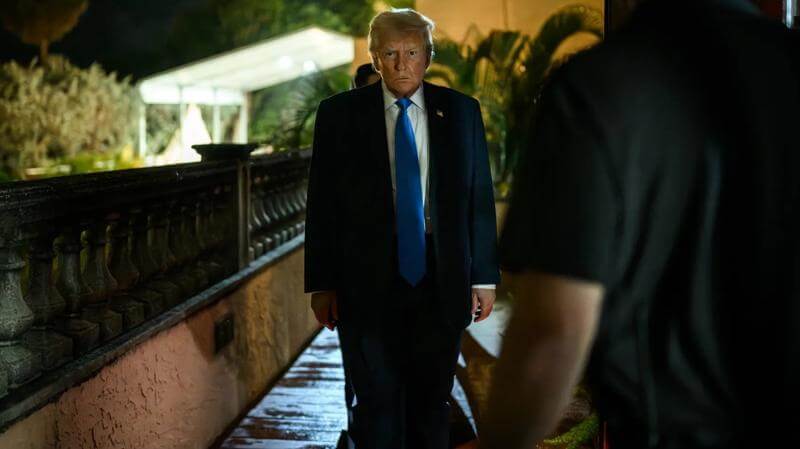
One of the (many, many) downsides of having a President who is very easily swayed by (A) money and (B) rich men willing to say nice things and prostrate themselves before him, is the fact that Donald Trump was always destined to end up in bed with Big Tech leaders in the field of AI, given that it’s the most naturally friendly segment of the tech world for hucksterism (or second, just after crypto). Like a starling being able to locate magnetic north, Trump is inexorably drawn to whatever segment of our billionaire ruling class can best line his pockets, and if it involves weakening the ability of states to protect citizens from abuse by those tech giants, well then so much the better. No doubt he was pleased by the thought of exerting his influence in yet another area the executive branch has no power by the letter of the law, when applying the final signature to yesterday’s executive order that serves to undercut the ability of U.S. states to regulate issues related to AI. It grants the Justice Department broad authority to sue states for any of their laws that don’t support “United States’ global AI dominance,” as the executive branch sees it, despite the fact that any power to overturn these state laws should naturally rest with Congress.
In doing so, Trump is enmeshing us even more deeply in what we’ve already called the country’s great existential crisis of our time, our willingness to regulate AI when the “success” of the technology has become such an integral part of the American economic bottom line that it cannot be allowed to “fail” at this point without dragging us all into chaos and financial ruin. Simply acknowledging that digital ball shackled to the nation’s ankle isn’t enough, however, so the new executive order, “Ensuring a National Policy Framework for Artificial Intelligence” goes out of its way to neuter the rights of states to decide for themselves how to best protect their residents from the myriad perils of unregulated use of AI. You can read the full text of the order here.
Trump: “We also know that a big part our economy — it could be 50%, 60% of our economy going forward for a period of time at least — is AI and AI based.
— Aaron Rupar (@atrupar.com) Dec 11, 2025 at 6:42 PM
Trump’s own team of course regularly makes use of AI in impressively juvenile ways, generating deranged video depictions of the President in various guises of the heroic strongman iconography he fetishizes, an aesthetic perfectly tailored to the experience of the soul-eroding rot on Trump’s Truth Social, a place where every other profile is a bot huckster trying to sell your MAGA uncle fake gold bars or Trump commemorative coins. Who could forget such memorable Trump/AI collaborations as the time they depicted him in a video as a fighter pilot literally dumping feces bombs on protestors during October’s No Kings rallies, which went on to become the nation’s largest political demonstrations in more than half a century? The crudeness of AI video, its total lack of soul, texture and human feeling, is a natural extension of the Trumpian milieu. They were destined to be together.
The embrace by Trump has made the Republican Party de facto embracers of the AI industry, intertwining the GOP with opportunists like Silicon Valley venture capitalist David Sacks, who has fashioned himself into the administration’s leading AI and cryptocurrency advisor, given nearly free rein to craft and spin the White House’s position on these topics as he sees fit. And wouldn’t you know it, Sacks’ views on White House policy, which increasingly amounts to legislation via executive orders in defiance of Congress, have broadly been “whatever is most profitable for tech moguls,” including his own areas of investment. According to a New York Times analysis of Sacks’ financial disclosures, the man has at least 708 tech investments, and nearly 500 of them are in companies connected to artificial intelligence that could “be aided directly or indirectly by his policies.” It’s a good gig, when you get to make the rules for the very industry from which you’re extracting your cash.
To that end, GOP members of Congress who have been … persuaded, shall we say … by AI company lobbyists have been attempting since the start of the year to insert moratoriums on AI legislation into otherwise unrelated bills, knowing that such measures are likely to be widely unpopular as standalone legislation. Congressional Republicans attempted to add a 10-year AI state regulation moratorium to July’s spending bill, but it was withdrawn after heavy criticism. Earlier this month, the same GOP lawmakers tried again, failing to insert language preempting AI regulation into the annual defense bill.
Watchdog Denounces Trump AI Order Seen as Giveaway to Big Tech Billionaire Buddies Like David Sacks
— Common Dreams (@commondreams.org) Dec 8, 2025 at 3:35 PM
Still, not everyone in the GOP world, or even in Trump’s own MAGA sphere, is on board with many aspects of surrendering states rights to actions such as crafting their own legislation to regulate AI or protect their residents from its incursions into daily life. The executive order has been decried by conservative think tanks, nonprofit organizations, Republican state governors, and even the likes of abortion pill obsessive Sen. Josh Hawley (MO), who on Twitter condemned the attempt to insert this language into the defense bill as a “terrible provision.” Adam Billen, the vice president of digital child safety nonprofit Encode, sums up the threat of Trump’s executive order in this quote from NPR: “Even if everything is overturned in the executive order, the chilling effect on states’ willingness to protect their residents is going to be huge because they’re all now going to fear getting attacked directly by the Trump administration. That is the point of all of this – it is to create massive legal uncertainty and gray areas and give the companies the chance to do whatever they want.”
That’s it, at the end of the day: AI companies want to get around being held accountable for the Pandora’s box they’re opening and reopening on a weekly basis–issues so obvious that all 50 U.S. states have already passed legislation of some kind to address them. A state like South Dakota, for instance, passed a law banning the use of deepfakes in political advertisements. California, meanwhile, home to many of the world’s largest AI companies including Google, Nvidia, OpenAI and Anthropic, has passed many separate pieces of AI legislation that Trump’s executive order could seek to undo. They include a ban on AI makers being able to blame the technology for harming people when defending themselves in court, and a prohibition on using algorithms to raise prices, along with a requirement that AI companies create tools for the public to be able to identify AI-generated photos and videos.
These are the kinds of consumer protections that Trump apparently believes the U.S. needs to jettison in order to be “competitive” in AI development with the likes of China. Speaking to reporters from the Oval Office after signing the legislation, Trump practically said he wished he wielded the unilateral power of Xi Jinping, the leader of the Chinese Communist Party: “We have to be unified. China is unified because they have one vote, that’s President Xi. He says do it, and that’s the end of that.” Classic Trump, still jealous that he doesn’t quite have the same unfettered powers as every other global autocratic strongman.
This being a Trump executive order, it naturally empowers tools of the administration to threaten states with punishment in some way as the “AI Litigation Task Force” it creates sues states over their “onerous” regulations. The order directs Commerce Secretary Howard Lutnick to study the feasibility of stripping states that don’t comply of federal rural broadband funding–yet another instance of Trump choosing to specifically target his own voters with negative consequence, in this case because their state attempted to offer them legislative protection against the worst abuses of AI. The executive order also instructs the aforementioned David Sacks to work with Congress to draft national AI legislation–a totally unbiased person to have pushing Congress toward AI bills, I’m sure you will agree.
Like so many other executive orders born from the union between Trump’s ego, financial interests and general disregard for how any of it might affect American citizens, this one will no doubt be challenged in court, likely under the grounds that the executive branch simply isn’t meant to be imbued with this kind of authority to preempt state laws. But with a Supreme Court that is way past pretending it’s anything other than a rubber stamp, and a Congress that regularly applauds Trump hacking away the power of the legislative branch piece by piece, one wonders if there’s anything standing between the average citizens and “whatever David Sacks wants” as the law of the land.
 Keep scrolling for more great stories.