

MAGA’s Precious Beef Supply Is Under Threat from an Unstoppable Parasite We’ve Failed to Contain
Get ready for beef prices to go through the roof, if the New World Screwworm becomes an epidemic in U.S. steer herds.
Photo via Unsplash, Philip Veater Splinter Beef
It’s sort of funny to think how tied at the hip right-wing American culture is, on many fronts, to the humble American cow. Robert F. Kennedy Jr. upended decades of nutritional guidance with an “inverted” food pyramid encouraging higher beef, butter and milk consumption, and MAGA-friendly eateries proclaim their dependence upon beef tallow as a fat of choice, as if it suddenly makes your basket of fries a health food. President Donald Trump signed a much crowed-about executive order to return whole milk as a lunch option in U.S. schools, thanks to MAGA fantasies about the magical health benefits of dairy fat. In the same vein, woo-woo health advocates now laud the consumption of bovine colostrum, the nutrient-packed mega-milk-like-substance typically enjoyed only by baby cows in the first days after their birth. And all of that stuff–not to mention the greater beef supply–could be under immediate threat in the U.S., thanks to the arrival of a devastating parasite we’ve spent decades attempting to keep away from our doorstep, the New World Screwworm. Will MAGA care, when beef prices subsequently explode even more than they’ve already soared?
This week, the U.S. Department of Agriculture confirmed the country’s first case of New World Screwworm in a cow in South Texas, a much-feared result that erases roughly 60 years of the parasite being considered eliminated within U.S. borders. Successful campaigns against the parasite pushed it out of the United States and away from our beef supply in the 1960s, and it has never returned … until now. The admission from the Department of Agriculture comes all of one day after Secretary of Agriculture Brooke L. Rollins swore that the insect had not breached U.S. borders, denying the claims of a Texas state lawmaker who had insisted that the screwworm had come within 1 mile of the U.S.-Mexico border. Rollins was immediately forced to eat her wormy words; a classic bit of Trump 2.0 era instant karma. Now, Texas’ entire $15 billion cattle industry could be at risk from a potential epidemic of infestation that could quickly spiral out of control.
Very bad news. Screwworm appears to have made it to Texas, as was predicted.
These parasites eat the living flesh of cattle, cause horrible pain, and can ultimately kill them.
Yesterday, USDA Chief Brooke Rollins categorically denied that screwworm was close to the border.
— Elizabeth Jacobs, PhD (@elizabethjacobs.bsky.social) 6:23 PM · Jun 3, 2026
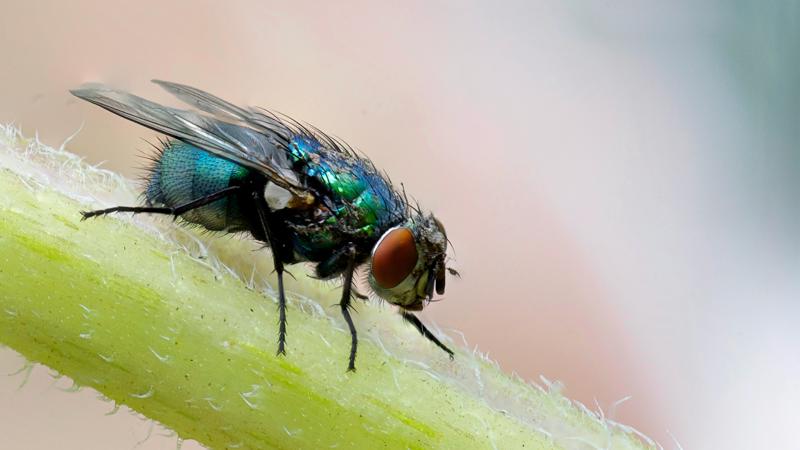
The New World Screwworm is the larvae of a common-looking fly, which insidiously lives exclusively off the living flesh of mammals–said mammals commonly include cattle, pets and even human beings. A screwworm infection happens when the flies land on an open wound on an animal and lay eggs there. The larvae subsequently feed on the flesh, causing severe wounds, infection and potentially death. We are talking about some grisly shit, here. For farmers, it means that any of their cattle that sustains so much as a scratch–from say, rubbing against barbed wire or thorns–is a potential screwworm victim waiting to happen.
“If this case is confirmed I will stand lockstep with every local, state and federal agency to work together and fight this horror,” said Texas state Rep. Don McLaughlin, the man whose report Rollins dismissed. “As we gather more information and work with different agencies we will keep South Texas informed and protected.”
For many years, the U.S. helped to maintain a very effective geographic barrier in Panama, in the famously wild Darién Gap, to keep the New World Screwworm from advancing back into Central America, Mexico and eventually the United States. The chief weapon in this fight is known as the sterile fly method: Governments breed millions of sterilized male flies and release them in the region, where they mate with female flies but produce no offspring, keeping the fly population in check. For decades, U.S. laboratories aided in this effort, but from the 1980s to 2010s, those labs were gradually shut down as the problem seemed to be well in hand. The sole facility continuing sterile fly production was located in Panama itself, and it now seems its efforts were not enough to keep the epidemic of screwworms from escaping containment. In the last few years, the United States has subsequently been rushing to open new sterile fly production facilities located in Mexico and Texas, but this is likely to be too little, too late. The Texas facility in particular isn’t scheduled to open until the fall of 2027, and as this week’s news shows, the threat has already breached our borders.
As for how the Panama barrier broke down in the first place, many possibilities have been suggested, ranging from “trojan horse” cases of animals or people infected as increased illicit traffic moves through the Darién Gap, to pandemic-era disruptions in the sterile fly breeding and release program that could have allowed small populations of flies to slip through. The Trump administration is likely complicit to at least some degree, especially in the form of March 2025 funding cuts to the USDA and its Animal and Plant Health Inspection Service, which have reduced the agency’s agility and capacity for responding to such scenarios. It’s certainly a bad look to cut funds being used for animal disease control and prevention, even as you’re watching the slow advancement of the New World Screwworm across Central America and Mexico. It has also been suggested that the administration’s outright disdain for climate science has contributed to the spread, and that the failure to integrate long-term climate modeling into pest-control strategies causes scientists to ignore the new realities of how far these parasites could penetrate into the United States as they spread northward.
started / going
— MeidasTouch (@meidastouch.com) 8:07 PM · Jun 3, 2026
The Agriculture Secretary, meanwhile, has a different target for blame in mind: The Biden administration (surprise!). Rollins has stated that the parasite has spread toward the U.S.-Mexico border thanks to “the open-border policies of the last administration and the resulting illicit cattle movement,” coming to this conclusion immediately before the presence of the screwworm was confirmed within U.S. borders. What else could you possibly expect a Trump appointee to say, really? Of note: It’s not just Texas that is potentially at risk, either, given that Florida detected screwworm larvae during inspection of a horse being imported from Argentina in February.
Anyone who does the least bit of grocery shopping, and consumes meat, will no doubt be intimately familiar with the fact that beef prices soared astronomically in 2025 even compared with other kinds of meat, and that there has been little if any relief this year. Nor is any seemingly coming: The U.S. cattle supply/herd size is at a 75-year low, the same size as it was in 1951 despite the fact that we have about 200 million more people in the country now than we did then. Rising costs, including Trump admin tariffs, have squeezed out ranchers in the sector, and climate change-induced drought and big business consolidation and profit-wringing has made turning a profit in beef for the people actually raising the cattle more difficult than ever, while the biggest companies in the industry are accused of engaging in rampant price-fixing.
Add a potentially crippling, uncontrolled epidemic of parasitic infestation on top of that, and you have the conditions for beef prices to approach levels we’ve never seen before. Perhaps when they can’t afford one of the key ingredients in Hamburger Helper, right-wing America will finally take a bit of notice of what is happening.
 Keep scrolling for more great stories.