

All It Takes Is a Broken Car Air Conditioner for Climate Change to Kill You
Modern luxuries blind us to a world inhospitable to life outside our door. The AC turns off, and climate change will kill you.
Photo via Unsplash, José Ignacio Pompé Splinter climate change
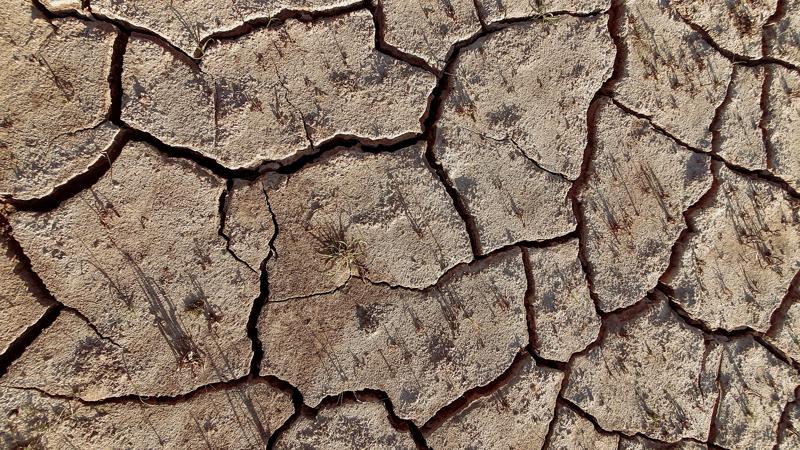
Our human ability to engineer our immediate indoor surroundings for comfort might ultimately be the thing that makes it most difficult to get people to take action on an issue such as the health risk posed by climate change. Put simply: In a world of air conditioning, few Americans who are even modestly well-off are ever forced to consider how they would endure the heat of a summer without it. They don’t have to think about what prolonged exposure to temperatures of 100 and above do the human body, or what is being experienced by those cut off from modern convenience because of poverty, isolation or the breakdown of an overtaxed grid. We don’t tend to think of our AC as a literally lifesaving tool, but in so many locales where humans live–like almost the entire American Southwest, for one–it has become something that is dangerous to be without for any amount of time. The line between life and death is incredibly fragile, particularly for the most vulnerable among us. Perhaps one day your car AC just happens to break down during a road trip … and before you know it, you’re in a deadly scenario.
That appears to be exactly what happened to a pair of married San Francisco senior citizens, who tragically were found dead in their still-running car on the side of the highway in Northern California this week, having driven into an area under extreme heat warnings where the temperature had risen to 109 degrees in the middle of the afternoon. Judith and Wylie Sheldon, both in their mid-80s, had set out from their home in the Bay Area on a road trip up to Ashland, Oregon, for that town’s well-known Shakespeare festival, planning to meet two other couples for dinner that evening. They never showed up, and were ultimately found deceased on the side of the highway, somewhere north of the town of Redding, California.
It’s worth noting that this is Northern California, at a latitude north of Denver, and practically equal to Chicago–they weren’t driving, in other words, through Death Valley or the Mohave Desert. But they still encountered stifling 109 degree heat anyway, and when their car air conditioning stopped working, that’s seemingly all it took for the pair to quickly be overwhelmed by the extreme heat. No specific cause of death has yet been released, but police noted that when the couple was found at 5:46 p.m. on Monday, they were inside their still-running and gassed up Jeep Compass, with the windows rolled down and the fan turned to high, and no sign of mechanical failure or foul play. Unfortunately, the air conditioning had stopped functioning, meaning the Sheldons had no reprieve from the intensely hot air. There was no water or any other liquids found in the car, another factor that could have quickly exacerbated the couple’s condition.
Judith and Wylie Sheldon, patrons of San Francisco’s arts world, were found in their car near a highway, the police said. nyti.ms/4fVdQl1
— The New York Times (@nytimes.com) 9:39 AM · Jun 19, 2026
As a friend of the couple, David Smith, who was waiting for them to arrive in Oregon put it to The New York Times: “They didn’t crash. They stopped. They both just died there. The entire thing is so bizarre. We’re still in a state of shock.”
There are obvious questions one might ask in this scenario, like why the couple would pull over in that location amidst the overwhelming heat, or why they wouldn’t have stopped in a town like Redding to either seek air conditioning repairs or shelter from the elements. But a condition like heat stroke, it should be noted, can come on after only minutes of intense heat exposure. The couple, who had likely made this drive before, may have thought they could simply endure the heat without knowing how bad it would get. They may have become confused, disoriented or dizzy. It’s tragic, but not difficult to imagine how this scenario could rapidly devolve. Climate change has contributed to making these types of headlines all too familiar in the United States, even amid the first-world comforts we take for granted.
As recently as the mid-2000s, such headlines were a whole lot less common here. In 2004, in fact, the CDC noted 297 Americans who had died from excessive heat, in their data set compiled on the subject. That figure has skyrocketed in the next two decades: Between 2023 and 2025, the average American deaths per year from extreme heat has been 2,215. That’s a mere 645% increase in how many people are being killed by annual heat waves in the country on average, vs. what was considered normal in the mid-2000s. And it should be noted that this is almost certainly a grave undercount of the actual number of deaths tangentially caused by extreme heat, relying primarily on death certificates that specifically list hyperthermia as a cause or contributing factor–many others are indisputably dying as well from heat exacerbating underlying respiratory or cardiac conditions.
Like so many health outcomes, this is the sort of thing that affluence can shield a person from, at least to some extent. But what happens when the comforts we take for granted fail, either because our utility grid is so overtaxed it can no longer keep up, or we simply experience a moment of rotten luck? Judith and Wylie Sheldon appear to have been prosperous Bay Area residents–in fact, Judith Sheldon was a well-known film industry patron and festival organizer, and the daughter of three-time Academy Award-winning film director William Wyler, the director of classics like Ben Hur. Wylie Sheldon was a prominent attorney. They belonged to a social caste that could, in almost all scenarios, avoid having to contend with something like extreme heat. But climate change does not care about what’s in your checking account. One breakdown in the system, and suddenly these two senior citizens became extremely and tragically vulnerable to the conditions that half of America still refuses to accept as extreme, or dangerous, or derived in part from our own influence upon the Earth. Climate change is killing Americans in a bevy of ways both obvious and obscure–like making you more likely to die from eating poisonous mushrooms, for instance.
That’s the scary thing: This kind of death could happen to absolutely any of us, and the opportunity for it to happen grows each and every year. When climate change makes more and more of the country into territory that is hazardous to traverse, these headlines are the result. You’d better just hope the AC is still running.
 Keep scrolling for more great stories.