

Cross Ballerina Farm with ‘Rosemary’s Baby’ and You Get the New Novel ‘Trad Wife’
The protagonist of Saratoga Schaefer’s novel actually wants to give birth to literal demon spawn.
Photo: iStockphoto BooksEntertainment
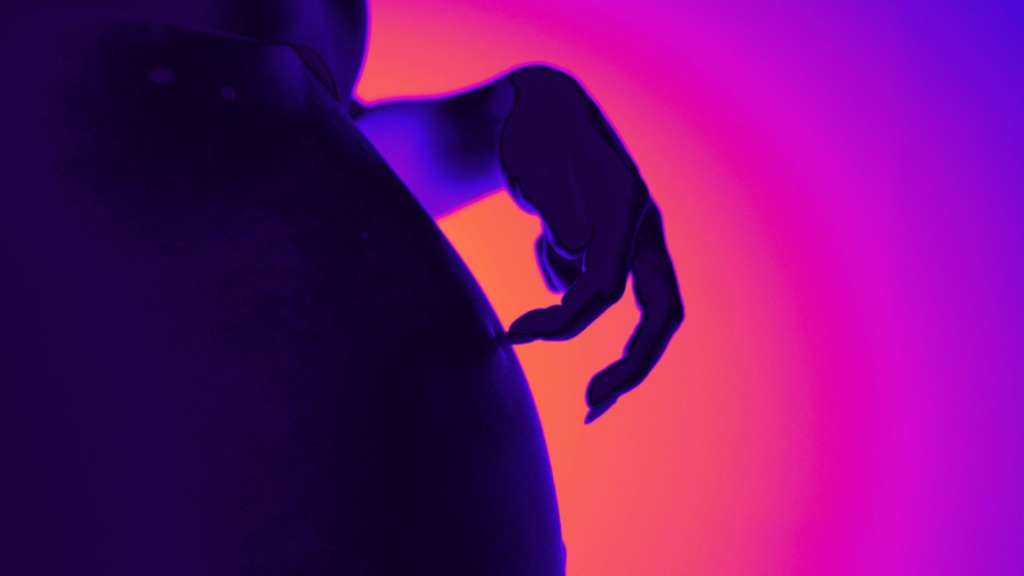
Pitched as Rosemary’s Baby but make it influencer, Saratoga Schaefer’s novel Trad Wife differs from other forced pregnancy horrors because, in this twisted novel, the protagonist actually wants to give birth to and parent demon spawn.
“It’s been done before,” Schaefer told Jezebel in a recent conversation. And true, the cultural phenomenon of the trad wife has certainly captured our collective cultural imagination and that of the book world—with no fewer than four other novels about the lifestyle coming out this year. But Schaefer actually meant the whole impregnation by a supernatural entity thing—in this case, the spooky yet alluring fallen angel who lives in a well on the titular trad wife Camille Deming’s rural property. She spends her days thinking up spon-con, cultivating the chasm between her and her husband Graham once she realizes this life may not be the one she wants, and lovingly tending to her demonic spawn.
Schaefer’s first novel came out last year, but they are embarking on a prolific publishing spree: another thriller about social media, The Last Time We Drowned, about a Bookstagrammer on a hypehouse-style boat, comes out in June, and a Sapphic riff on the Bluebeard tale, A Thousand Monstrous Forms, comes out in September.
Here, Schaefer tells Jezebel about the inspiration for Trad Wife, writing a book about reproductive rights in the current political climate, and how doing so helped Schaefer heal from their own trauma.
This interview has been edited and condensed for length and clarity.
How’d you land on this premise?
I was chatting with my sister via text and brought up trad wives—and she was like, “What’s a trad wife?”
I was like, “Have you been living under a rock? How do you not know what trad wives are??” So I gave her the rundown and as I was telling her, this idea popped into my head, and then it became me pitching this horror novel to my sister. A week after that conversation I started writing it, really intensely, all at once. It was the most fun I’ve had writing anything—which hopefully comes across in the writing. I had been thinking about that cultural phenomenon for a while and I guess it was just percolating under the surface.
So this book is pitched as a kind of Rosemary’s Baby for the digital age, but what I found really intriguing about that juxtaposition is that in Rosemary’s Baby, Rosemary is impregnated with demon spawn against her will, whereas in Trad Wife, Camille actually chooses to be impregnated with demon spawn. Why did you choose to flip it so that Camille has the agency here?
Having a demon baby is not a new idea. It’s been done before and when it has, in Rosemary’s Baby and even American Horror Story, it’s been done in a way in which the female character has a lack of agency. There’s not always consent happening there. I thought it would be more original and really interesting to see what that would look like if the female party was really into it.
Camille is doing quite a bit of lying to herself, especially in the first half of the book where there’s a willing ignorance happening regarding how she lives her life. That was her way of validating her choice in engaging the “services” of this demonic being who came out of a well in her yard.
I wanted her to have that moment of, “yeah, I’m doing this for my marriage and my family and social media.” And then on a deeper level, maybe one that Camille’s not aware of yet, she’s doing it for herself, because she’s got all these issues going on with her husband, Graham, and she doesn’t want to look those in the eye yet. On paper, Camille is a character who doesn’t have a lot of control, so getting pregnant by a demon is her way of gaining a bit of control back.
And we also have Camille’s choice being at odds with the submissive image of the trad wife—which of course is an illusion, because these women are engaging in work and oftentimes are the breadwinners for their families.
I was really fascinated by the trad wife aspect in regards to how they show up on social media. Personally, I theorize that there are two camps of trad wives: those massive accounts with millions of followers and all these brand partnerships and lots of “link in bio.” They’re making a lot of money. They’re, as you said, the breadwinners. They’re selling a lifestyle whether or not they are personally bought into the lifestyle or whether it’s a very conscious marketing move.
And then you have the smaller accounts which are in the position that they want to be like the bigger accounts and there’s maybe a little bit of brainwashing going on. Because there’s not transparency online, they’re not quite sure what they’re getting into. So I wanted to explore what it’s like being one of the smaller accounts that’s desperate to grow into a bigger account that might be selling you a crock of shit.
I thought it was interesting that you gave Camille a science background, since it’s at odds with the anti-science beliefs of trad-wifery. She also doesn’t get prenatal care or vaccinate her baby but not because she doesn’t believe in it, but because of her baby’s demonic heritage.
Camille’s background in science was a lot of fun to play with; I wanted her to be a character with a very strong arc. I also wanted to explore what would make somebody be drawn to the trad wife lifestyle and what about their past and background would affect it or have some kind of negative connotation for it.
Camille’s background in science was really important because I wanted to show that she’s lying to herself and there’s quite a bit of delusion happening. It’s another way to show her agency. She can be seen as a character who’s ceded a lot of control—but she did that on purpose. She intentionally chose to forgo this scientific background and all the stuff that she knows to be true in order to fit in with a certain online aesthetic and a certain social media persona.
That thread is carried through the book: her relationship with science has an ebb and flow because she can’t quite forget all the things that she learned and loved before she decided to do the trad wife thing.
I can’t help but see the parallels between Camille having the agency to get pregnant by a demon and carry that pregnancy to term and the movement behind the trad wife trend wanting to take away women’s rights. How did the political environment while you were writing this play a part?
Usually books are a longer process but I wrote this pretty quickly last year. I live in the United States, which is a hellhole, and there are a lot of issues happening with reproductive rights. That was definitely present when I was writing this. I wanted it to be an exploration of this twisted version of femininity; this reductive way of looking at gender roles.
As someone who is non-binary and who grew up being socialized as female, it was sort of my way of understanding where those pressures in society come from and how harmful they can be—especially with the rise of things like the trad wife, and the focus on traditional ways of being in a relationship. I personally don’t quite understand the draw of being in a relationship like that. This was my way of trying to understand it. I knew that I wanted Camille to be in a traditional relationship but I also knew that I wanted her to be a nuanced character. There’s so many different layers to the trad wife and you could write 15 books about that. I wish I could have gotten into all of that, but this book in particular focuses a lot on agency, gender roles, female rage, what happens when you realize you’ve been put in a box (even one of your own making) that you don’t fit in any longer, what happens when you break out of that and the men around you don’t like that.
In the acknowledgements, you state that writing this book helped you overcome your own trauma. If you’re comfortable, could you talk a bit more about that?
I was in a series of abusive relationships. The most recent one was the most intense. A common theme in my work is abuse and how that’s explored in different ways—it’s not always a romantic relationship, sometimes it’s family or toxic friendships. Exploring the trauma of being in a toxic situation in fiction is my own catharsis but it’s also really interesting story-wise: How did this happen? How are we dealing with it while it’s happening? How are we dealing with it after it’s happened? With Trad Wife, particularly, there’s a lot of anger and rage and that was the more personal side for me. It was me taking back some of my power after being in a relationship where I was misgendered and treated poorly. The mistreatment and anger in this book is very raw and my own little unhinged revenge party, which I’m excited for personally!
Like what you just read? You’ve got great taste. Subscribe to Jezebel, and for $5 a month or $50 a year, you’ll get access to a bunch of subscriber benefits, including getting to read the next article (and all the ones after that) ad-free. Plus, you’ll be supporting independent journalism—which, can you even imagine not supporting independent journalism in times like these? Yikes.
 Keep scrolling for more great stories.