

A Pint of Guinness Has Never Been More Expensive than It Is Now
The cost of a pint of Guinness crossed a symbolic threshold in Ireland and the U.S. recently as inflation creeps forward.
Photo via Unsplash, Christopher Zapf Splinter craft beer
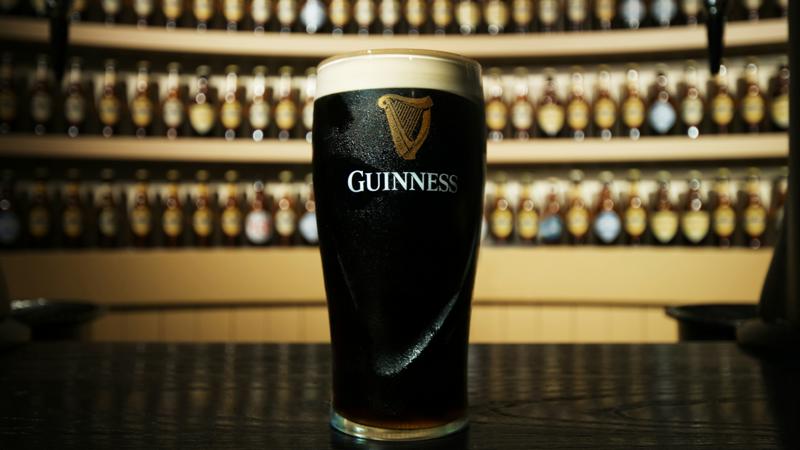
Overall inflation may be relatively tame at the moment, with the U.S. rate falling to 2.4% in January, the lowest since the previous April, but that doesn’t mean its cumulative effects haven’t added up over the last few years to register even higher consumer prices than the sticker shock of the pandemic era. Those steadily creeping increases tend to register in the collective public psyche most strongly when they push the average price of a staple good to a new, symbolic level … and so it is with a pint of Guinness stout. For the first time ever, the Irish press reports that the average price of a pint of Guinness has exceeded €6 in the beer’s home nation, which is more than $7 in U.S. currency. That said, the actual average price in the United States according to the same data is $7.49. Those levels are up 28 Eurocents since last year in Europe, and 36 cents in America, illustrating the inexorable climb in the price of a pint of the Black Stuff.
The prices, naturally, are contingent on location. In more expensive states and especially in large, metropolitan cities, consumers would likely count themselves lucky to find a $7.50 pint of Guinness, or would do so only at a generous happy hour. The cost of pints can easily exceed $10 in major American markets, or €9-10 in the most tourist-drenched parts of cities like Dublin, where the brand’s home brewery at St. James Gate is Ireland’s single most visited tourist destination. These price increases do threaten, on some level, to challenge the long-held perception of Guinness as the ultimate working-man’s, blue-collar beer … not that the increases have actually hurt the stout’s sales.
No, in fact, Guinness remains in the midst of a remarkable boom period that has been going on for a few years at this point, driven at least partially by adoption of the stout–once portrayed as a relic of a bygone era–by a younger generation of drinkers. Even its non-alcoholic Guinness 0.0 has been warmly embraced. It’s been a saving grace for megacorporate owner Diageo, which has been hurting with declining sales on its global portfolio of beer and spirits as world drinking rates have either leveled off or declined. Guinness is a major bright spot in all that.
Split the g?
The phenomenon of its recent surge has often been associated with organically driven social media clout among younger drinkers, which began with the viral challenge of attempting to “Split the G” by drinking a pint of Guinness down, on the first quaff, to the level precisely in the middle of the “G” in the branded pint glassware. But even beyond that kind of kitschy appeal, the surge of Guinness feels indicative of consumers seeking comfort and tradition in a world where the craft beer industry increasingly found itself mired in creative stagnation, and the relative value of a term like “craft” became watered down to the point where meaning disappeared. Perhaps that’s just the sort of landscape for an old warhorse like Guinness to thrive in, but the thought of the brand surging now would have been unthinkable to craft beer geeks like myself during that segment’s boom days in the mid-2010s.
The question is, of course, whether the rising price of a pint of Guinness eventually works to counteract the surge; if passing a symbolic level like an average of €6 in Ireland rubs enough people the wrong way that they can no longer justify heading down to the pub–or the American equivalent–for the next round. At a time when economic sentiment is firmly in the toilet, and some metrics suggest up to 42% of American households qualify as experiencing financial hardship, even a humble “pint of plain” could eventually seem like too rich a luxury to entertain.
 Keep scrolling for more great stories.