

More and More Americans Can’t Afford to Heat Their Homes in a Brutal Winter
The number of utility shut-offs this year is projected to increase by 33% from two years ago.
Photo via Unsplash, Dan LeFebvre Splinter affordability
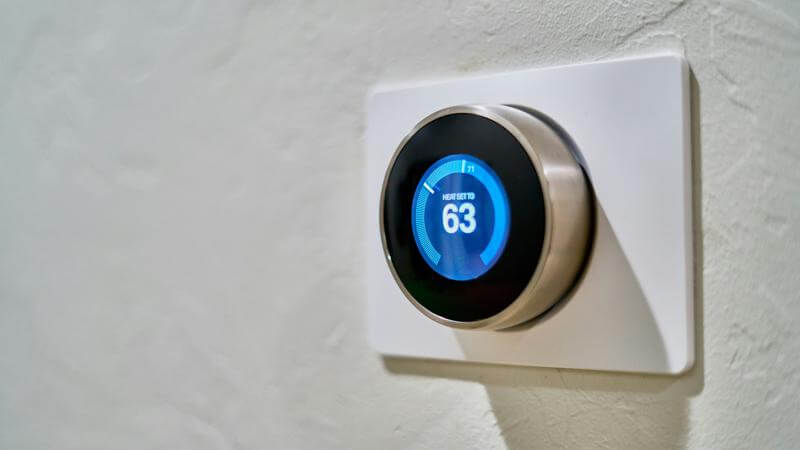
Much ink has been spilled since the beginning of the second Donald Trump administration on the sharply rising costs of electricity and utilities, a visible element of a swelling affordability crisis that Trump recently attempted to head off by claiming that the very word “affordability” was some kind of anti-American hoax. The basic cost of living looks like it will no doubt form the crux of many prominent narratives around the 2026 midterm elections in particular, but even when weighed against inflationary pressures, the rising cost of electricity has stood out as a particular hot-button issue. And not to be forgotten as a corollary of rising electrical costs is the fact that for millions of Americans, this could mean the difference between being able to pay the heating bill this winter, or being left in the cold. According to data collected by the National Energy Assistance Directors Association, which represents state governments in securing federal funds for low-income residents to pay for heat, the evidence of Americans not being able to afford their heating bill is already there: The NEADA calculates that around 4 million utility accounts in the U.S. will be shut off in 2025, which is up from 3.5 million in 2024 and 3 million in 2023. That’s a 33% increase in Americans having their heat or power shut off by utility companies within the last two years, a glaring sign of economic precariousness.
All in all, NEADA projects that the average U.S. household will spend nearly $1,000 to heat its home this winter, which represents a 9.2% average increase from 2024. That average brings together various different types of heating cost, which are not all equal: Homes using natural gas heat, for instance, are projected to experience a slightly smaller 8.4% increase in costs. Homes receiving heat from electric heaters/heat pumps, on the other hand, will suffer even more, experiencing a 12.2% average increase according to NEADA’s projections. The number of homes powered by electric heat continues to rise–at 42% in 2024, the figure is poised to surpass natural gas (47%) within the near future.
At the same time, even as the cost of power continues to rise due to increased demand from factors such as A.I. data centers, electric vehicle adoption and increased summer cooling demand, the U.S. federal government is cutting back at the same time on assistance it offers to low-income households to be able to afford to heat their homes in the bitter cold of winter. Two years ago, $6.1 billion was allocated by Congress to the Low-Income Home Energy Assistance Program in the United States. This year, that has been slashed down to $4 billion, which means less assistance available to fewer people, tracking alongside the surge in service shut-offs. This, in a country where a 2023 survey by NEADA found that almost a quarter of Americans were already unable to pay their full energy bill for at least one month of the year, and a quarter likewise reported that they were forced to keep their home at unsafe temperatures to save money. Imagine being a member of Congress, gaily cutting that assistance and doing your best not to think about senior citizens freezing to death in their homes.
“These increases may not sound dramatic to higher-income households, but for families already struggling, they are devastating,” said NEADA director Mark Wolfe, in a statement to The New York Times. “Millions of households are being pushed deeper into utility debt and closer to shut-offs simply because they cannot afford to keep their homes warm.”
This issue has become a particularly thorny one at the moment thanks to the American and global existential crisis of AI, the corner of the tech world that is propping up the entire country’s economy, to the point that it can’t be allowed to fail without dragging the whole world down with it into economic ruin or at least stagnation. The advent and mass adoption of AI programs and large language models has led to a surge of projected energy demands in a world where energy demand had more or less evened out since the turn of the millennium. Said consumption and demand are now projected to continue climbing rapidly, with the National Electrical Manufacturers Association conservatively projecting that overall U.S. demand will increase by 50% by 2025.
That is a whole lot of new power that is needed to be added to an aging grid. Meanwhile, the Trump administration is slashing funding for the ever-improving efficiency of renewable power sources and instead propping up the fossil fuel industry, mandating that costly and inefficient coal power plants about to be retired must instead remain open, where they’ll only continue to contribute to climate change-causing greenhouse gas emissions … which likewise serve to make electricity more expensive. It’s a vicious cycle, in other words, although the U.S. is by no means alone in facing this particular suite of challenges. In another country such as Ireland that is also building scads of new AI data centers, additional future power demands were roughly calculated to perhaps be as large as the entire nation’s current winter peak power demand. All over the world, we suddenly need more power, and we need it soon.
I had to re-read this a few times because it is hard to believe.
Demand from proposed new data centres might be as high as 5.8GW, equivalent to *peak electricity demand for the entire country*.
www.irishtimes.com/politics/202…
— Patrick Bresnihan (@pbresnihan.bsky.social) Dec 15, 2025 at 10:36 AM
In the United States, meanwhile, it’s the average American, or lower-income families, that will immediately bear the brunt of these economic factors and decisions of Congress and the Trump administration, whether that’s because their power bill is going through the roof, or because assistance previously offered to them is now being stripped away. In a winter that the National Weather Service projects will likely be colder than usual for those already in the coldest northern regions, it could mean the difference between comfort and suffering, or the difference between life and death.
 Keep scrolling for more great stories.