

Indigenous People Are Once Again Collateral in Trump’s Anti-DEI Crusade
A new report found that—because of funding cuts—at least 1,000 requests made by indigenous victims of violence were ignored last year.
Photo: Getty Images Trump Administration DEI
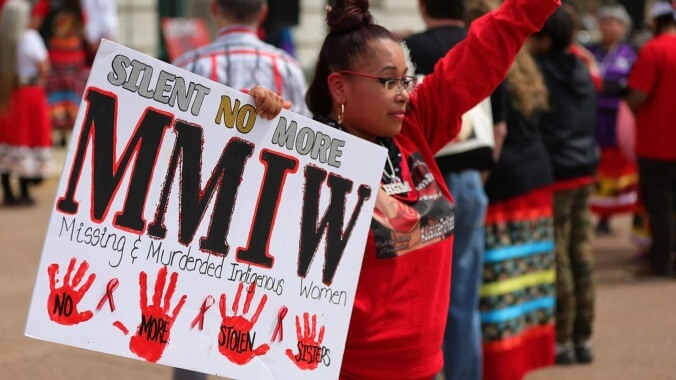
The Trump administration’s efforts to get rid of any and every kind of DEI across the country have been cruel, bizarre, and wide-sweeping—but few groups have been hit as hard as indigenous people.
Driving this point home is a recently released report by the Urban Indian Health Institute, which found that—according to 201 tribes, tribal organizations, and similar coalitions—at least 1,000 requests made by victims of violence were ignored last year because of funding cuts made by the administration. An administration that also, BTW, repeatedly and erroneously tried to deport indigenous people; stopped conducting reports on indigenous deaths in February 2025; and gutted protections for several sacred landscapes.
“This was already prepaid by the blood of our ancestors, and through the strength of their negotiation for treaties,” Rose Lashawaat Quilt, the Southwest Indigenous Women’s Coalition policy director, told Stateline of the diminished funding. “Programs today are stretching everything,” she explained, “they are delaying hiring, cutting travel, reducing their hours, and trying to prioritize emergency needs in order to fill these gaps.”
Indigenous people in the U.S. experience violent crime at more than twice the national average, and a congressional report published in 2023 found that more than 84% of American Indian and Alaska Native women—and 82% of men—have experienced violence in their lifetimes. The CDC in 2023 also found that more than 50% of indigenous people experience violence from intimate partners; that intimate partner violence is a factor for at least 38% of homicides among Native women, and that at least 44% of Native women report having been raped. According to FBI stats between 2021 and 2023, sexual assault victims are most often girls aged 12 to 17.
To obtain the data for its report, the UIHI asked several programs and organizations about their funding sources—as well as services they were able to provide last year—and the budgets they were able to cover with what paltry sums they were given. 64% of respondents said their organizations were significantly impacted by federal funding cuts since Trump re-entered office, at least 44% reported their services to help victims of violence were reduced or are expected to be shuttered, and 84% said federal funding accounts for more than half of their operating budgets.
“Tribal leaders and advocates spent decades building support, raising awareness, and passing legislation to protect our people—all it took was the snap of a finger for the money to disappear,” UIHI Director Abigail Echo-Hawk, who co-wrote the report, told Native News Online. “The United States has a legal responsibility to fund health programs that serve American Indians and Alaska Natives. They are failing to do that, which means we will see a rise in violence against Native peoples.”
 Keep scrolling for more great stories.