

The Cost of a Few Weeks of the Iran War Would Have Saved a Million Lives Via USAID
Why pay to help the starving or the sick, when you can instead fire million dollar missiles at civilians?
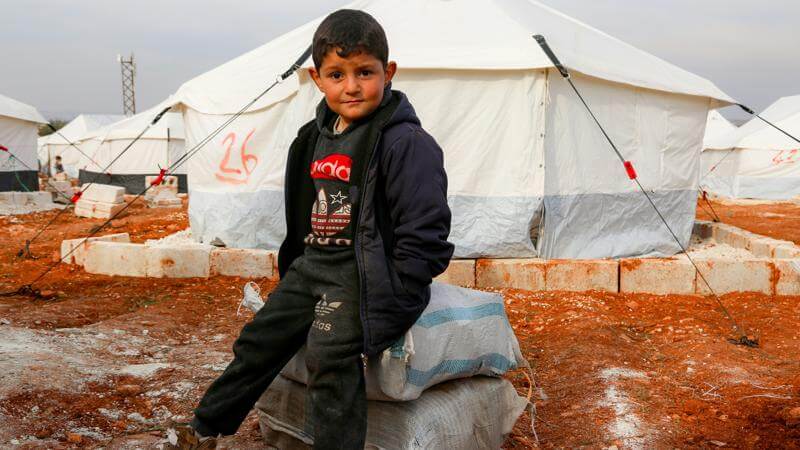
Photo via Unsplash, Salah Darwish Splinter Iran War
There’s only so much money to go around, and hard decisions about fiscal prudence must always be made by the U.S. government … until there’s an opportunity to blow billions of dollars on spending related to the military, that is. As we all know as Americans, any talk of what costs the nation can and cannot “afford” is instantly silenced as soon as the opportunity for a quagmire in the Middle East presents itself. Still, it bears highlighting just how much money the Pentagon has managed to burn in the opening days of the Iran War, and the nearly incalculable number of lives that money could have—would have—saved if applied elsewhere, in programs that the government didn’t think were worthwhile, such as the now-shuttered USAID. The calculus of the Trump administration ultimately comes down to the following: Why provide for the hunger of a starving mother, or treat the curable or preventable disease of a young child, when you can instead spend $2.5 million on a single Tomahawk missile to strike an Iranian school and kill 175 civilians? Given the choice between dealing death and saving lives, the U.S. government chooses death.
This week, Pentagon officials told members of Congress in closed-door briefings that they put the estimated cost of the first six days of the ongoing Iran War at more than $11.3 billion. Keep in mind that this is only for the first six days of the formal conflict that began on Feb. 28, which has now lasted 13 days, and that this number also doesn’t include many of the logistical costs of the operation, such as the transportation and buildup of military hardware and troops that occurred in the region in the months building up to the beginning of airstrikes. Which is all to say, the true number is of course higher, perhaps much higher. In fact, the Pentagon said the military had spent $5.6 billion on munitions alone in only the first two days of the war. Leave it to the U.S. military to find a way to vaporize the GDP of small nation in just a few salvos of missiles and bombs. The entire budget of the National Park Service for 2025, by the way, was merely $3.3 billion.
We shut down USAID but:
www.mediaite.com/politics/pet…
— Adam Kinzinger (@adamkinzinger.substack.com) Mar 10, 2026 at 9:28 PM
Flash back, now, to the beginning of 2025, when in a series of cuts over the course of a few months, Elon Musk’s now-defunct Department of Government Efficiency (DOGE) decided to make USAID, the country’s official tool for foreign aid and humanitarian assistance, its sacrificial lamb and symbol of the supposed governmental waste it would be targeting. In its last full year of operations in 2024, USAID spent roughly $21.7 billion, or a paltry .3% of the overall federal budget, in order to distribute millions of meals, aid in disaster recovery around the globe, and supply medicine to impoverished communities. It was a level of spending, in other words, that the current Iran War will almost certainly surpass in its first two weeks. Which is to say: We’ve already probably spent more lobbing missiles at civilians in Iran than USAID would have required to fully fund its operations for all of 2026. In two weeks.
What was lost, with those USAID funds that we were told we “couldn’t afford” to allocate? Well, the short answer is hundreds of thousands–potentially millions—of human lives around the globe. Atul Gawande, a surgeon and professor for the Harvard T.H. Chan School of Public Health, cited analysis from The Lancet, which estimated that USAID assistance that historically had been aimed at combatting diseases such as HIV, malaria, polio and tuberculosis had likely saved roughly 92 million lives worldwide over the course of two decades. Losing that funding and those programs for 2025, meanwhile, would have resulted in hundreds of thousands of deaths from infectious disease and malnutrition that were otherwise preventable. We had the money to do it—clearly, given that we just torched it in Iran—but left those people to die, because they were unworthy of expenditure. Now, sending the entire global economy into a tailspin with a war driving surging oil prices? That’s worth tens of billions of wisely invested dollars.
To put this grim tally into a more precise number, Boston University estimated in November that the loss of USAID funding “has already caused the deaths of six hundred thousand people, two-thirds of them children,” according to Gawande. “We are now witnessing what the historian Richard Rhodes termed ‘public man-made death.'”
The Trump administration is gearing up to kick an estimated six million more people off of food assistance programs — including nearly two million children.
The move would save just $1 billion a year, while Trump spends upwards of $1 billion per *day* on his new forever war.
Priorities.
— Robert Reich (@rbreich.bsky.social) Mar 10, 2026 at 3:31 PM
So, what has our expenditure of billions on the Iran War yielded instead? Thousands of dead people, for one. There hasn’t been an update on casualties from Iran for a week at this point, but they most recently reported last week that more than 1,348 civilians had been killed in the fighting to date within Iran itself, in addition to millions that have been displaced. In Lebanon, Israeli bombardments have killed close to 700 people and likewise displaced nearly a million. UNICEF has likewise termed the war “catastrophic” for children, reporting more than 1,100 children injured or killed in the violence, many from those ultra-expensive U.S. missiles that were a better investment than HIV medication or vaccines. Children have been killed in the war everywhere from Iran and Lebanon, to Israel and Kuwait.
But at least we’ve achieved our goals and toppled a brutal regime, right? Well no, we haven’t done that either, despite spending more than the entire USAID budget in less than two weeks. Supreme leader Ayatollah Ali Khamenei was simply replaced by his own son Mojtaba Khamenei, who today issued his first proclamation since taking power. In it, he proclaimed that not only would Iran continue attacking oil tankers and other ships in the Strait of Hormuz, forcing cascading increases in oil prices and inflation around the globe, but that Iran would expand its attacks against other potential U.S. targets worldwide to “avenge the blood of the martyrs.”
So, to sum up: For the same $20 billion or so, we could have either
A: Saved hundreds of thousands, or potentially millions of lives, in a vital display of American soft power that has for decades positively influenced worldwide perception of the United States, by fully funding USAID for the whole year, or
B: Killed thousands, while leaving the same Iranian regime intact, driving up oil prices and global inflation, destroying the credibility of the U.S. military while also allowing hundreds of thousands of children with treatable illnesses worldwide to die. In two weeks.
Both of those things had the same price tag. Guess which one the Trump administration will always choose.
 Keep scrolling for more great stories.