

It’s Officially Time to Worry About Trump’s Economy
America lost 92,000 jobs last month, and January's figure was revised down by a not nice 69,000.
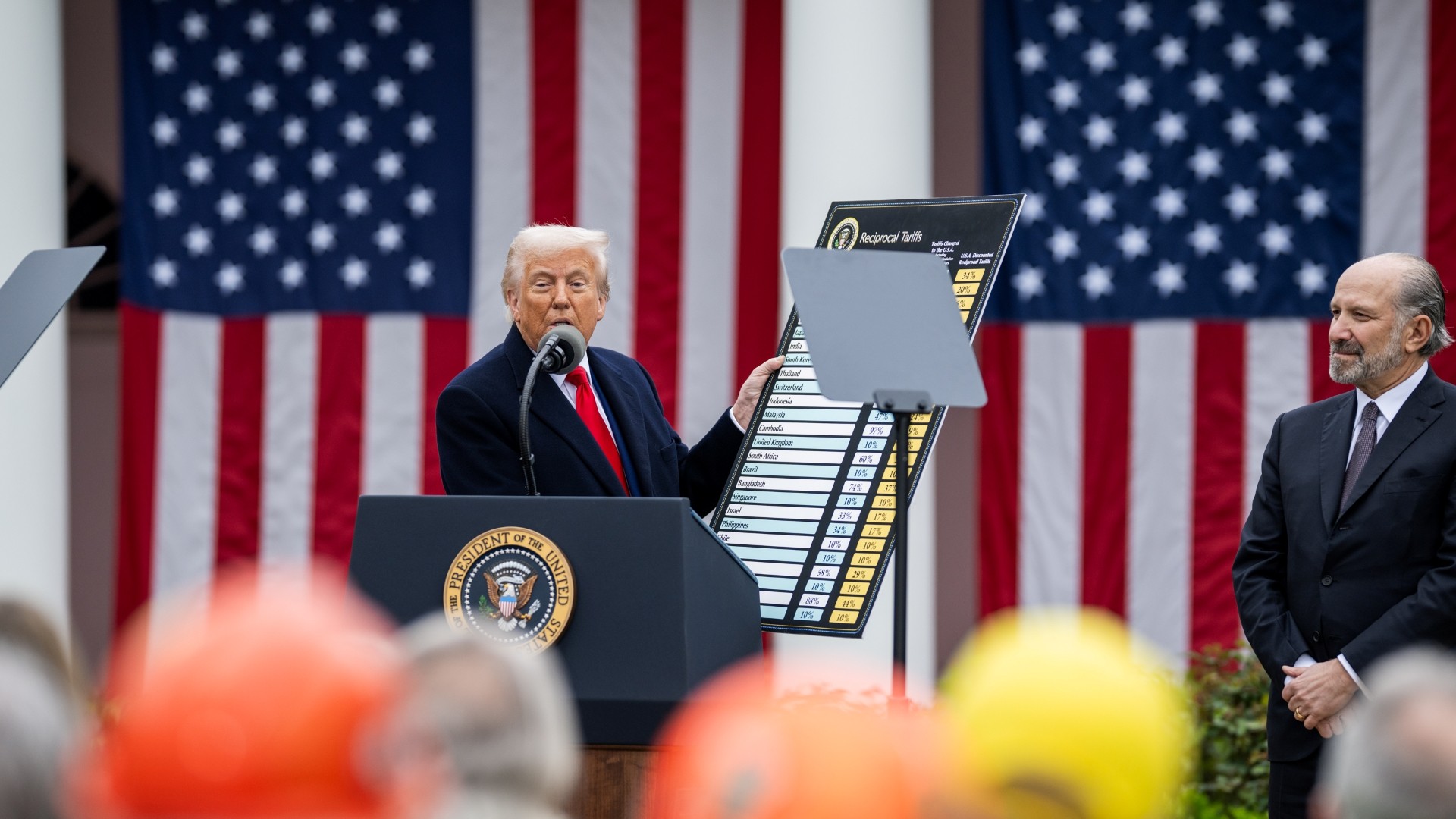
Photo by The White House Splinter Economy
Today is jobs report day, one of the most important financial days of the month, and the figures released by the Bureau of Labor Statistics (BLS) paint an increasingly dire picture of the American economy (it’s also yet another dagger in the heart of the evidence-free conspiracy theory that the BLS is compromised—you really think Trump is rigging these awful figures?). The United States lost 92,000 jobs in February, and the surprisingly good January jobs report was revised down from a gain of 126,000 to 57,000 jobs added. The unemployment rate helps put these numbers in some context, as it ticked slightly higher again to 4.4%, but that figure is still quite low by historical standards.
Still, zooming out on the monthly job figures and looking at the trend we’re in is harrowing. A negative month of job growth in this broader context looks just horrible, let alone three negative months of job growth in our last seven. But that’s where we are now.
This is not good.
— Justin Wolfers (@justinwolfers.bsky.social) March 6, 2026 at 6:40 AM
Writing about the economy the last few years has been difficult, in part because our schools and media do such a horrible job of teaching how this stuff works, and so naturally, we have a country filled with intelligent people who don’t quite understand this very important niche subject that I can attest is not easy to grasp. I had to go to grad school to really understand a small sliver of it, so don’t feel bad if all this stuff looks like gibberish to you. That seems to be by design in a failing imperial power dedicated to disempowering its citizens. Combine that with the trauma from 2008 that all of us who went through that feel, and this has flattened the discourse of whether the economy is good or bad ever since the pandemic shock of 2020 spiked inflation to 9%. The modern economy is so much more complex than binary arguments can capture, and we are in a new world now where the major topline figures like GDP growth and the unemployment rate simply do not tell an informative story about the economy anymore and how it affects most Americans.
The “when is the collapse happening” question has been the subtext of a significant segment of the online commentariat driving Will Stancil insane in his mentions ever since 9% inflation. The Stancilite negatively polarized reaction to this misguided characterization of seeing 2008 everywhere is not helpful either, as this group’s counterargument has been to instead say that everything is hunky dory because we’re doing better than Europe. The people who actually know this stuff, the ones who taught me a fraction of the broader picture as Splinter relaunched from the dead in March 2024, they do not speak in economic absolutes the way most of this discourse does. A big problem the doomers filled with certitude that we are in the midst of a three-year long recession have is that it is extremely difficult to collapse the greatest economic engine mankind has ever created. Despite all the genuinely difficult conditions in the economy for every day folks, it’s been chugging along pretty well since 2020.
But Trump has tried his best to make the doomers’ wishes come true, and he has now boxed the economy into a deteriorating and conflicting set of circumstances that Fed Chair Jerome Powell has been warning about amidst the war Trump has waged on the Fed’s independence the past year. It is very clearly past time to worry about the American job market. The doomers in Stancil’s mentions can point to the entire second half of 2025 with flat to negative job growth outside healthcare and a couple other industries, and after today, can add some semi-sustained negative job figures over half a year to their case. Healthcare employment even declined by 28,000 last month, although the BLS says that figure is “reflecting strike activity.” If you are struggling to find work, I can promise you that you are far from alone. This is one of the defining features of our current economy.
If it were just the increasingly alarming jobs figures amidst low unemployment and near all-time highs of prime-aged employment, I don’t think it would be time to worry about the economy, which is why I have found myself hedging more towards the Stancilites in this battle between the discourse extremes the last few years. As much as I have written at length about my myriad concerns surrounding Trump’s economic destruction over the last year-plus, I have been encouraged by the resilience of the US economy in the face of this mess every step of the way, stopping me from going full doomer. We had a very strong 3rd quarter GDP print, and the steep decline in the 4th quarter was primarily due to the longest government shutdown in history. America has a K-shaped economy that can still power along as job growth slows to a crawl (because Trump’s racist immigration policy has plunged the breakeven unemployment level), all because the upper part of the K, the wealthiest Americans, are now driving more consumer spending than ever. New Moody’s data finds that the top 20% of earners are powering 59% of consumer spending, the fuel for the greatest economic engine mankind has ever produced. That is why the broader economy can be just fine and dandy while thousands of middle to low-income earners go on an endless search for work.
But if the last Gilded Age taught us anything this generation defined by bottomless greed has refused to learn, it’s that vast inequality was a major contributor to the Great Depression, and that consumer spending figure from a fifth of the population cannot sustain an entire country forever. We know that elite consumer spending is being fueled by an insane market rally on the back of hysteric twelve figure AI promises now encountering a stock market selling off on every major new multi-billion-dollar data center announcement. The “where is the AI-induced crash” caucus has gained a lot of momentum for their case in the first two months of the year thanks to a market pummeling every software stock while buying every equity connected to the real world that it can find (preferably outside the US in the better performing markets), and this is where the blithering idiot in the Oval Office may have provided the spark to get this caucus an answer to their existential questions about 2008 having a sequel.
I am switching sides in this intractable debate and fully embracing my inner Cassandra I’ve been flirting with over the last year, and tepidly joining the doomers without endorsing their flattened economic worldview. Trump has bet the economy on war with Iran and this week has convinced me that he’s going to lose this bet because it is clear this administration has zero plans for the infinite negative consequences that will now arise as a result of their bellicose actions. This is making Donald Rumsfeld’s vision for the Iraq War look well thought out. I am generally optimistic about where our politics are headed after we get through this stage of imperial collapse, but as someone who came of age during the Iraq War, I cannot feel anything other than deja vu and immense dread over the multiple doors to hell the US and Israel just opened this last week.
And one of those doors goes to economic hell. Rising oil prices are very bad. They cause inflation. This is an economic law the way that gravity is a law. It now costs far more to fill your gas tank than it did a month ago, which makes countless products around the world incrementally more expensive because they pay gas or oil costs at some point in the supply chain too. I know this may come as a shock to a presidential administration that can’t cobble a single collective brain cell together, but attacking the most oil rich region in the world is a really great way to raise oil prices, and an extended campaign reportedly planned into September is a terrific strategy to keep them high.
Oil really starting to look scary
— Jacob Weindling (@jakeweindling.bsky.social) March 6, 2026 at 10:57 AM
Since the open of the first trading day in 2026, oil prices are up over 50% while gold is up 19% after a 64% rise last year. The S&P500 is down 1.36%, the Dow Jones is down 1.45%, the Nasdaq is down 2.45%, and the two-year Treasury yield, the one most sensitive to central bank policy, is up slightly under 2% (in relative value, not absolute). All while job growth turns negative.
That’s stagflation. We are not there yet, and it takes much more than two months to lock that malaise in, but if you extrapolated those figures to an entire year and assumed GDP growth tracks the deteriorating equity market trends, Trump will have succeeded in making 1973 great again. The traders who placed their stagflationary bets after Biden’s notorious debate in 2024 are on track to make a fortune.
Oil prices are skyrocketing today because Qatar warned that this war will force all the Gulf energy exporters to shut down production within days, which would drive oil to $150 a barrel. Qatar Energy Minister Saad al-Kaabi told the Financial Times that even if the war ended right now, it would take Qatar “weeks to months” to return to a normal cycle of deliveries following the Iranian drone strike at the largest liquified natural gas plant of the world’s second-largest LNG producer. Trump has already baked in a fresh and aggressive round of future inflation into an economy that has lost jobs in nearly half the months since August. This is a monetary policy nightmare.
Because the Fed’s primary tool to help ease the pressure on the labor market and get hiring going is to lower interest rates and reduce the cost of borrowing to make it easier for businesses to make long-term investments like hiring or expanding production. The problem is that the 1970s taught us that if you lower interest rates into rising inflation, that will send you into a horrible feedback loop of ever higher inflation that you must raise interest rates to tamp down on, which further crushes growth and harms the job market, all while everything gets more expensive. This is such a dire set of economic circumstances, economists once thought it was impossible to have rising inflation, slowing growth, and persistently high unemployment occurring all at once until around the time the misery index hit its all-time high in June 1980.
But we are now staring down the stagflationary barrel while the threat of recession rises. This is no longer a storm looming over the horizon that we have time to process. The jobs market is bad to mediocre for everyone outside healthcare, and it has flirted with negative growth over the last seven months. Trump and Israel’s war with Iran has guaranteed us more inflation thanks to the oil shock, and the only questions now are how bad it will be, how widespread will it be, and how long it will last. The main thing powering the economy is consumer spending from a small minority whose portfolios are goosed by a stock market that was already looking nervous about this extended AI rally before spiking oil prices drove it down further this week. If you’re wondering what rising oil prices can do to a stock market near all-time highs, yet again I would like to draw your attention to 1973. I have become Cassandra.
Trump introducing an oil shock to an already fragile picture very well could be the catalyst for a deflationary period that proves the 2008 2.0 doomers right amidst broader concerns about the opacity of private credit. Or maybe we follow the 1973 oil shock and plunge into a less severe recession followed by a stagflationary spiral for nearly a decade. Either way, the trends in Trump’s economy are becoming clearer and they all point towards nothing good. The jobs market has been telling us for a year now that there are serious problems under the hood, and they’re only getting worse. Add how this war in Iran has introduced an incredibly damaging variable across the economy with spiking oil prices, and it’s not hard to see how a deteriorating situation being mismanaged by the biggest idiots on the planet can spiral out of control along multiple fronts.
 Keep scrolling for more great stories.