

Mourn the Obliteration of Endangered Species with a Tropical Jungle Bird Cocktail
It's the perfect cocktail for when you're reflecting on the intentional extinction of countless endangered species.
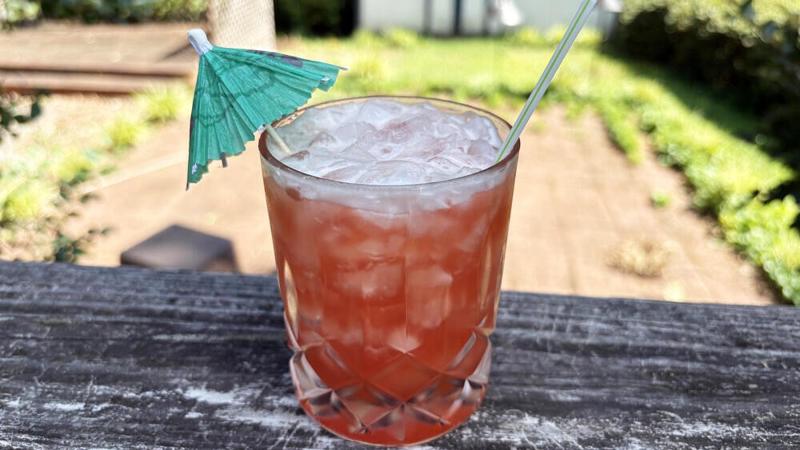
Photo by Jim Vorel Splinter sunday cocktail corner
Sunday Cocktail Corner is a series dedicated to finding just the right libation for the situation.
I could hardly blame you if, among some of the week’s other stupid headlines, such as Donald Trump being forced to leave his irresponsibly dangerous new Air Force One behind in Turkey, or Trump deciding not to sign a piece of legislation with close to 90% public approval, you had missed that the Trump administration more or less declared war on the very concept of endangered species. Suffice to say, Friday’s announcement of the reinterpretation of a single word–“harm”–in the Endangered Species Act opens the doors for private industry to directly exterminate countless species currently considered critically endangered. What else could we have expected from such an administration, after its hand-picked panel of environmental “protectors” recently signed off on expanded oil drilling in the Gulf of Mexico, despite the fact that it will almost certainly lead directly to the extinction of the Rice’s Whale, a species with roughly 50 remaining specimens alive on the planet?
As implied, the Trump administration again signed the death warrant of these numerous species with the single stroke of a pen, confirming that the concept of “harm” to animals as described in the Endangered Species Act no longer applies to things such as directly destroying the habitat or nests of a species. Previously, “modification or degradation” of habitat that led to the deaths of endangered animals was (quite obviously) considered “harm.” Under the government’s new interpretation, though, you more or less aren’t technically “harming” an animal unless you’re physically crushing the life out of it with your bare hands–aka, the definition that thoroughly evil corporations have long sought. Paving over the one and only beach where a species of turtle or bird lays its eggs every year? That’s fine. Who would define that as “harm”? The fact that all those animals will die is probably coincidental.
www.commondreams.org/news/trump-e…
— Charles Keener (@charleskeener.bsky.social) 10:24 PM · Jul 10, 2026
We are, as many have observed, in the midst of an apocalyptic mass extinction tied directly to the effects that humans have had on this planet. Species particularly dependent upon delicate micro-climates and unchanging habitats are unsurprisingly the first to go–the last half century, for instance, has decimated the populations of thousands of different tropical bird species around the globe, offering a grim preview of what is coming to ever-more-critical corners of our food chain and natural order. Is it any wonder that the ensuing feeling of helplessness, and our rage at our own government’s utter disregard for the sanctity of life, drives us to drink? I don’t know what we can do to stand in the way of the next species lost, but I do know how to make a Jungle Bird cocktail in memory of those beautiful tropical birds we’ll never see again.
I apologize for how dire that transition is, but that’s what we do in this column–provide a brief, boozy escape from all the other depressing shit happening in the world.
The Jungle Bird cocktail is considered a tiki classic, albeit one from after the golden age pioneered by Don the Beachcomber and Trader Vic in the 1930s-1960s. By the time this one was created in the early 1970s, tiki was becoming blasé, tastes were rapidly changing, and American cocktail culture was entering perhaps its darkest, most fallow period until the craft cocktail renaissance of the early 2000s. How funny, then, that the Jungle Bird is also one of the only tiki classics that actually does hail from the hemisphere that supposedly inspired so many of Beach and Vic’s classic creations. It’s not quite Polynesia, but the cocktail’s origin in Kuala Lumpur, Malaysia, still does confer a certain authentic exoticness that doesn’t exist in more foundational tiki classics like the Zombie. Bartender Jeffrey Ong is said to have whipped up the first Jungle Bird in the Kuala Lumpur Hilton’s Aviary Bar, and it was that theme (and probably the drink’s color) that gave the cocktail its name, evoking a bird of paradise.
People have conceptions of tiki cocktails as being dominated by rum and relatively sweet-tart fruit juices, but bitterness is an element of flavor/taste perception that can also be key to a good number of tiki classics, and the Jungle Bird in particular. It gets that bitterness courtesy of Italy’s classic, citrusy Campari, making the Jungle Bird the tiki drink you absolutely should suggest to the avowed negroni fan in your life. Without the Campari in this recipe, the cocktail would drink like a rummy, caramelized, overly sweet pineapple daiquiri. With the Campari there to balance out elements like pineapple juice and demerara (a type of brown crystal sugar) syrup, the drink finds a bitter harmony–sweet in one moment, tart the next, bitter in the finish. You absolutely should not try to sub in Aperol here, as the bitterness is essential, although you can reduce it a bit if you want a bit gentler profile.
Jungle Bird Cocktail Recipe
— 1.5 oz Jamaican rum
— .75 oz Campari
— 1.5 oz pineapple juice
— .5 oz lime juice
— .5 oz demerara syrup
Combine all ingredients in a drink tin/cocktail shaker, with ice. Shake well to dilute, and strain into a glass filled with crushed ice. Traditional garnishes often include a pineapple wedge or pineapple fronds.
Behold! My riff on a jungle bird cocktail!
— ComradeWolfe (@comradewolfe.bsky.social) 5:45 PM · May 8, 2026
A note on rum: Because rum is perpetually the most misunderstood widely consumed spirit, you’ll still see a vast majority of recipes for a drink like the Jungle Bird calling simply for something like “dark rum,” despite those words being functionally meaningless in the United States. Suffice to say, you can use some inexpensive “dark” rum with caramel coloring in this, but you’ll get a tastier drink by using some aged rum from a place like Jamaica or Guyana (demerara rum). My advice to you is to buy your first bottle of Appleton Estate and start from there, layering in bolder and funkier rums as you go.
A note on demerara syrup: Look, I know most people don’t just have stuff like this laying around. That said, there’s plenty of commercial demerara syrup on the market, and it’s also quite easy to just make basic simple syrups (it’s right in the name!) for yourself in just a few minutes, in small quantities. Demerara or turbinado sugar from the supermarket, combined with water, will make exactly what you need here.
You’re rewarded with a cocktail that feels juicy and rummy while still possessing a certain adult maturity offered by the bitter balance of the Campari–unlike drinking a piña colada or even our recently featured Painkiller, there’s no sense of desserty indulgence. This is a proper tiki cocktail, with more going on under the hood than the attractive color would make you guess.
So with that said, let’s raise one of these crimson-tinted beauties to all of the other jungle birds of the world that are facing down extinction, thanks to the way we’ve left our planet in shambles. Here’s to hoping that the cocktail doesn’t ultimately outlive its own inspiration.
 Keep scrolling for more great stories.