

A Law Designed to Protect the Identity of Crime Victims Is Instead Being Used to Hide Police Identities
Police in Ohio are hiding behind a law meant to protect victims, by simply claiming they're the victims.
Photo via Unsplash, Logan Weaver JusticeSplinter Police Violence
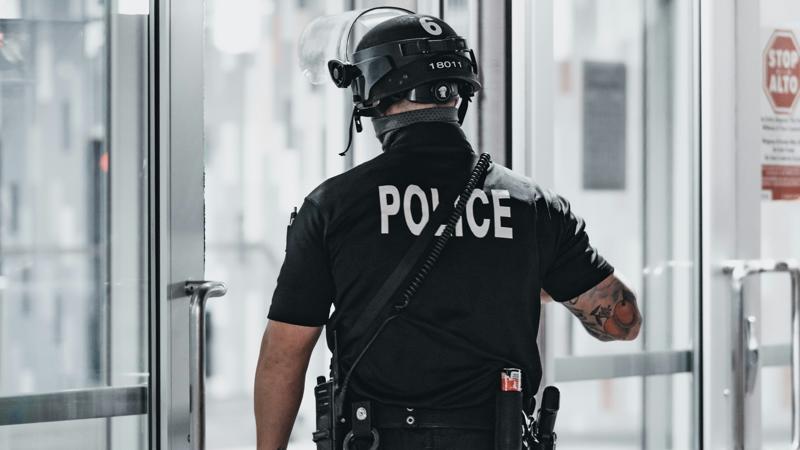
I’ll give this to Ohio police: They’re at least dreaming up some novel applications of the law. Who said that ingenuity is dead, among the cops of the nation’s heartland? Turns out, there’s some serious creativity among them, at least when it comes to figuring out how they can twist legislation written to protect the victims of a violent crime into a shield to protect their own identities. You’ve no doubt heard of someone playing the victim, but never quite like this, I assure you.
Back in 2008, the state of California was the first in the nation to pass what it called the California Victims’ Bill of Rights Act, better known as Marsy’s Law, after 21-year-old college student Marsalee “Marsy” Nicholas, who was murdered by an ex-boyfriend in 1983. The legislation, which was soon adopted in similar formats by a handful of other states, is meant to codify a wide variety of rights possessed by crime victims, especially when it comes to not having their identities disclosed to the public when it isn’t a legal necessity. In Ohio, voters approved their own version of Marsy’s Law in 2017, but those who advocated for it at the time had no idea that the law they were voting for would eventually be used to protect police from public critique and consequence.
Critically, Ohio legislators amended their law after its approval, switching the protections it offers from “opt-in” to “opt-out.” This might seem on paper to confer more protections to more people, but in practice it means that the identity of anyone identifying as a victim in a crime is automatically hidden unless they approve otherwise. And that includes when cops designate themselves as the victim of a crime, which happens … well, quite a bit! In doing so, a loophole for Ohio police was essentially created, whereby departments can avoid having to identify their officers when involved in incidents such as fatal shootings, by simply saying that those officers are victims protected by Marsy’s Law. And unlike in Florida, where such an attempt to interpret the law was struck down, with the Florida Supreme Court stating that “Marsy’s Law guarantees no victim, police officer or others, the categorical right to withhold his or her name from disclosure,” the Ohio Supreme Court saw things rather differently. At the end of 2025, it ruled that on-duty police officers “who are victims of crimes committed against them while in the line of duty” do indeed qualify for protection under Marsy’s Law.
Divided Ohio Supreme Court ruled police officers can be crime victims under Marsy’s Law and can conceal their identities in public records. The court turned down a Columbus Dispatch request for the IDs of the police involved in a midday highway shootout. www.courtnewsohio.gov/cases/2025/S…
— Dan Trevas (@dantrevas.bsky.social) 9:16 AM · Nov 25, 2025
Granted, there are certainly instances where you can see how a police officer would qualify as a victim–the court case that advanced this decision to the Ohio Supreme Court, for instance, involved an officer who was shot in the line of duty. It would be difficult to argue that this specific officer was not the “victim of a crime committed against them.” In other cases, however, the idea of a “victim” gets far more murky.
Take, for instance, the police shooting death of Cleveland, Ohio resident Andre Martin in 2025. Martin was shot and killed by two Medina Co. sheriff’s deputies outside a Staples store on the west side of Cleveland as part of a drug sting, after he had reportedly picked up a package containing large amounts of cocaine and fentanyl from the store. Accounts of the actual shooting are conflicting and lacking in first-hand video evidence: Some footage is available from the body cameras of responding officers, but the police who actually did the shooting seemingly (and conveniently) did not have their cameras turned on. We have only the police narrative to go on, that Martin “pulled out a knife” when confronted by police and then died in a hail of gunfire immediately afterward.
More than a year after the shooting, however, the family of Martin still doesn’t know the identities of the two deputies who shot him, thanks to the police applying Marsy’s Law to claim that those two cops are in fact victims. The obvious question: Victims of what? Neither of them were injured. Neither of them had their rights infringed upon. They were there specifically to bust Martin, drew their weapons on him, and ended his life. But they also get to hide their identities in perpetuity afterward, and face zero public accountability or investigation? Attorneys for the family of Martin quite clearly object to this, saying the city is “deliberately” concealing information about the shooting and is trying to “run out the clock” on civil rights and wrongful death claims, which would need to be filed within two years of the April 2025 incident. They also accuse the city of deliberately ignoring public records requests for information on Martin’s death.
“Cleveland is holding back the names of the two officers and the report as to the shooting of Andre Martin, claiming that they were victims,” said attorney Keith Hansbrough. “But what about Andre Martin? He was certainly a victim. He was lying dead on the parking lot. Police are hiding behind this when it’s a perversion of what the voters meant to do when they passed Marsy’s Law.”
In response, the president of the Cleveland Police Patrolmen’s Association, Andy Gasiewski, gave what might qualify as one of the very worst quotes I have ever seen from someone fundamentally misunderstanding the situation and how people will react to it. Referring to applications of Marsy’s Law in this way in Ohio, he said the law would not allow officers to evade accountability in cases where excessive force is used or errors are made, because “I don’t think society will allow officers just to say, ‘Hey, I’m a victim’ and right away hide under that.” Mr. Gasiewski, are you aware that this is literally exactly what the officers are being accused of having done in the case of Martin’s death? But given that you’re claiming it’s up to “society” to rectify it, what exactly are the members of that society supposed to do in order to not “allow” officers to get away with this? Please detail for me how society goes about “not allowing” officers to claim victimhood, and then I’ll weigh in on whether it seems feasible, okay?
That said, the actual circumstances of Martin’s death are not even particularly central to the core question at hand: What allows police officers in that type of scenario to claim, under the law, that they are victims and thus automatically shielded from close critique? How does someone serving the public, in a role that allows them to (poorly) use a deadly weapon, not have to live up to a higher standard of expectation and responsibility? Maybe if these cops stopped trying to abuse laws created to protect the public, the public would be a bit more sympathetic toward police victimhood.
 Keep scrolling for more great stories.