

Hundreds of South Carolina Schoolchildren Are in Measles Quarantine, Thanks to Low Vaccination Rates
The U.S. has registered its highest number of cases in 33 years.
Photo via Unsplash, Fusion Medical Animation HealthSplinter measles
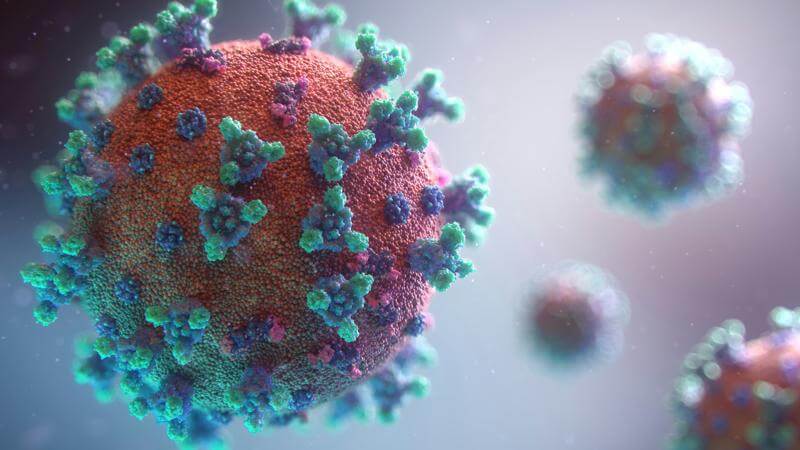
In South Carolina, hundreds of people–many of them young children in elementary schools–have become the latest victims of an almost entirely avoidable malady. Rejecting the scientific consensus, which has for decade upon decade proven the efficacy of exhaustively tested vaccines, they’re people who have either chosen not to protect themselves with the universally available measles-mumps-rubella (MMR) vaccine, or have even more heinously chosen not to protect their loved ones and young children who can’t make such decisions for themselves. The ongoing outbreak in the Palmetto State is accelerating, with 111 measles cases reported through midweek in upstate South Carolina, the area of the state that includes cities like Greenville and Spartanburg.
But the actual infections are just part of the disruption that vaccine hesitancy manages to wreak here, and in other U.S. states also experiencing outbreaks–there are also at least 254 people in quarantine across several schools and a church in Spartanburg County, because they’re unvaccinated people who may have been exposed to the measles virus. And because measles has a long gestation period of 21 days despite being one of the most contagious and transmissible viruses on Earth, that means three-week quarantine periods as well. For some of these South Carolina schoolchildren, it’s already their second measles quarantine of the 2025-2026 school year, meaning that they’ll have spent 42 days out of school since September–basically half of the academic year to date. All because of vaccination rates that continue to slip. According to local news sources, the K-12 vaccination rate for the MMR vaccine was 90% in Spartanburg County and 90.5% in neighboring Greenville County, both well below the level of 95% and above that is generally considered to be needed be epidemiologists in order to prevent a cascading outbreak.
Measles measles everywhere.
RFK Jr. should be launching massive vaccination campaigns but instead I suspect he’s going to rebrand measles as freedom rashes.
— Elizabeth Jacobs, PhD (@elizabethjacobs.bsky.social) Dec 11, 2025 at 10:05 AM
The ongoing outbreaks haven’t drawn much commentary from Secretary of Health and Human Services and brainworm enthusiast Robert F. Kennedy Jr., who has barely acknowledged them at all since the first measles outbreaks of 2025 in Texas this February attracted public attention. A the time, Kennedy dismissed the outbreak in Texas as “not unusual,” because “we have measles outbreaks every year,” ignoring that this particular outbreak was immediately of a much higher level of prevalence and severity, including several deaths, the first U.S. measles death since 2015 and the first child death since 2003. To date, Texas has recorded more than 760 measles cases this year, which is all on its own almost three times more than the entire United States recorded in 2024. In the entire U.S., there have been 1,912 cases per the CDC, the most that the United States has experienced in a distressing 33 years.
The total number for 2024, meanwhile was 285, a number that had already crept up somewhat from the record lows seen in the early 2000s, when the disease was declared eliminated in the United States thanks to the effectiveness of the MMR vaccine. Back then, yearly case numbers were often less than 100, with a total of only 37 cumulative cases in 2004.
Why were measles cases so low, in the early 2000s? Well, it was probably because there were enough parents alive then who remembered the serious and deadly measles outbreaks that occurred in many large American cities between 1989-1991. During that period, more than 55,000 were sickened and more than 100 people died from measles infections across the United States. What was the cause? Would you believe it was low vaccination rates?
It seems that these waves may be a cyclical or generational thing on some level: People get vaccinated and levels of the disease fall down to record lows, which prompts people to think that they or their children no longer need to be vaccinated, because the disease is no longer a threat. Subsequently, the disease rises back into circulation as the levels of vaccination fall to levels that allow it to flourish once again. Parents of kids in the 2000s, remembering what happened in the late ’80s and early ’90s, got their kids vaccinated, which worked so well that the disease was declared eliminated in 2000. And we could very easily have kept it that way, if not for a pseudoscientific movement that welded itself to modern conservatism until the most politically powerful health officials in the country were suddenly casting accusations and hesitancy on every vaccine, even the most widely tolerated and researched of them, like the MMR vaccine, traditionally given in two doses when a child is 1 and 5 years old. Just this week, RFK’s Advisory Committee on Immunization Practices (ACIP), consisting of the secretary’s handpicked, anti-vaccine researchers–voted to limit the use of the Hepatitis B vaccine for newborns, in spite of copious evidence that the shot helps to prevent cancer and save lives.
A little context, for the terminally contemporary reader: Before the measles vaccine was first introduced in the U.S. for public use in 1963, measles were a disease that most children suffered through, including many that needed hospitalization. An estimated 48,000 measles hospitalizations each year tended to result in 400 to 500 annual deaths, and that was itself a vast improvement from how many were killed by measles in earlier eras. Before the vaccine, roughly 2.6 million people were dying of measles worldwide, every year.
That is the world that the policies of RFK and his ilk, and the vaccine hesitancy they’ve fostered, would return us to. Everywhere the man goes, sickness follows: Just ask the people of Samoa, who dealt with their own deadly measles outbreak after Kennedy’s visit to boost vaccine disinformation. He’s now facing largely performative articles of impeachment in the U.S. House of Representatives, destined to go nowhere, but perhaps if the Democratic party recaptures Congress in the 2026 midterms, we could see a revisit of the idea with more teeth. Still, that doesn’t make the words of Rep. Haley Stevens of Michigan any less true.
🚨 Today, I formally introduced articles of impeachment against Robert F. Kennedy, Jr.
RFK Jr. has turned his back on science and the safety of the American people. Michiganders cannot take another day of his chaos.
— Rep. Haley Stevens (@rephaleystevens.bsky.social) Dec 10, 2025 at 8:10 AM
“RFK Jr. has got to go,” Stevens said in a video statement. “I cannot and I will not stand by while one man dismantles decades of medical progress. Enough is enough, and that is why I’m pushing to impeach RFK Jr., to hold him accountable and to protect the health, safety and future of every Michigander because our health, our science and our future are worth fighting for.”
What do you think, South Carolinians? Does one of those schoolkids have to die before we disagree with RFK about whether any of this is “unusual”?
 Keep scrolling for more great stories.