

Russia Has Suffered More than 1.2 Million Casualties in Ukraine, Leading to Another Lost Generation
But the effect on Ukraine has been even more severe, especially in terms of displaced refugees.
Photo via Unsplash, Mykhailo Volkov, Wikimedia Commons Splinter Russia
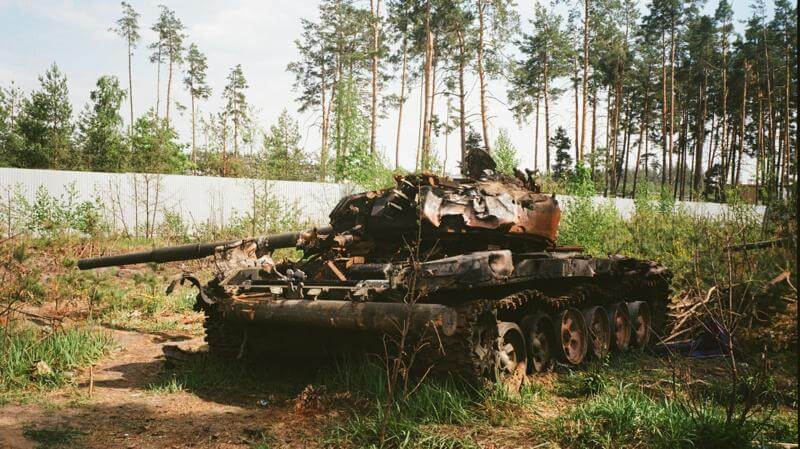
Since 2024, Russian forces have been “on the offensive” in its tortuous war with Ukraine, whose current phase began in 2022 but indeed stretches all the way back to 2014 in terms of open hostilities. I use air quotes there because “offensive” is an almost theoretical term in this capacity, due to the incredibly slow rate of advancement that Russia has been forging for the last 1.5 years or so. On an average day, according to new analysis by Washington D.C.-based think tank the Center for Strategic and International Studies (CSIS), Russian forces manage to advance by roughly 15 to 70 meters. That’s METERS, folks. And to gain those precious yards (if you can only think in imperial measurements) they pay a currency of human lives, as fresh recruits are continuously fed into the meat grinder. In its new study, CSIS estimates that the Russian aggressors have paid a price that far exceeds anything the country has experienced since World War II, with more than 1.2 million casualties (dead and wounded) to date, at a rate of roughly 2 to 1 or 2.5 to 1 corresponding Ukrainian casualties.
That’s a very large number, and yet it feels all the larger when you break it down into more digestible form. You could think of it as 25,000 Russian casualties for every one of the 48 months that this phase of the war has stretched on, since Russian tanks barreled toward Kyiv (and were rebuffed) in February of 2022. Or you could break it down even more: Roughly 833 casualties per day. Every day. For four years. In terms of fatalities alone, there have been 17 times more Russian soldiers killed in Ukraine than there were in Afghanistan during the 1980s, and 11 times more killed than in both the First and Second Chechen Wars. In fact, five times more Russian soldiers have been killed in Ukraine than in every single cumulative Russian and Soviet war since World War II, which makes WWII practically the only point of comparison for death and casualties on this scale. And suffice to say, all these losses are only exacerbating a demographic crisis that already existed in Russia. And lest we forget: Ukraine has had things even worse, in terms of demographic harm that would take generations to fix even if the war ended tomorrow. But for now, let’s talk about Russia.
The Russians Who Volunteer to Die
Russia has managed to avoid needing to institute broad, nationwide general drafts during the war to supply fresh troops mostly through a campaign of intimidation to those it can press into military service, and promises of relatively lavish rewards to others. This is its preferred modus operandi: The cost of the war must be kept as far away as possible from urban city centers and the country’s more aristocratic, affluent and oligarchic classes, which means that recruitment efforts are kept largely in the rural, smaller villages and cities, and far away from places like Moscow. This helps to keep the resulting deaths from culturally impacting the city population as directly, resulting in a smaller chance of visible unrest, protests or popular uprisings.
In order to do this, Russia has gotten creative about where it’s drawing troops from during its biannual recruitment drives. It has emptied prisons, drafted debtors into the military, employed foreign fighters and private mercenaries from abroad, and offered military service as an alternative to crooked court rulings to those who are in pretrial detention. This has decreased the quality of soldiers available to Russian commanders—one quoted by The New York Times in 2025 stated his latest group “was riffraff: the homeless from train stations, alcoholics, men running from the law. The health check was fictional.” The average soldier has gotten much older, less physically capable, and less trained than in the war’s opening days.
⚡️Russia has suffered ‘more losses than any major power’ since World War II, report says.
Russian forces have sustained nearly 1.2 million casualties since the 2022 invasion of Ukraine, paying a steep price for limited gains, a new CSIS report finds.
— The Kyiv Independent (@kyivindependent.com) Jan 27, 2026 at 8:29 PM
Perhaps most effectively for many rural Russians, or members of ethnic minorities making subsistence wages in far-flung areas, the government has offered very large (relatively) signing bonuses for military service, which have grown steadily as the war has dragged on and bodies have become harder to find. The $30,000 a soldier can make via this kind of signing bonus works out to being roughly 33 times the average Russian monthly salary. There are also promises of numerous other ways to make lump cash bonuses while in the field, from destroying advanced pieces of Western equipment, to being injured in battle. There is, in fact, a whole sliding scale for the injury payouts that each type of wound is meant to yield: Fractured fingers are worth $12,000, while an amputated limb is $36,000. These payments have become a massive expenditure for the country on a national level, supported by its exports of oil, natural gas, coal and gold. Of course, perhaps unsurprisingly, many Russian troops (or their families) have reported waiting for such injury payouts that never actually arrive.
The payouts and bonuses also serve a certain psychological purpose for Russia: They make the Russian public feel like even the coerced deaths of the war have been “fairly compensated,” reducing empathy for the soldiers sent to the front to die over a daily territory gain of 15 meters. After four years, the war seemingly exists in Russian state media as simply the normal way of things, a comfortably far-off thought that middle- and upper-class urban Russians largely don’t have to think about.
“The larger the payout, the less sympathy fallen or injured soldiers receive from society, and the less likely are the protests against the war,” said Janis Kluge of the German Institute for International and Security Affairs, to NYT.
And that lack of sympathy suits Vladimir Putin quite well, given that his military has increasingly turned to utterly heinous means of making soldiers continue fighting as the war has dragged on for years longer than anyone initially thought it would last.
Forced to the Front
A newly signed Russian recruit is, quite frankly, a terrifying thing to be, given the country’s callous treatment of disposable human lives. Recruits often sign up thinking that they’re getting involved in a short-term employment with a lucrative payout, only to find that there’s no way out. Prisoners facing 10-year sentences have been told that they’re signing up for “1 year” of military service to void their sentences, which no doubt seems a reasonable trade-off, should they survive the experience. After arriving for duty, they’re then pressured to instead sign “voluntary” extended contracts binding them to the military for many more years. Refusal to do so is met by methods of coercion as simple as beatings or corporal punishment, or as grim as telling the recruit that they’ll be immediately transferred to an assault unit with the highest mortality rate if they refuse.
The prospect of being killed by the Ukrainian defenders is often used as a tool to force cooperation, in fact: Soldiers who show insubordination or anything less than performative fealty to the motherland can be sent on attacks against enemy positions that are essentially designed to fail, simply as a neat and tidy method of removing the undesirable soldiers from the group. This technique of using the enemy to kill your own soldiers even has a name among the enlisted men: “zeroing out.” It’s an effective threat in the playbook of Russian commanders. Other officers, meanwhile, seek to profit from the war by essentially stealing the pay of the men beneath them, extorting payments in order to exempt troops from being sent on missions with a high probability of death. It all gets much worse, with the result of Russian parents who often never receive closure or final knowledge of how their loved ones died. A sprawling NYT investigation spoke to many of these Russians in secrecy, turning up many instances of the same stories: A soldier tells a parent or wife that they fear they will be “zeroed out,” and then disappears. A body is never found.
“They said it had most likely been blown up and that the pieces that remained had been eaten by wild animals,” said one Russian mother to NYT. “So I shouldn’t expect to see the body.”
Russian men are either: dead ☠️; have fled from Russia; too old to fight; alcoholics; OR, they are INTENTIONALLY committing self-injury to avoid fighting in Putin’s war and/or to collect free money 💰 for not 👎 fighting.
cepa.org/article/puti…
— Desert Iguana (@desertiguana28.bsky.social) Nov 29, 2025 at 8:53 PM
Even those who are wounded or injured and removed from the front—or captured and then released in prisoner of war exchanges—often find themselves immediately back on front lines. The same investigation found numerous cases of Russian soldiers forced to continue fighting with broken limbs, epilepsy, vision and hearing damage, head trauma, mental illness and even stage 4 cancer. One Russian soldier interviewed was currently fighting a legal battle against the government as it attempted to return him to the front lines.
“People in wheelchairs are being sent to the front, without arms or legs,” he said. “I saw it all with my own eyes.”
The Demographic Toll
The overall death toll of the ongoing Russia-Ukraine war is still comparatively minuscule in direct comparison to the generational upheaval that was World War II, but it is accentuating the country’s demographic struggles in much the same way, thanks to other, additional factors that have led to a shrinking population in recent years. During WWII, the pure carnage of the German invasion and subsequent deaths from hunger, disease, supply disruption, etc., effectively resulted in a lost generation of young men that echoed through Russian society for decades to come. Of Russian men who were born between 1918-1925, an overwhelming majority were dead by the end of WWII, not only because they had been conscripted as fresh-faced recruits, but because they were coming of age/vulnerable during an incredibly deadly period. This caused a gender imbalance in Russia that persisted for decades—there are still far more Russian women than there are men in the age range of 40 to 90, which contributed to severe working-age deficits in the 1970s and 1980s. According to the 1959 census, there were 18.43 million more women in Russia than there were men, at a time when the overall population was 118 million. That is a dramatic imbalance; an entire nation of X chromosomes. No other country in the war was affected in such a lopsided way.
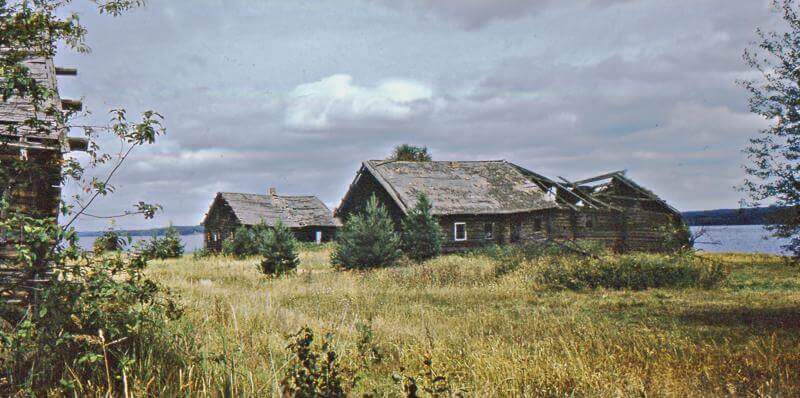
Despite that, the overall population of Russia rebounded following WWII and partially offset the male/female disparity over the coming decades, until growth stalled in the mid-1990s, when Russian hit a population high of 148.6 million. Since then, population has gone into phases of contraction, driven by declining birth rates, exodus of residents, and widespread deaths during the COVID-19 pandemic. The “brain drain” has especially hurt the country’s economy and science/tech industries, while the overall population collapse has resulted in abandoned rural villages in much the same way as Japan. Russia has attempted to offset population losses with high immigration, but hasn’t exactly been the most attractive destination given the ongoing war. In 2023, The Economist calculated that “over the past three years the country has lost around 2 million more people than it would ordinarily have done, as a result of war, disease and exodus.” Even the life expectancy of young Russian men has collapsed as a result, now being roughly equal to a country like Haiti. The population collapse is projected to continue.
In Ukraine, meanwhile, concrete war losses have equaled somewhere between 500,000 and 600,000 casualties according to the same study from CSIS, but the numbers of those physically wounded or killed in the conflict pale in comparison to the millions upon millions who have been displaced, either within Ukraine or those who have fled as refugees outside of its borders. Millions of Ukrainians live within captured Russian territory, while estimates of the number of global Ukrainian refugees land anywhere between 5.5 million and nearly 7 million people. Many of them would no doubt theoretically return at the conclusion of the war, but as a percentage of the overall Ukraine population, they make even Russia’s losses look small.
There are few modern military campaigns, other than the likes of the Second Congo War in Africa, that have wrecked devastation on this level in the decades since World War II. Together, the combined Russian and Ukrainian casualties will likely blow past the grim tally of 2 million in the early days of 2026, a milestone of devastation in a conflict that can often feel no closer to ending now than it did in 2023. Even when the active shooting finally comes to a close, both Russia and Ukraine will find themselves facing another lost generation, crippling their economic engines for the foreseeable future. It’s an extraordinary price to pay for Vladimir Putin’s imperialist ambitions.
 Keep scrolling for more great stories.