

Do You Know What a “Sell By” Date on Your Food Even Means?
The answer involves millions and millions of tons of wasted food each year.
Photo via Unsplash, the blowup Splinter food waste
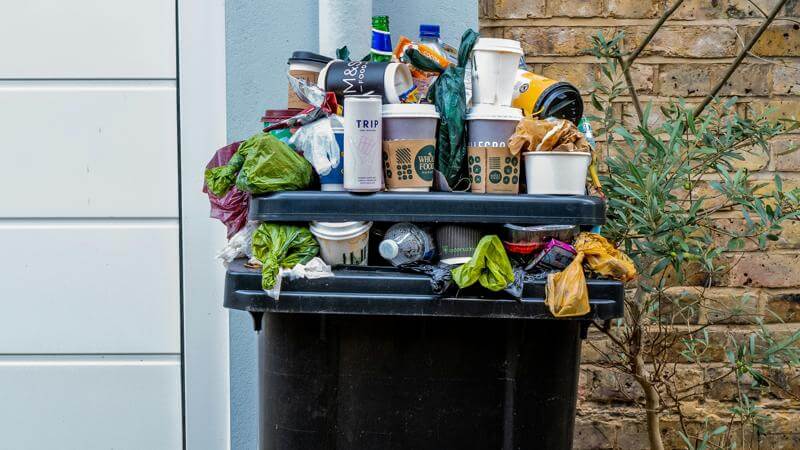
Quick question, same as the headline: When you see a “sell by” date on a food item at the grocery store, be it something relatively perishable like a gallon of milk or more stable like a box of cereal, what do those words truly mean to you? Obviously, they imply that the store probably intends to get that item off its shelf by the date in question, but what about the consumer? Should you simply go ahead and use that can of beans that was “sell by” last month? Or in your household, does that mean the item is headed straight for the trash?
For a lot of consumers, it really does mean the latter–ask my own partner, who routinely throws away anything reaching its sell by date despite how it looks or tastes, or acts as if an ibuprofen capsule a week past its best-by date has suddenly transformed from medicine into poison. The big problem with these actions is that the concept of a “sell by” date isn’t meant to actually inform consumer behavior in any way–they’re merely a tool used by the sellers to know when they should cycle their merchandise, and convey no information as to how much longer your food will remain safe to eat. Confusion over how a consumer is supposed to approach such an innocuous label, however, has huge consequences: The FDA estimates that 30% of the entire food supply is ultimately lost or wasted at the retail and consumer levels, and that confusion over labeling is one of the prime causes, accounting for up to 20% of food waste. In California alone, this results in more than 6 million tons of unspoiled food waste per year, which is why the state has now taken action: A new law going into effect today bans “sell by” dates entirely, in favor of language that is actually useful to the consumer. Imagine that.
thehill.com/homenews/sta…
Sell by dates are not an eat by date. Some food is eatable weeks after their sell by date. Others remain safe to eat even longer. There is no standard meaning for sell by dates. I applaud the courage of California for pointing out the worthlessness of the “Sell By Date”
— Deborah Weeks/A Woman for An Eternity (@deborah-10.bsky.social) 7:47 PM · Jul 1, 2026
The legislation, initially passed in 2024, mandates that instead of “sell by” dates, food labels in California will instead carry either “best if used by” dates or “use by” dates on their packaging–manufacturers can choose to use either label or both of them, according to the bill’s original author, Democratic State Assembly member Jacqui Irwin. Technically speaking, those terms still imply slightly different things: “Best if used by” tells a consumer when a products “peak” quality has passed, while the arguably superior “use by” indicates when a product should be used for outright safety. Either, though, is superior to “sell by” from a consumer standpoint, as the latter frequently contributed to label-conscious and anxious Californians discarding perfectly safe food, according to Nick Lapis, director of advocacy at nonprofit Californians Against Waste.
“We don’t need to build some kind of huge infrastructure and invest tons of money to solve this,” Lapis said to the Associated Press. “We just need companies to use the same words across brands.”
Or in other words, a little standardization and common sense. And if your knee-jerk response is to think that millions of Americans probably haven’t been confused by the fine print of this wording, think again: A 2022 study found that there are more than 50 different variations upon the concept of the date label on food products sold in U.S. stores, while another study determined that 80% of Americans confirmed that they had discarded unspoiled food due to date label confusion. The same study indicated that more than a third of Americans falsely assumed that date labels in general were federally standardized and regulated, despite the fact that the only nationally date-regulated food product is infant formula. Confusion over “sell by” dates have even in some cases kept perfectly safe food from reaching soup kitchens or charity food pantries.
It doesn’t take a genius to see, either, why the concept of “sell by” as terminology is more attractive than “use by” dates to the major food product manufacturers: Their bottom line doesn’t ultimately care if a food product is actually used/consumed or thrown away, as long as people keep buying it. In fact, you could argue that every package of unspoiled food that is thrown away benefits the manufacturers, given that it probably leads to stores/consumers more quickly buying replacements. And food waste, it should be noted, is part of a vicious cycle when it comes to perpetuating the climate change factors that make food more expensive in the first place: More than 40% of the methane emissions in California can be traced by to organic waste (mostly food) that is rotting in landfills. Cutting down on food waste literally helps the state in several ways to resist the damaging effects of climate change.
Food waste isn’t just about hunger. It’s about heat.
Uneaten food from farms, shelves, and buffets rots anaerobically in landfills and drives methane emissions. Fixing food systems is fixing climate.— Abilu Tangwa. (@abilutangwa.bsky.social) 2:32 AM · Jun 30, 2026
And despite the fact that the Trump administration will no doubt find some way to oppose such a common-sense piece of legislation that could provide framework for numerous other state or national laws, even the country’s own federal regulators and researchers have long recommended that exactly this action be taken. The U.S. Department of Agriculture has recommended for more than a decade that food manufacturers and retailers nationally switch from “sell by” to “best if used by” dating, specifically to counter the country’s rampant food waste. So, do we dare make such a relatively easy switch? Or do we keep tossing unopened packages of English muffins into the trash for absolutely no reason?
 Keep scrolling for more great stories.