

Splinter at the Munich Security Conference: America, The Toxic Ex
The Old World Order Has Crumbled. What Comes Next?
Photo by Anastasiya Dalenka on Unsplash PoliticsSplinter Europe
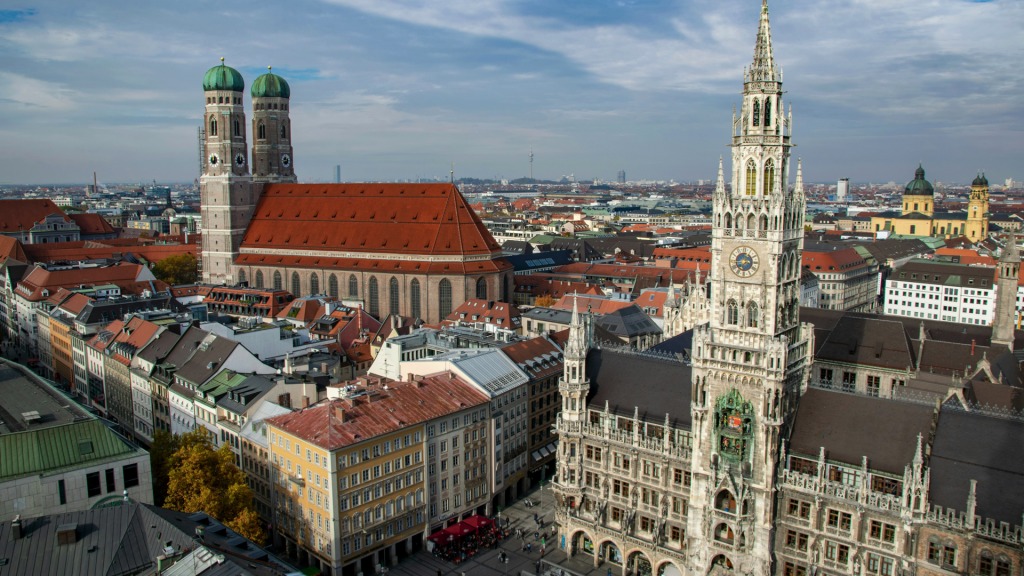
MUNICH – Inside the Rosewood Hotel, one of the heavily guarded sites of the Munich Security Conference, diplomats and politicians, past and present, mix with think tankers and aides. There are so many blue-suited people with pins on their lapels, it becomes a kind of guessing game: is that who I think it was, or just some guy?
Here, the Politico Pub and the adjacent courtyard—branded Politico Platz—is one of the downtime spaces for attendees. On a Saturday afternoon, a few people hang by the bar in the pub. An ambassador sits in a leather chair on his phone, and does not want to take questions. On the other side of the doors, people descend on a platter of pretzels. With cokes, or maybe a glass of wine, they wander out to the courtyard to search for a seat. The hotel restaurant is visible behind glass walls, as is a former prime minister dining at a small, round white-tableclothed table.
Outside of these rooms, in the speeches and panels and closed-door meetings at Munich, much of the talk is all about the new world order. But, here, a version of the old one hangs on.
This split screen played out across Munich this year, the premiere transatlantic get-together that, almost too perfectly, fell on Valentine’s Day weekend. Last year, vice president J.D. Vance’s combative Munich speech kicked off a year of U.S. marginalization and antagonization of European allies, culminating in Trump’s Greenland threats.
But this year, the Trump administration, led by Secretary of State Marco Rubio, put forward a more conciliatory tone. Even as Rubio doubled down on nationalistic MAGA foreign policy, he framed it as an act of America’s commitment to Europe, not its betrayal. This was true of other American lawmakers, including a bipartisan contingent who explicitly said they wanted to reassure European partners. It was also true of many Democrats, some trying to burnish their foreign policy for credentials for 2028 and beyond, who correctly diagnosed Trump’s destructiveness, while trying to reassure allies of its temporariness. All of those approaches masked the crisis the United States initiated, whether by downplaying the divisions, or by being in denial about its permanence.
America broke the world order. But in Munich, it wasn’t fully ready to let go of the old one.
American can’t commit, no matter what it says
Secretary of State Marco Rubio leading the U.S. delegation to Munich looked like a sign that it wanted to ease tensions with Europe, especially after Davos, where the Canadian Prime Minister declared a “rupture” with the old world order, and Trump laid out his designs on the Danish territory of Greenland.
The shift in tone was noticeable. Ahead of the conference, Pentagon policy chief Elbridge Colby spoke of a NATO where Europe is responsible for its defense, backed by America’s nuclear deterrent, which Colby described as an “alliance that is militarily credible, politically durable, and strategically realistic.”
U.S. Ambassador to NATO Ambassador Matthew Whitaker described NATO as “stronger right now it certainly has been the last five years, and it’s probably stronger than it has been since the end of the Cold War.” Whitaker heaped praise on certain allies, including Germany, Poland, and the Baltic states for their defense investments, adding that everyone needed to “get stronger together.”
State Department official Sarah Rogers, who’s met with European far-right groups, pushed back on reports that the Trump administration wanted to fund MAGA-aligned groups. “The idea that we have a slush fund for the far right is a lie,” Rogers said. “It’s not America’s decision to govern who’s elected in Europe.”It’s not America’s decision to govern who’s elected in Europe.”
Then Rubio spoke Saturday morning, where he explained Trump’s approach was tough love, but only because America just cares too much. “We want Europe to be strong,” Rubio said. “We believe that Europe must survive, because the two great wars of the last century serve for us as history’s constant reminder that ultimately, our destiny is and will always be intertwined with yours, because we know because we know that the fate of Europe will never be irrelevant to our own.
Rubio received loud applause during this line, and when he concluded, got a standing ovation. The Munich Security Council chair Wolfgang Ischinger called it “a message of reassurance, of partnership.”
Parts of Rubio’s speech sounded like the ghosts of American rhetoric old—some tensions, some challenges, but a lot more focus on the shared bonds. But that masked how Rubio defined those bonds—not shared values, like democracy, but shared heritage. Rubio, descended from Cuban immigrants, talked about how mass migration is “transforming and destabilizing societies across the West.” Rubio’s vision of the West was explicitly Christian and, implicitly, white, a flattened, children’s picture-book version of history, defined apparently, by figures like Mozart and Michaelangelo.
This was Vance, the hard edges shaved down into something more subtle. It was not reassurance, but gaslighting: we love you, we want to stay together, but, baby, you’re the one who’s changed.
“Dinner went down better, and the schnapps tasted better, but nothing really changed in the sense of the position,” Sen. Lindsey Graham (R-SC) told reporters Saturday about Rubio’s speech.
“I want Europe to understand we don’t hate you,” he added. “We want to work with you, but we all need to do better. We all need to up our game.”
The reaction among European officials may have been some degree of relief, at least publicly, and these weekends do tend to be more pleasant if everyone is on speaking terms. But many also saw it as more unsettling, because Rubio made the MAGA nativism sound nicer. Rubio also failed to talk about Russia, and only mentioned the Ukraine war in passing—the actual, immediate security threat Europe faces. This makes it easier for Europeans to dismiss U.S.’s claims of commitment to the transatlantic alliance. Delivery aside, its actions have stayed mostly consistent. Even the offers of a forever partnership are conditional, and extended only on America’s terms.
It is also why the reassurances of American lawmakers—which are nice to hear—also sound increasingly hollow, more of a eulogy for a time than a solution for the current crisis.
Sen. Jeanne Shaheen (D-NH) and Thom Tillis (R-NC), two retiring senators who lead the NATO Observers group, tag-teamed press on the strength of support for NATO. “A part of what we’re dealing with now is frustration with the drift, and I’m seeing positive signs, and I’m reassuring them that the Congress is behind them, the American people are behind them,” Tillis said. That’s why we’re here.”
Democrats, including some potential 2028 candidates, also sought to reassure Europe. Some offered promises of a day after Trump, of repair and renewal that had echoes of Joe Biden’s “America Is Back.”
Gretchen Whitmer, the governor of Michigan, during a panel discussion, said she did not think Trump represented “permanent, irredeemable change.”
“It will take time to rebuild, but I am confident that we will do that, and it doesn’t have to start happening after the next presidential election,” she said. “I think by showing up, by showing that there are Americans who see the world differently, who value the transatlantic partnerships, who understand the chaos that a lot of the policy changes have freaked out all of our economies is part of that reconciliation.”
California Governor Gavin Newsom told Europe that the transatlantic alliance was dormant, not dead, and it might have to “sleep with one eye open”—maybe one of the more honest assessments. Newsom met directly with foreign leaders, including Spain’s prime minister Pedro Sanchez, one of Europe’s most vocal Trump critics. “I hope if there is nothing else I can communicate today: Donald Trump is temporary. He’ll be gone in three years,” Newsom said on a panel on efforts to fight climate change.
Others began to offer a glimmer of a post-Trump foreign policy, but in many ways, it was more for an audience back home—for Europe, it’s great to know, but doesn’t do much to get them out of the current predicament with the United States.
Rep. Alexandria Ocasio-Cortez (D-NY), alongside Rep. Jason Crow (D-CO), talked about a “foreign policy for the working class,” one opposed to military interventionism, that incorporates economic and trade policy that supports the industrial base and doesn’t prop up big corporations at the expense of workers. “We have an opportunity to explore what a world would look like if we upheld democracy, human rights, trade that actually centers working-class people, instead of approving overwhelmingly the benefits of trade to the wealthiest,” Ocasio-Cortez said during a nightcap panel, the same one Whitmer also participated in, alongside Whitaker, the NATO ambassador.
Hovering in the background of all of these future plans is the uncertainty of American stability itself. Trump’s militarized immigration crackdown, his increasing threats around intervening in U.S. elections, his unabashed corruption, his attempts to weaponize the justice system against foes, and his disdain for any checks on his power, all make the U.S. a volatile partner, even if it was saying all the right things to its partners. There was some talk about the 2026 midterms, and whether a Democratic win might put a check on Trump, including on his tariff policy. But a lot can happen between now and November.
America at Munich was just one big mixed message. As one British lawmaker said, most people have accepted that friendship isn’t coming back, now it’s a matter of figuring out what’s next. For Europe, this is more about the complications of untangling itself from American defense and tech, and doing it in a way that won’t incite the U.S., while also managing domestic crises closer to home.
There are obvious divides on that approach, and even as Europeans talked about European defense independence, even as they talked about the end of the old world order, they still vouched for the old one. German chancellor Friedrich Merz rejected the MAGA ideology, but he also told America it was not “powerful enough to go it alone.” British Prime Minister Keir Starmer rejected a rupture in favor of a “radical renewal,” on the rest of NATO reducing its dependencies on the U.S., making the alliance more interdependent.
For now, Europe latched onto unpredictable, unstable America. Maybe Rubio’s reassurance will be the start of a turnaround, or maybe it will be the latest in the transatlantic whiplash. The Democrats’ promise of renewal and resilience is not a bulwark against Trump’s foreign adventures today. Part of this is that no one—not Europe, not America—really knows what comes next. “People seem to accept that the old order is done for whether they lament that or not,” Stephen Wertheim, a senior fellow in the American Statecraft Program at the Carnegie Endowment for International Peace told me at the MSC.
“It’s kind of beside the point now. So they know that we need to transition into something new. It’s not very clear what that is. And there’s also just—to some degree, nobody knows what that is.”
Not knowing is the hardest part, but makes it impossible for meaningful promises on what comes next—and both Rubio’s dark promise of a “new Western century” or Democrats’ promise of renewal still build on the world as it is, not what will come next. Maybe America’s mixed messages at Munich were a twang of regret, for what it might lose when it destroys the order it built. Or maybe it’s just easier to hobnob in the hotel lobby, drink the free wine, and cling to the trappings of a marriage that no longer exists.
 Keep scrolling for more great stories.