

U.S. Sunscreen Is Actually Getting Better, for the First Time in More than 20 Years
The rest of the world has apparently been using more effective sunscreen for decades.
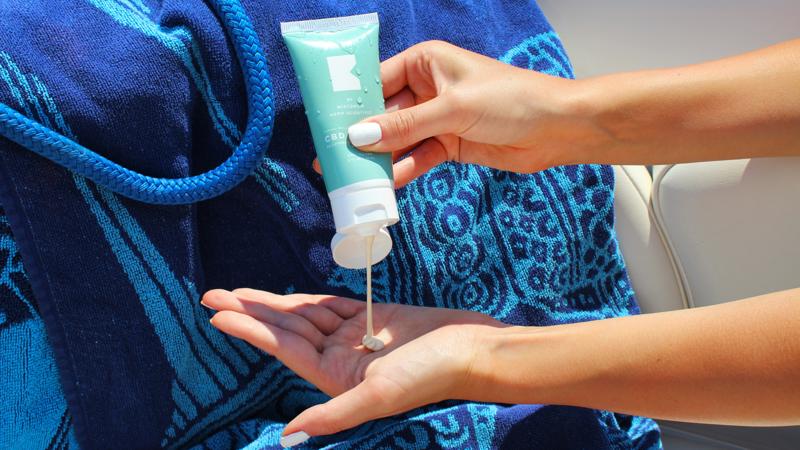
Photo via Unsplash, BATCH by Wisconsin Hemp Scientific Splinter Sunscreen
It’s always fun to learn that more or less the entire rest of the world has, for decades, been using superior versions of a product that many of us rely on each and every summer day. Did you know that by global standards, the sunscreen available in the U.S. kind of sucks? Perhaps this is common knowledge for those with the most basic background or interest in cosmetics, but it’s also reasonable for the U.S. consumer to assume that the dozens of sunscreen brands dotting the medical aisle of the grocery store represent the best science we have available to protect ourselves from the more damaging ultraviolet radiation put out by our sun. And as it turns out, that apparently isn’t the case–there are more generally effective, multipurpose sunscreens out there that the rest of the world has been using for a long time, held back from ever reaching the U.S. market by an impenetrable wall of red tape. But no more, thankfully, as the FDA has finally gotten around to approving the ingredient that makes up the base of some of the most effective European and Asian sunscreens, which sunscreen geeks (a category that apparently exists) have been importing for years.
That ingredient is called bemotrizinol, a chemical UV light filter. Generally speaking, sunscreens are divided into two categories: Mineral or chemical, with mineral sunscreens such as zinc oxide or titanium oxide effectively blocking both UVA rays (which generally cause skin aging and wrinkles) and UVB rays (which cause sunburns). Both are thought to contribute to skin cancer. Mineral sunscreens, however, are less popular for aesthetic purposes because of the white-ish film they can leave on skin, which means that more people use chemical sunscreens. The familiar SPF system, or “sun protection factor,” denotes a product’s ability to block UVB rays specifically, but even American sunscreens previously labeled as “broad spectrum” generally have not blocked UVA rays at a level that would meet the European Union’s legal standards. Sunscreens with bemotrizinol, on the other hand, are fully broad spectrum and block both UVA and UVB rays effectively, which means they offer superior all-around protection.
1. Big day over here at Sunscreen HQ.
For the first time in more than 25 years, the FDA has approved a new sunscreen filter: bemotrizinol aka BEMT.
This filter has been approved for use in Europe since 1999.
— Yashar Ali 🐘 (@yasharali.bsky.social) 4:20 PM · Jun 9, 2026
One would obviously wonder, why are we just getting our hands on this stuff now? It has to do with the laws that undergird the Food and Drug Administration’s review process, including a 1938 U.S. law that classifies sunscreens as drugs, rather than as cosmetics, which is how most of the world classifies them. That means, among other things, that animal testing is required, which gives pause to global companies from countries where animal testing of cosmetics has been banned. It is, in other words, a bureaucratic mess that has contributed to U.S. sunscreen development effectively stalling out for the last few decades.
“It goes back to sunscreens being classified as over-the-counter drugs,” said Carl D’Ruiz of DSM-Firmenich, a Switzerland-based maker of sunscreen chemicals. “It’s really about giving the U.S. consumer something that the rest of the world has. People aren’t dying from using sunscreen. They’re dying from melanoma.”
Another apparent benefit: Bemotrizinol is reportedly more stable and doesn’t break down as readily in the sun, while also having low levels of absorption into the body according to the FDA.
That’s pertinent for another reason that I’m only now becoming aware of: A 2019 study from the FDA itself, which determined that various chemicals in American sunscreen brands were being absorbed into the body of users at far, far higher rates than was previously assumed. Comprehensive safety testing of these ingredients/chemicals has never been performed, because absorption was thought to fall under legal levels necessary to require such testing. The study, on the other hand, showed the opposite. With that said, the FDA considers the chemicals in question (avobenzone, oxybenzone, octocrylene and ecamsule) to be “generally safe and effective,” and still ultimately recommended Americans use sunscreen, because the risk of skin cancer and its associated health outcomes outweighs the risk of the chemical exposure. Still, it’s a bit concerning to read the agency effectively admitting that they’re not quite sure what the effects might be of that absorption, and merely responding with “just because they are absorbed doesn’t mean they are unsafe.”
Avoiding skin cancer, it should be noted, is still the primary concern when it comes to any form of sunscreen. It remains the most common category of cancer in America, with 6.1 million adults treated every year for basal cell and squamous cell carcinomas, according to the CDC. Through their lives, 1 in 5 Americans will be diagnosed with skin cancer by age 70, and two people in the United States ultimately die each hour from various forms of it. It’s estimated to cost the U.S. health care system $8.9 billion per year; a huge sum for a form of cancer that is among the most directly preventable via a concerted effort at sun protection.
🚨 we're finally getting one of the better sunscreen filters 🚨
(real ones have been importing them for years lol)
— Garnet Henderson (@garnethenderson.com) 5:01 PM · Jun 9, 2026
Sunscreens with bemotrizinol won’t hit U.S. store shelves immediately, meaning that they may not actually be around during the height of summer, but they should arrive in the broader U.S. market at some point in 2026. Activists who have long lobbied for tighter sunscreen regulations praised the move from the FDA, saying that it would allow the average American consumer to be better protected from all forms of ultraviolet radiation. Dare we say, could this be an ultra-rare win for RFK Jr., the saddest man in the entire Trump administration?
“This is a great day for American consumers and everyone who has fought to improve sunscreen options and close the UVA protection gap in U.S. sunscreens,” said Environmental Working Group chief science officer David Andrews.
Could this really be an unambiguously positive piece of news? By all accounts, yes. Here’s hoping that some versions of this new sunscreen hits shelves before too long, and that they don’t universally smell like a sun-baked coconut.
 Keep scrolling for more great stories.