

The Ancient Greek Roots of Medical Sexism
Hippocratic physicians introduced the first evidence‑based, ethical approach to diagnosing and treating. But their patriarchal work also revolved around theories like women having porous insides they likened to “flocks of wool,” while men’s were “densely woven carpets.”
Photo: iStockhphoto BooksHealth

This is an excerpt from A Woman’s Work: Reclaiming the Radical History of Mothering by Elinor Cleghorn.
In the fifth century BCE, in a suburb of Athens, a physician and midwife named Phanostrate lived and died. Her life’s work was memorialized in a scene carved in relief on to the stone of her funerary monument. Phanostrate is seated on an ornate chair while a woman named Antiphile stands before her, clasping Phanostrate’s hands in hers. A young girl nestles close to Antiphile while a toddler clings to her skirts. From behind Phanostrate’s chair, a small child reaches out her arm, and underneath the chair sits a baby. Nothing is known for certain about who Antiphile was, but she was probably one of Phanostrate’s clients. She may have commissioned the memorial herself, to honor the care she received from Phanostrate before, during, and after the births of her children. “Maia [midwife] and iaotros [doctor] Phanostrate lies here,” the inscription reads. “She caused pain to no one and having died, is missed by all.”
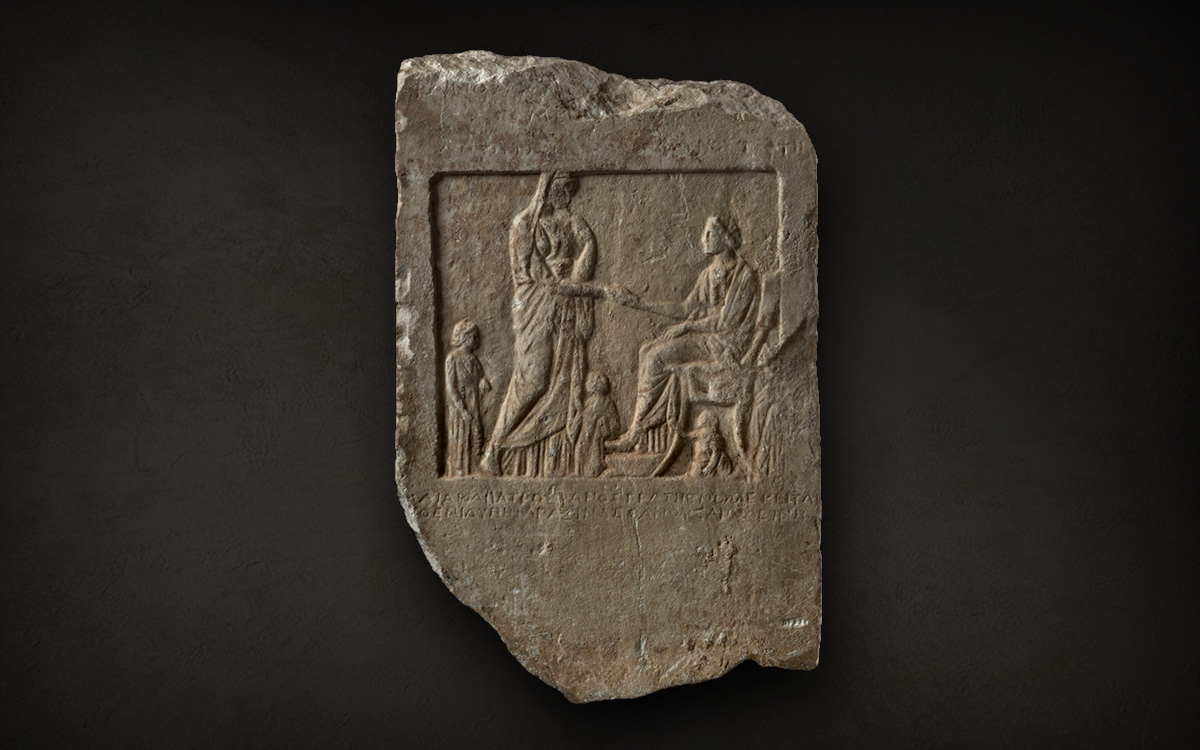
Phanostrate was a highly respected maia in a society that prized and depended on abundant fertility and successful childbearing. Midwifery was a motherly profession, described with a mothering word; as well as “midwife” and “nurse,” maia meant “good mother” and “foster mother.” Phanostrate was also an iaotros, a person trained in the theory and practice of medicine, who knew how to treat and cure. To become an iaotros, she gained the expertise and knowledge that was typically available only to male physicians. Other women practiced medicine during the classical era, but Phanostrate is the first known and named female iaotros. As a maia, she supported women while they were pregnant, guided them through labor, and cared for them and their newborns as they recovered after birth. As an iaotros, she also diagnosed and treated the illnesses and health conditions women experienced throughout their lives, from puberty to menopause. Her skills, within the limits of the time, were equal to those of an obstetrician‑gynecologist. Yet her gravestone is all that remains of her contribution to medicine’s history.
Women implored goddesses to bless them with healthy pregnancies and living children. But when their bodies needed to be tended, they turned to human caregivers. Some women were able to access and afford the services of a female iaotros like Phanostrate, but many looked to midwives for health advice and treatments. There was no official midwifery training system. Midwives usually acquired their skills by assisting their own mothers or apprenticing with older midwives. Whether they dealt with gynecological conditions and reproductive health needs or guided women through labor and cared for them and their infants through the earliest days of motherhood, midwives were continuing the long history of medical practice and knowledge cultivated and sustained by women, for women.
In classical Greece, childbirth, a private, ritual‑steeped event that often happened in the women’s quarters of the oikos, was usually the province of women. When a birthing woman’s pains began and she made her prayers to Eileithyia or Artemis, her female relatives, friends, or neighbors gathered to attend her. Often she was guided through each stage of her labor by a midwife. If her pains became too much to bear or the infant was in a difficult position and delivery was arduous and slow, the midwife might prepare her a drink made with analgesic plants or sedative herbs. Positioned on her bed, on her knees, or in the arms of her companion, she hopefully delivered her living child into the midwife’s hands.
Sadly, much of what is known about the event of giving birth does not come from representations of the joy and relief of new life and new motherhood. Often it was only on the tragic occasion of a birthing woman’s death that this event was inscribed into history. Several surviving funerary monuments for women who lost their lives to child-bearing depict the scene of birth and the companions and caregivers in attendance. Deceased women appear slumped on beds or chairs, with their hair and clothes loosened—as ritual custom decreed. Some lie back in the arms of their companions while their midwives stand close by, holding their hands or stroking their arms. Memorial scenes like these—carved, like Phanostrate’s, in relief onto stone—commemorated the patriarchal ideal of a submissive wife and mother who gave her body and life to serve the state. They are poignant records of the perils of women’s principal biological and social duty. But they also honored, as Phanostrate’s did, the bonds of trust between women and their midwives.
Midwives in classical Greece played a vital role in the birth and survival of valuable heirs, and they maintained women’s health so they could bear those heirs in the first place. But while their presence is preserved on funerary monuments, virtually no firsthand evidence of the scope of their knowledge exists today. As had been the case for most of human history, the hands‑on care of women’s bodies in pregnancy, birth, and beyond was provided by women. But midwives and other female health caregivers accrued their knowledge through the oral tradition. And since women were largely denied literacy, they were not usually able to commit this knowledge to writing—and if they did, these texts have not been preserved.
Classical Greek writings about the medical care of the female body that have survived the centuries were not written by a midwife, a female iaotros, or any other women who tended to women’s bodies and health. They were the work, instead, of a group of male physicians taught by the legendary physician Hippocrates of Cos. And being men, they had been granted the privilege of literacy and the opportunity to study. Under Hippocrates’s tutelage, these men wrote 60 tracts—known as the Hippocratic Corpus—of which 10 focused on the diseases and disorders of women. The Hippocratic physicians demystified the causes of ill‑health, which had previously been attributed to malign supernatural forces. They revolutionized the care of unwell people by introducing the first evidence‑based, ethical approach to diagnosing, treating, and curing. But as learned men in a gender‑divided society, they upheld patriarchal beliefs about what women’s bodies were for and what they could do with them. In the Hippocratic Corpus, which laid the foundation for centuries of medical discourse, almost all aspects of women’s health were understood in relation to their biological capacity to bear, birth, and nurture children.
The authors of the Hippocratic Corpus endorsed society’s insistence that daughters marry early, have marital sex frequently, and procreate often. They considered the female body inferior because of its differences from the male ideal, and these differences were rooted in the physiological conditions that enabled women to menstruate, gestate, give birth, and lactate. Female flesh was looser, damper, and more blood‑filled than male flesh. Where women’s porous insides were likened to “flocks of wool,” men’s were “densely woven carpets.” All this wetness was essential for growing a fetus—but it also meant that, from the moment they started menstruating, they hovered dangerously close to pathological crises. To stave off the horrendous physical and mental symptoms that could arise if excessive moisture accumulated in their bodies, unmarried virgins were advised to marry and cohabitate with their husbands at the earliest opportunity. Regular intercourse was thought to warm women’s blood and enable it to flow out of their uteruses with ease. It also prevented the uterus, or womb, from becoming so dry and light that it moved out of its rightful place or turned on its side. The empty wombs of older women who were no longer having sex or getting pregnant were liable to wander around the body in search of moisture. If a wandering womb pressed against a woman’s liver, she was at risk of suffocation and death.
Pregnancy was the paradigmatic Hippocratic cure for many gynecological disorders. “[If] they become pregnant, they recover.” It’s not surprising that in a society where the primary purpose of women was reproduction, the female body was thought to attain health equilibrium only when it was performing its ordained duties. The Hippocratics enshrined into medicine the enduring association between childbearing and women’s health. Their assumption that women were at a health deficit if they hadn’t been pregnant, given birth, or breastfed persists to this day. The myth that pregnancy is a cure for the symptoms of endometriosis has been dispelled, but many people with a uterus who live with this chronic and currently incurable inflammatory disease are still being told to try for a baby as a treatment option. The possibility that giving birth before the age of thirty‑five reduces a person’s risk of developing cancers of the breast, ovaries, and uterus has been reported on for decades. But exactly how pregnancy‑related hormonal changes and ovulation cessation might protect against certain cancers is still poorly understood. Overstating the preventive health effects of pregnancy—when many factors are known to increase the risk of breast and gynecological cancers—perpetuates the misbelief that becoming a birth mother is the normal condition of womanhood and that not having given birth, voluntarily or involuntarily, is unhealthy or pathological. The “pregnancy cure” myth also plays into the narrative of blame and shame surrounding women who choose to be child‑free—and it can compound feelings of brokenness and deficiency that many women facing fertility challenges have about their bodies.
Excerpted from A Woman’s Work: Reclaiming the Radical History of Mothering by Elinor Cleghorn. Copyright 2026 by Elinor Cleghorn. Published by Dutton, an imprint of Penguin Random House.
 Keep scrolling for more great stories.