

Venezuela Is Basically a U.S. Colony at This Point, with Marco Rubio Its “Viceroy”
A supposed return to "democracy" is constantly being pushed further away for Venezuela, as Marco Rubio assumes almost total power.
Photo via Wikimedia Commons SplinterTrump Administration Venezuela
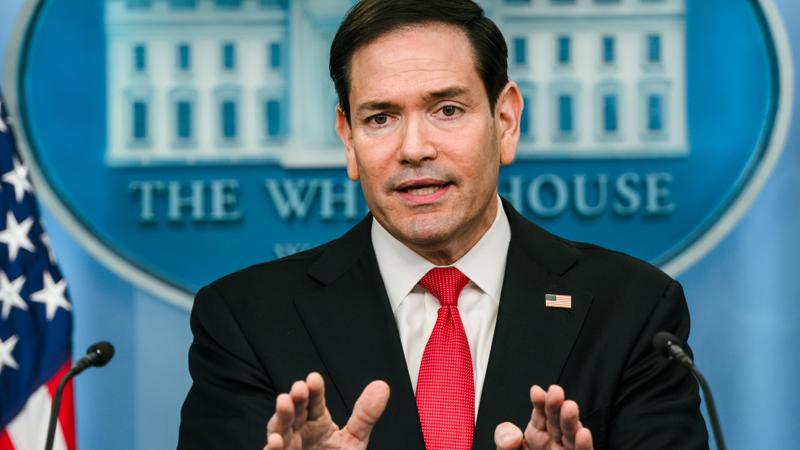
It’s indicative of the daily shitshow that is U.S. foreign policy during the second Trump administration that the United States can attack a country, depose its leader, seize control of its entire economy, treasury and oil industry, and run the entire thing via texts from the Secretary of State … and have that story recede into the background hum within a few months because we’re so busy with hotter and more distracting wars, and the prospect of new wars to come, all courtesy of the “peace President.” Even as we wait to see how much more widespread the latest waves of shooting in Iran and the Strait of Hormuz will get each week, the situation in Venezuela has lingered as the kind of international debacle that would stand out as the most egregious foreign policy incident in the majority of presidencies. In the Trump 2.0 era, though, it’s perceived as just one more item on the trash heap, but it really shouldn’t be–particularly given the absolutely insane level of control that Secretary of State Marco Rubio is flexing over the supposed “democracy,” and the constantly receding promise of new elections.
Rubio’s control over the day-to-day minutia of Venezuela’s rebuild is detailed in a wide-ranging new piece in the New York Times, detailing how the Secretary of State, when not indulging in his favorite pastime of planning the deaths of millions of Cubans, has acted as the final say in practically any economic matter in Venezuela, controlling the flow of its finances, the rebuilding of its oil industry and even the social media posting of officials and its “interim” President/puppet ruler, Delcy Rodríguez. Rubio has been wielding more power there, in fact, than many nominal elected heads of state do in their own countries–and Venezuela is now even more in the pocket of U.S. influence than it was before, reeling as it is from a devastating series of earthquakes that killed more than 4,300 people and upended the country’s already fragile economy and infrastructure.
Think. About. This.
The U.S. Treasury receives the revenue from most of Venezuela’s exports, then disburses it gradually to Venezuela through the country’s private banks…. Mr. Rubio and his team set the conditions on what that money can be spent on, and by whom.
www.nytimes.com/2026/07/11/u…
— Kai Ryssdal (@kairyssdal.bsky.social) 9:32 AM · Jul 11, 2026
Such a disaster may present deep challenges for the country’s economic development–outside investors are understandably very hesitant to throw their money into an oily puddle of chaos–but it perfectly suits the seeming anti-democracy policy that Rubio and Rodríguez have been pushing. Seven months after the U.S. abduction of Nicolás Maduro, his former Vice President is still the de facto figurehead, and no elections have been scheduled. When NYT asked Rodríguez prior to the earthquakes when the country would honor its democratic commitment by scheduling federal elections, she merely replied “I don’t know. Sometime.” Millions of Venezuela’s residents, meanwhile, are demanding a far clearer timeline than that. They’re as dissatisfied as you would expect them to be, given that Venezuelan inflation, although technically falling, is still the world’s highest at more than 500% annually.
Not that Delcy Rodríguez actually has the power to make such a decision, when it comes to Venezuela’s token democracy. She effectively took the job with a figurative gun to her head that could have transitioned into a real gun at any time if she had not immediately bent the knee, so she made the choice that most of us would undoubtedly have made. In the words of Trump, she was given an ultimatum by Rubio during Maduro’s capture and told him that she’s “essentially willing to do what we think is necessary to make Venezuela great again.” Turns out, that involves ceding control of literally everything to Rubio as the nation’s de facto ruler, to the point that officials within the Venezuelan government refer to Rubio as the “viceroy,” a colonial Spanish-era title for a provincial governor who enforced the will of a country on the other side of the globe. The implication is hard to miss.
Marco Rubio believes he’s going to run for US President whilst simultaneously being the Viceroy of Venezuela.
— Dr. Jack Brown (@drjackbrown.bsky.social) 11:18 AM · Jul 11, 2026
Rubio’s iron grasp is equally hard to shake off. According to NYT, he has direct control over nearly all the country’s public revenues, which flow first to U.S. treasuries and are then disbursed to the Venezuelan banking system at the Secretary of State’s whim. This allows the U.S. to curtail local government corruption schemes, but also gives the country total control of the money spigot that pays government employees, security forces, etc., forcing total compliance. Rubio likewise has overseen the enforcement of U.S. sanctions in Venezuela, effectively deciding its trading partners and where it does business. He approves government appointments from the office of Delcy Rodríguez and communicates with her regularly via WhatsApp, although he hasn’t even physically set foot in the country since Maduro’s ouster. He even weighs in directly on the social media posting and public statements of Rodríguez and her officials, telling them when and where they can speak or post. NYT relays a story, for instance, of Fox News anchor Bret Baier contacting the office of Delcy Rodríguez for an interview, only to be told by the interim President that Donald Trump would have to personally approve her speaking to the American media. In another instance, Venezuela’s foreign minister Yvan Gil condemned U.S. aggression against longtime Venezuelan ally Iran, only to be contacted by Rubio’s office and instructed directly to remove the post and refrain from voicing any opinion contrary to U.S. aims. Gil immediately complied.
Marco Rubio has always styled himself as a champion of democracy in Latin America, in particular vowing to overthrow the remnants of Communist Cuba while handwaving however many innocent deaths this might entail. He has as such described the Trump administration’s overall plan for Venezuela as three parts: “recover the economy, stabilize the country and transition to democracy.” Only now, when it comes to the last phase, the plan suddenly becomes entirely ephemeral despite the unprecedented level of control he now wields. Reviving an oil industry that produces a product very few refineries in the U.S. are actually able to use? That’s obviously a priority. Allowing the Venezuelan people to choose their own leaders? Suddenly not something Rubio is interested in talking about. Once upon a time, when Maduro was still ruling, Rubio had been a strong supporter of Venezuelan opposition leader María Corina Machado, the woman who tried to curry Trump’s favor by literally gifting him her Nobel Peace Prize. Now that Delcy Rodríguez is functioning as an obedient lapdog, however, Rubio’s office is reportedly refusing to assist Machado in returning to Venezuela, where she says she wants to aid in the country’s post-earthquake recovery, saying that her presence would be a distraction and “political stunt.” A woman who was a useful figurehead during the Maduro era suddenly finds herself no longer useful to U.S. foreign policy.
Trump abandons freedom fighter Maria Corina Machado in favor of dictator Delcy Rodriguez.
www.wsj.com/world/americ…
— Max Boot (@maxboot.bsky.social) 8:00 AM · Jul 3, 2026
Delcy Rodríguez, on the other hand, seems perfectly happy to play along, perhaps hoping that if the topic of elections can be postponed for long enough, that she will simply be able to consolidate her limited power as an autocratic figurehead and outlast the current American administration while quietly scrubbing away the promise of elections altogether. She is clearly mastering the political art of pretending to publicly resist foreign influence while actually taking her marching orders directly from each morning’s WhatsApp missives from Rubio, which seems to be exactly what the United States wants from the regional doormat. Her approval rating? Currently sitting at less than 25%. Got to love all that democracy we’re nurturing in the region!
“They removed a pawn, but the structure remains,” said Tiotiste Herrera, a retired judge in Caracas, just weeks before the massive earthquakes would plunge Venezuela into even deeper chaos. “The same problems persist. They have even worsened.”
 Keep scrolling for more great stories.