

You’ve Never Been More Likely to Get Cancer, Survive Cancer, or Be Bankrupted by Cancer
A full 70% of cancer patients now survive five years or more after diagnosis. The question is if they'll be able to afford their treatment.
Photo via Unsplash, National Cancer Institute HealthSplinter Cancer
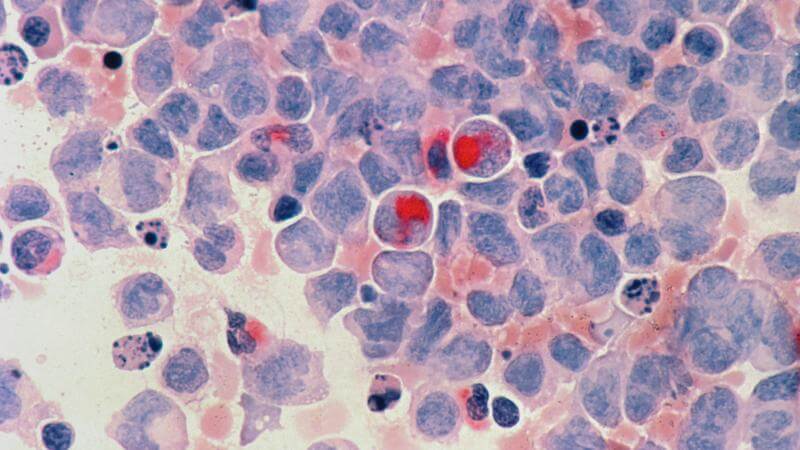
We’re living in a curious moment for the status of cancer diagnosis and treatment, within the United States. The overall rate of prevalence for diseases that fall under the wide, wide title of “cancers” is increasing. At the same time, steady improvement to the standard of care and treatment, and newer breakthroughs in therapeutics, have raised survival rates higher than they’ve ever been before. But for all too many patients, the question is whether they’ll be able to afford those new wonder drugs and treatments, given the surging cost of both medical treatment and healthcare/insurance premiums, directly aided along by the actions of the second Donald Trump administration. Which is to say: You’re simultaneously more likely than ever to be diagnosed with cancer, but also more likely to survive it … provided that you can pay. That’s a state of affairs that, like so many others in the U.S., leaves the most vulnerable, low-income Americans as the most likely to bear the burden of what the medical industry would term poor disease outcomes. Which is another way to say “the most likely to die from cancer.”
There’s little question that we are surrounded by more cases of cancer than ever in 2026–the American Cancer Society estimates that this year, there will be more than 2.1 million newly diagnosed cases in the United States, and more than 626,000 total deaths. There are multiple primary drivers of these rising cancer rates, including one demographic one that is all too easily overlooked by social-media health influencers searching for some kind of environmental smoking gun: The U.S. population just keeps on getting older. According to the U.S. Census Bureau, the U.S. population who are 65 and older rose again, by 3.1% from 2023 to 2024, continuing a trend that has been happening for decades. From 2004 to 2024, the total share of the U.S. population that was 65 and older rose from 12.4% to 18.0%. Simultaneously, thanks to falling birth rates, the total share of the population made up by children declined in the same period, from 25.0% to 21.5%. Children still outnumber “older adults” (the term for adults 65+) in raw numbers, but within another decade that figure could flip. And in an increasingly senior society, you’re probably going to find more cancer.
That said, researchers and doctors are also concerned about the rising rate at which younger people (defined as 50 and below) are now being diagnosed with a more than a dozen specific forms of cancer. The American Cancer Society noted in 2025 that incidence rates among younger people seem to be especially notable in women, and that rates “in women under 50 are now 82% higher than their male counterparts, up from 51% higher in 2002.” Specific types of cancer being found more frequently in this cohort include colorectal, breast, prostate, uterine, stomach (gastric), pancreatic, and more, and although many lifestyle and environmental factors have been offered as potential culprits (such as sedentary lifestyles, or heavily processed foods), there’s little scientific consensus. One study projected that the rate of cancer diagnosis in this age group would increase by roughly 30% globally between the period of 2019-2030.
“This is not a blip,” said Andrea Cercek, a gastrointestinal oncologist quoted by the Memorial Sloan Kettering Cancer Center. “The more data we gather, the clearer this becomes.”
It is fortunate, then, that taken as a whole, most cancers tend to be less deadly than they once were given modern medical treatment–although as ever, this is an incredibly wide-ranging statement, and specific types of disease range from highly survivable to quite often fatal. Almost every type of cancer, however, has seen the outlook on survivability improve in the last 10 or 20 years. The U.S., in fact, recently reached a milestone: According to the latest annual report from the ACS, seven in 10 people now can be said to survive five years or more after diagnosis, for the first time ever. In comparison, that number was around 5 in 10 in the 1970s. By the 1990s, it had crept up to 63%, and has slowly continued to climb since. Five years is typically used as a standard benchmark in measuring cancer survival, due to the decline in risk of recurrence if the disease hasn’t come back in that period of time in a person who has been successfully treated.
The 5-year survival rate across all cancers has reached 70%, up from 50% in 1971, according to new data from the @americancancersoc.bsky.social. Experts including @mskcancercenter.bsky.social told @statnews.com this reflects decades of sustained investment in cancer research. bit.ly/3Lsk1QI
In particular, the expanding use of immunotherapies (which teach the immune system to fight cancer cells) and targeted therapy have helped to notably improve the survival rates for several specific forms of the disease. The blood cancer myeloma, for instance, has seen its five-year survival rate go from 32% in the 1990s, to 62% today. Lung cancer, which remains the biggest killer in the United States despite factors such as starkly declining cigarette usage, has also improved in its outlook at least somewhat, with five-year survival rates rising from 20% in the 1990s to 37% today. The use of these newer types of treatment has multiple benefits, beyond simply combating the disease: They also tend to be easier on the body than the likes of radiation or chemotherapy, allowing patients a greater quality of life in the course of treatment. And it should not be lost on us that said drugs are typically the result of many years of labor and testing, before they can help make such significant changes in survival rates.
“It takes decades for research to understand and develop these more effective treatments, and now we’re seeing the fruits of those investments,” said Rebecca Siegal, the American Cancer Society’s senior scientific director surveillance research, in the latest annual report. And that’s significant, because the amount of funding being put into current, ongoing cancer research has been slashed in the wake of Donald Trump’s return to the White House. In the early days of Elon Musk’s DOGE rampage at the beginning of 2025, hundreds of employees were axed from the National Cancer Institute, and the leadership and overall strategy of the organization has been crippled. It’s difficult to fully summarize just how much money has been pulled specifically from cancer research within the last year, but an analysis from the Senate Health, Education, Labor, and Pensions Committee estimated that there had been a roughly 31% decline in cancer research grant funding in the first part of 2025, compared to the same period in 2024. Keep in mind that during the same period, Donald Trump was in the process of trying to sell Americans on a space-based “Golden Dome” missile defense system that he said would cost $175 billion, equal to 25 times the annual operating budget of the National Cancer Institute. This all suggests a blockage in the pipeline in which new, crucial treatments are developed for fighting the disease, which one would think could lead to survival rates that stop rising and instead plateau.
For all too many patients, however, the question of survival increasingly comes down to dollar signs. The previously mentioned newer generation of cancer therapies, such as biologics, immunotherapies and targeted drugs, are simply more expensive (and subject to monopolies and lack of competition) than prior generations of treatment, cost that is passed on to both insurers and patients. Case in point: Of the 12 drugs approved by the FDA in the year 2012 to fight cancer, 11 of them had a cost of more than $100,000 annually. By 2017, the average annual cost of newly approved drugs was more than $185,000. By 2022, it was more than $283,000. It’s little wonder that cancer patients are statistically far more likely to declare bankruptcy, and that those patients who declare bankruptcy are more statistically likely to die. Those two statements are as perfectly logical as they are perfectly cruel.
Nor is the situation going to get better any time soon. With members of Congress failing to come to any kind of compromise on expiring subsidies for the Affordable Care Act (ACA), spiking insurance premiums for more than 22 million Americans will mean that the bottom line cost of access to lifesaving cancer medications will no doubt be higher than ever going forward. For cancers like the aforementioned myeloma, which has a rate of incidence twice as high in Black Americans as it does in others, it will likely result in a deadly confluence of rising cost of living–of staying alive–and Trump administration policy, which is so often targeted to hit the poorest, the hardest.
The question becomes: When it’s your turn for cancer, can you afford to fight it?
 Keep scrolling for more great stories.