

Florida Forced 2 Black Women to Have C-Sections They Didn’t Want
“I have 20 white people against me, and because I am informed and I am making an informed decision, they are trying to take my rights away from me by force,” one of the women told ProPublica of her bedside court hearing.
Photo: Getty Images Abortion
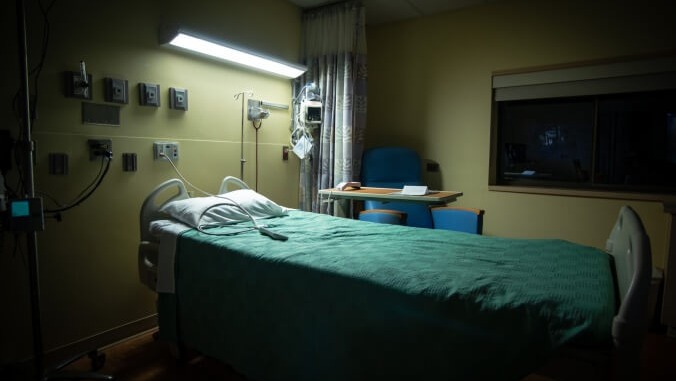
Medical fascism is alive and thriving in the sunny state of Florida, where officials seem to be obsessed with everyone’s medical freedom except that of pregnant people—and where at least two women have been coerced into having C-sections after a judge ordered them to.
On Saturday, ProPublica reported on the harrowing stories of Cherise Doyley and Brianna Bennett: both Black women who had prior C-sections, didn’t want to go through another one, and thus ended up in a remote court hearing from their hospital beds with hospital staff holding a tablet up to their faces.
“Pregnancy is the only condition where Florida courts have ruled that a patient can be forced to undergo unwanted treatment,” the outlet writes. “Even a state prisoner on a hunger strike has more rights to make medical decisions.”
Doyley, a birthing doula, had three C-sections before she went to the hospital in September 2024—one of which had resulted in a hemorrhage. She asked for a vaginal birth, but the hospital refused to comply with her requests and got a judge involved. During her hearing, a doctor testified that she and her fetus were unlikely to survive the birth, as her history of C-sections and stalled labors could result in uterine rupture. (Little research actually confirms uterine rupture becomes a higher risk after prior C-sections.)
Doyley’s judge eventually ruled that she could continue laboring until an emergency occurred, to which the hospital was then allowed to step in and operate—even without her consent. She woke up overnight, being wheeled into surgery, after doctors noticed the fetal heart rate had dropped for seven minutes.
“I have 20 white people against me, and because I am informed and I am making an informed decision, they are trying to take my rights away from me by force,” she reportedly said during her hearing. The judge dismissed her requests for a Black medical provider to join the call, saying, “I don’t find that race really has much to do with this.” Black women are four times more likely to die than white women in childbirth—grim data that abortion bans have only made worse.
Bennett went through her experience in March 2023, in which she was seeking a vaginal birth because her former three C-sections seemed medically unnecessary and were increasingly more difficult to recover from. After her third C-section, she’d been unable to use the bathroom for weeks without help.
After her labor went on for over a day, a doctor urged her to get a C-section. But because she refused, the hospital reached out to a state attorney, who replied via email, “I plan to file an emergency motion with the Court to allow TMH to take whatever steps medically necessary to protect the life of the child and mother.” During the hearing, the fetal heart rate spiked—and Bennett was taken into surgery. Speaking to ProPublica, the attorney doubled down on the decision he made, saying he was “real comfortable” with what he did and “I hate the fact she’s upset about it.”
Speaking to ProPublica about Doyley’s case, a spokesperson from the state attorney’s office said, “The courts have held that the State has a compelling interest in the preservation of the life of an unborn child and the protection of innocent third parties who may be harmed by the parental refusal to allow or consent to life-saving medical treatment.” The outlet also notes that the Supreme Court declined to hear a case on court-ordered C-sections in 1994, meaning there’s really no firm precedent stopping courts from ordering them.
Florida’s six-week abortion ban is one of the strictest in the country, with a narrow and vague exception only to save the life of the mother. Doctors and providers risk losing their license, or could face jail time or hefty fines if they violate it. But preserving the “life of an unborn child” is the endgame of the fetal personhood movement, whose goal of legally recognizing pregnant people as nothing more than wombs seems to be fast approaching.
 Keep scrolling for more great stories.