

Celebrate Papa’s Birthday with the Poorly Designed Hemingway Daiquiri Cocktail
Ernest Hemingway: Great American writer, crappy American cocktail designer. Thankfully, his namesake daiquiri has since been fixed.
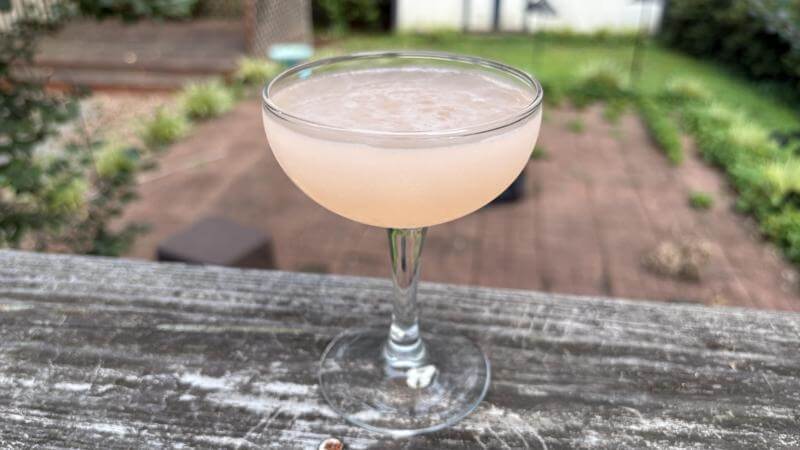
Photo by Jim Vorel Splinter sunday cocktail corner
Sunday Cocktail Corner is a series dedicated to finding just the right libation for the situation.
I love how the most important thing in whether the origins of a cocktail are well recorded and shared tends to be nothing more than whether there’s a good story attached to the drink, a foundational legend that can be endlessly repeated. That’s certainly the case with something like tiki’s favorite gin cocktail The Saturn: I swear to god, people who know nothing else about the drink are somehow aware of its origin story of winning the International Bartender’s Association World Championship in 1967, despite the fact that no one can name a cocktail that won any other year of the same competition. So it is as well with one of the all-time great summer cocktails, the Hemingway Daiquiri. In honor of Papa’s birthday this week, let’s consider how amusing it is that the daiquiri named in his honor today is such as delicious drink, when his initial instructions for making it were demonstrably anything but.
The oft-repeated legend goes like this: Ernest Hemingway, living in Cuba through much of the 1930s, visited a bar called El Floridita that claimed to have invented the original daiquiri, that magically simple elixir of rum, lime and sugar. Sampling the El Floridita daiquiri, Hemingway supposedly told the bartender that he preferred a version “with no sugar and double the rum.” That daiquiri specified by the iconic American author would go on to be named the “Papa Doble” in his honor. It has subsequently had a handful of other names as well, such as the “Hemingway Special” or “El Floridita #4,” but on modern menus it’s typically just called a Hemingway Daiquiri.
But here’s the thing: A daiquiri, made with “double the rum” and “no sugar,” is not just some subjective matter of taste–it’s an unambiguously bad drink. It’s a large amount of rum and some lime juice in a glass, and it’s not a drink anyone will actually enjoy if you dared to serve it to them. If you mix one of these up, you’ll see why: Without any balancing sweetness, you’ll find this quasi-daiquiri bracingly tart, bitter, boozy, flat and flavorless all at once. It’s genuinely impressive how awful it is. It simply doesn’t work at all, and this really shouldn’t be a surprise! Hemingway, after all, was a cantankerous novelist and journalist, not a cocktail aesthete or mixologist. He was also a committed, lifelong alcoholic whose top priority was no doubt getting the ethanol into his bloodstream in short order. Of course he wanted a drink like this.
Bartenders, however, know a bad cocktail when they see one, so despite the legend of its creation being constantly repeated, the people actually mixing the drinks immediately began to search for a way to make the Hemingway Daiquiri into something you’d actually want to drink. This, they did in a couple of ways. First, grapefruit joins the lime juice to add another layer of citrus complexity and a pleasant pastel pink hue. But more importantly, a small amount of maraschino liqueur (typically the common Luxardo brand) adds in a bit of the sweetness missing from the “Papa Doble,” bringing the drink back in the direction of balance. If you’ve never had Luxardo Maraschino, you might be expecting it to be flavored like cherries, but you’ll instead find that it contributes an almond nuttiness reminiscent of cherry pits, blended with sweeter floral notes. The end result is still relatively dry and spirit-forward, like Hemingway apparently wanted it, but it’s not bracingly tart or unbalanced. It’s drinkable. It’s a lean, elegant warm weather cocktail.
Hemingway Daiquiri Recipe
— 2 oz white rum (a wide variety of possibilities, from dry and neutral to grassy or funky)
— .75 oz lime juice
— .5 oz grapefruit juice
— .5 oz maraschino liqueur
Add all ingredients to a drink tin/cocktail shaker with plenty of ice. Shake thoroughly to chill, and then double strain into a chilled cocktail coupe or Nick & Nora glass–the double strain helps remove some of the smaller ice chips. This is a cocktail that is best cold, and best consumed relatively quickly before it can warm up too much. It’s designed for crisp refreshment.
The result is something that is a touch drier than a classically made daiquiri, and a little more complex, thanks to the additional layers of citrus and the floral notes of the maraschino liqueur. It’s by no means a “better” version, as some people try to position it–just an alternate daiquiri if you happen to like maraschino in particular. Ironically, it’s entirely likely that Papa himself was never actually served a daiquiri that was anything like this, but it’s what his namesake has become in the interim. By all accounts, it’s what they still serve at La Floridita to this day, although we sadly can’t check for ourselves with the Trump administration still in the middle of attempting to choke the Cuban people to death by cutting off their power supply. Regardless, the reality is that the drink inspired in Hemingway’s name is almost certainly far better than anything the author would ever have requested himself, if his “double rum and no sugar” instructions are to be believed. Even if Hemingway would likely have been too blitzed to know the difference, we can still enjoy the modern classic that has taken on the mantle.
 Keep scrolling for more great stories.