

Iowa Implements Flurry of Setbacks to Repro Health and Cancer Prevention
“Anti-abortion politicians won’t stop until abortion access is cut off entirely, for everyone,” Nimra Chowdhry at the Center for Reproductive Rights told Jezebel in a statement.
Photo: Getty Images AbortionPolitics Abortion
A round of tomatoes are in order for Iowa, who this week signed out of its last legislative session for the year with a collection of bills that will, effectively, attack healthcare access in the state.
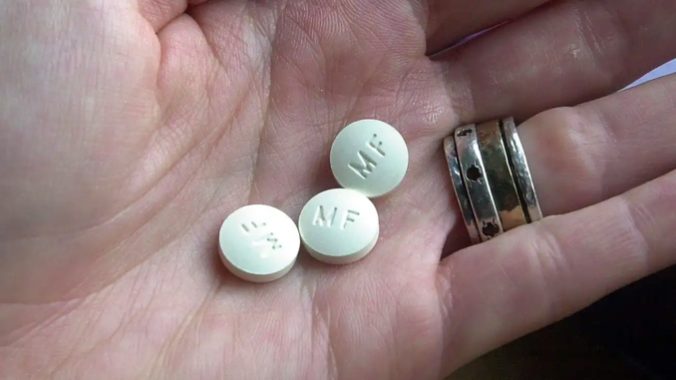
Iowa on Tuesday became the 17th state to restrict access to telehealth abortions by imposing on them an in-person prescription requirement, and strictly by a medical provider, with House Bill 2788–one of 13 bills signed into law by Gov. Kim Reynolds (R-Iowa). This comes as another setback in a state that already has one of the strictest abortion bans in the country, during a time that feels especially fraught for medication abortions.
Along with attacking telehealth abortions, HF2788 will also redefine “abortion” to specifically ensure medical treatment for miscarriages and ectopic pregnancies—conditions that are far less treatable under an abortion ban—cannot be construed as abortion treatments. In an earlier version of the bill, one provision also tried to suggest abortion seekers should be charged with homicide.
Another bill Reynolds signed was Senate File 304, thus no longer allowing minors to get human papillomavirus (HPV) and hepatitis B vaccines without parental or guardian consent—and adding another guardrail around a potentially life-saving vaccine. (Per experts, the HPV vaccine in particular is believed to reduce the risk of cervical cancer.)
“Anti-abortion politicians won’t stop until abortion access is cut off entirely, for everyone,” Nimra Chowdhry, senior state legislative counsel at the Center for Reproductive Rights, told Jezebel in a statement. “Iowans already struggle to get the care they need before the state’s six-week limit.”
While Iowa’s anti-abortion lawmakers have a long history of railing against reproductive rights in the state—even before Roe was overturned—the state did, for a time, have better access than many of its neighbors in the midwest. But under a near-total ban at six weeks, a two-trip requirement; a mandatory ultrasound law; and only three abortion clinics in the state, access has become extremely limited.
This was one of the concerns brought forward during debates ahead of the bill’s passing, and specifically by state Sen. Catelin Drey (D-Woodbury County), who used her time to grill state Sen. Jason Schultz (R-Audobon)—who’s called abortion pills “dangerous drugs”—about some basic questions regarding women’s reproducctive rights.
“How far does the average Iowan have to drive for reproductive care?” Drey asked Schultz. When he said he didn’t know, she answered for him: “An hour and a half to two hours, one way.” (Schultz, for his part, didn’t know most of what Drey was asking him about—like what a miscarriage actually means.)
#iowa vote for Catlin Drey!
#prochoice #womensrights #abortion is healthcare— Neon Antifa Life 🎰🌴😎 🏁 (@aliceknew.bsky.social) May 12, 2026 at 6:34 PM
The Hawkeye State is the latest to move towards restricting—and ultimately eliminating—access to medication abortions, following suit after Oklahoma earlier in May passed another anti-abortion bill, threatening a (additional) felony charge for anyone who dares send abortion pills into the state.
All this also comes in the wake of a Supreme Court ruling that stayed access to medication abortions, after a federal appeals court tried to put a full stop to telehealth abortions—even in states where abortion is protected—while Louisiana continues taking the FDA to court over its removal of an in-person requirement for mifepristone, the first of two pills taken in a medication abortion.
Still, none of these anti-abortion gremlins can seem to change the fact that abortion medications accounted for 27% of all abortions in the first half of 2025, or that telehealth abortions have become much more common as abortion bans continue to crop up across the country. Reminding them all—again—that abortion bans do not stop people from needing, or getting, abortions.
“Restrictions like this force people to drive even longer distances to get the care they need. But the reality is, many won’t be able to make that trip,” Chowdhry further explains. “Anti-abortion extremists know this — that’s why they want to ban telehealth abortion in Iowa and across the country.”
 Keep scrolling for more great stories.