

The U.K. Is Banning Social Media for Kids. Can It Deliver More Effectively Than Australia?
Do any of the countries banning social media for kids actually have the guts to force tech companies into compliance?
Photos via Unsplash, Berke Citak, Bruce Mars SplinterTech social media
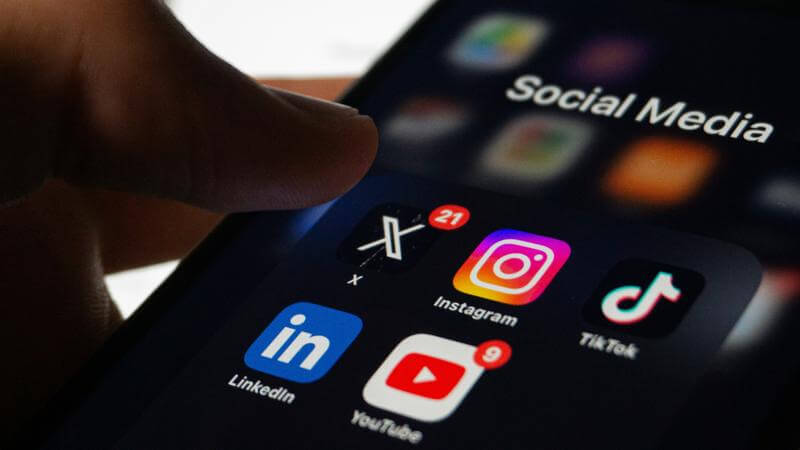
Amid World Cup fervor that is likely dominating news headlines across the U.K. this week, comes a Monday morning announcement from British Prime Minister Keir Starmer that carries some significant cultural weight: Britain will join other European and world nations in employing a planned social media ban for children under the age of 16. Specifically targeting “user-to-user platforms, whose purpose is to enable social interaction and which allow users to post material, alongside algorithms,” such a ban would take aim squarely at the likes of TikTok, Snapchat, YouTube, Instagram, Facebook and Twitter, while sparing messaging services like WhatsApp. The British government plans to get the bill in front of lawmakers before the end of the year, “with protections expected to come into force in spring 2027.” The obvious question: Can Britain make such a ban stick in a way that conveys real benefit to the country’s youth? And can it do it in a way that proves more effective than the somewhat toothless child social media ban in Australia that became the world’s first of its kind six months ago?
“The changes will back parents grappling with the risks for children that come from the online world and help empower them by providing a clear decision on what is safe and age-appropriate for children,” said Starmer in a statement. The British PM went on to claim that the UK’s legislation will go “further than any country in the world” in the ban’s scope and enforcement, including “world-leading blocks on harmful functions such as livestreaming and stranger communication with children for under-16s. Taken together, these measures will mean a much more comprehensive model than just a blanket ban on social media—one that responds to how children experience harm online, rather than just where it happens.”
BREAKING: Prime Minister Keir Starmer says Britain will ban under-16s from using various social media apps.
— The Associated Press (@apnews.com) 3:26 AM · Jun 15, 2026
The U.K. ban on social media accounts for children younger than 16 is just the latest in what has become a percolating global wave of similar legislation–even in the United States, more than half the individual states have taken steps toward such a ban, although always facing extremely stiff resistance from the industry’s biggest tech giants. In Europe, Spain vowed to protect its children from the “digital wild west” by enacting a ban in February, although there isn’t yet any data on its effectiveness, while Malaysia started enforcing its own ban just this month. France, Norway and Denmark and Greece are all in the midst of working toward their own bans–but all follow the outline of Australia on some level, as it became the first major nation to attempt to institute and enforce a ban for kids younger than 16, starting in December of last year. That one has been in effect long enough to get some data from Australia eSafety Commission, and suffice to say it seems to be of relatively limited impact so far.
According to the eSafety Commission’s data, a survey of 898 parents of children aged 8-15 conducted in January and February found that seven of 10 kids who possessed social media accounts before the ban started still had their accounts, having found loopholes and ways around the ban. Said “loopholes” could be as simple and stupid as a kid literally drawing a mustache onto their face for an age estimation scan, or simply creating a new account with a fake birthdate. At the same time, some accounts of children younger than 16 reportedly just kept working as if nothing had happened.
“While there are fewer under-16s with social media accounts than there were four months ago, it is clear significant numbers of children aged under 16 are still on social media,” the eSafety Commission concluded in its March report.
It is easy to joke, or to dunk on the seeming lack of enforcement of such toothless legislation, because of course the most determined kids will find a way back on to the addictive social networks they have been weaned on at a young age. At the same time, however, I do feel we should note that “7 in 10 are still on social media” is a framing effectively ignoring that even a relatively toothless ban did seemingly work in getting the remaining 3 in 10 kids off social media services a few months after the ban went into effect, and if extrapolated out to the entire Australian population is the sort of thing that could still have measurable cultural benefit. We are talking about millions of kids and parents who altered their typical behaviors in accordance with the new law, an outcome I actually see as at least somewhat optimistic.
That said, more effective enforcement of such a ban would require the country putting it into effect to actually follow through on its vows to hold tech companies accountable–otherwise, said tech giants will have little to any impetus to comply. The Australian law puts the burden of enforcement on those tech companies under the threat of fines for non-compliance with the new regulations (such as allowing children to skirt the law), but to date, no fines have actually been issued. They still could be in the future, however, as the Australian eSafety Commission says it still has “ongoing investigations into five of the 10 platforms covered by the law for noncompliance — Facebook, Instagram, Snapchat, TikTok and YouTube — and said it would decide on enforcement actions by the middle of the year.” One wonders, how big a fine would be necessary for the likes of Meta to give a shit about making their age gates more effective?
In the U.K., technology secretary Liz Kendall claimed that Britain would learn from the sluggish enforcement of the Australian ban by instituting steps that “make it far harder for children to bypass safeguards,” while also working with the U.K.’s communications regular Ofcom on a compliance strategy for the tech companies.
Keir Starmer says under-16s in the UK may get around his social media ban
“But we don’t say, ‘oh look, a teenager managed to get a drink somehow’ – let’s not bother banning alcohol sales to children”
— Peter Stefanovic (@peterstefanovic.bsky.social) 3:46 AM · Jun 15, 2026
“The government must continue to put pressure on Big Tech and not let them off the hook,” said Chris Sherwood, CEO of the National Society for the Prevention of Cruelty to Children, to CNN. “We want to see Government go further, be bolder and make sure there is real accountability across all online platforms, gaming services, and AI chatbots so the transformational change children and parents need and deserve becomes a reality.”
To do that, frankly, they’ll probably have to make it hurt for the likes of Meta, TikTok or Twitter/X, and make it hurt badly–and the same government is so caught up in AI investment already that there may be no extricating them from the financial/technological entanglements. But it’s a case where governments will need to lead, because we obviously can’t rely on said social media companies to weigh in on such a topic in good faith, when it concerns their inherent ability to gain and monetize users. A Meta spokesperson can warn that bans will simply drive kids toward more dangerous “unregulated alternatives,” but this is the knee-jerk response of a company where profitability is being threatened, not the warning of some altruistic nonprofit. At least in Australia, 3 in 10 kids who had social media accounts may not have them any more. That’s probably not enough to reshape a generation, but it could be the start of an important reframing of how we allow the most impressionable in our society to interact with the digital world while their brains are still developing fast. Here’s hoping that Spain and France, the U.K. and even the United States can improve on these modest results in throwing off the yoke of social media’s cultural centering.
 Keep scrolling for more great stories.