

The War Against Inflation Would Nearly Be Over If Not for Trump
This stupid motherfucker, man.
Photo by The White House SplinterTrump Administration Inflation
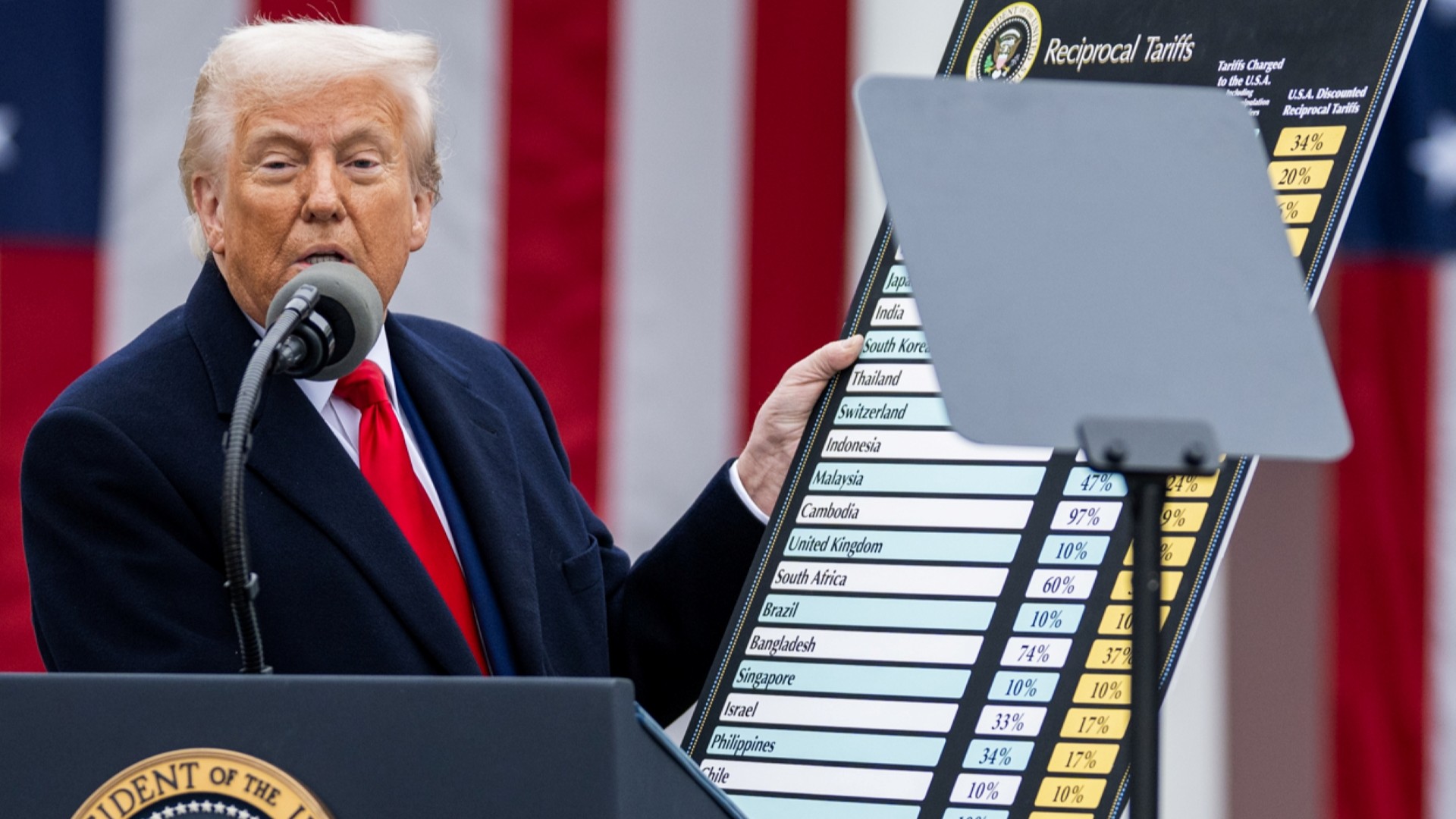
In November 2021, right as Dogecoin reached a $36 billion market cap—one larger than Halliburton’s, Estee Lauder’s and The Hartford’s right now—the Bureau of Labor Statistics returned an October inflation report confirming a trend that would shake the financial world to its core and mark the top of a wildly speculative bubble. In the midst of an easy-money bonanza, the bill for nearly two decades of greed had come due. Inflation driven by a historic supply shock was ripping through an economy that held interest rates far too low for far too long, creating the vast paper wealth of the Silicon Valley ZIRP monster swallowing our society whole today. The financial world that post-2008 generations grew up in had to fundamentally change. And fast.
In March 2022, the Federal Reserve pivoted and began the fastest interest rate hike cycle since Fed Chair Paul Volcker crushed the economy with nearly 20% rates in 1981, essentially an admission that they were late to see the inflation unleashed by the myriad ripples of the COVID supply shock. By June 2022, headline inflation hit its cycle peak of 9%, and the whole world began to brace itself for a recession that never came. One of the lessons from the Volcker Shock that finally ended the stagflationary 1970s is that using interest rates to force the economy off the road and into a ditch is a good way to kill inflation too, and Fed Chair Jerome Powell and his board of governors tried to draw from the lessons from the 1970s, albeit with a more delicate touch, given that our era was not preceded by a decade of aimless clusterfuck. We are in the Trump era, where we are creating the decade of aimless economic clusterfuck that someone will have to unfuck one day.
And it was working. The Fed’s fast, but not too fast, rate hike schedule caught up to inflation and tamped it down, all while the U.S. economy outperformed all of its peers post-2020. In June 2022, core CPI, the inflation measure the Fed pays attention to in order to set policy, was 5.9%, down a little from its September 2021 peak at around 6.3%. By March 2025, core CPI was down to 2.8%, rising just 0.1% month-over-month. Had Kamala Harris won, interest rates would surely be far lower, housing would be cheaper, and hiring last year would likely not be frozen across most industries outside healthcare and a few others. That is the basic policy interpretation you can take from this new estimate from the Dallas Federal Reserve branch that core CPI would be 2.3% today without Trump’s tariffs, just 0.3% off the target of a stable 2% which the Fed has said since 2022 would convince them to end this rate-hike cycle and declare victory against inflation.
Dallas Fed estimate for how much lower inflation would be without Trump tariffs www.dallasfed.org/research/eco…
— Catherine Rampell (@crampell.bsky.social) May 28, 2026 at 10:00 AM
“We find evidence that impacts of realized tariff rate changes on relative price changes across PCE categories peaked in first quarter 2026, and that these impacts are roughly consistent with the cumulative impact we would expect given the changes in realized tariff rates in 2025,” wrote the Dallas Fed. Some folks may roll their eyes and say “duh, anyone who ever drunkenly stumbled into an economics 101 class could tell you that these tariffs would lead to inflation,” but most of those folks couldn’t tell you exactly how much. That’s why studies like these and the widely mocked Wall Street Journal story about how Americans are paying for tariffs are valuable, because they provide the tangible evidence the “fucking duh” caucus points to, and 0.9% is a lot. Enough to raise my eyebrows and write about how much it is.
The Fed may have been late to the fight against inflation, but they caught it and reversed it. Powell has been very clear since March 2022 that the Fed did not want to repeat the mistakes of the 1970s, which centered around cutting rates too soon before inflation had truly abated, which ran the economy hot and brought inflation roaring back, forcing the Fed to hike interest rates again in a horrific feedback loop that brought the Misery Index to its all-time lows in the 1970s. The problem is that Jerome Powell’s boss thinks that all those mistakes they made in the 1970s were actually pretty great and he wants to make them even bigger and do them faster.
12-month goods inflation is basically 0 with anyone else in office. With Trump it’s almost 3%.
— Jacob Weindling (@jakeweindling.bsky.social) May 28, 2026 at 10:17 AM
“We estimate that the tariffs implemented through November of 2025 have raised core goods PCE prices by 3.1% through February 2026, explaining the entirety of excess inflation in the core goods category relative to pre-pandemic inflation rates and contributing to a 0.8% boost in core PCE prices as a whole,” wrote the Federal Reserve last month. That is Jerome Powell and company explicitly telling you that you are paying more for goods because of this dumb motherfucker trying to brute force debunked 19th century economics into existence. There is at least some good news in these ‘look at what this dumbass did’ Fed blogs, however, as both the Dallas Fed’s article this week and the Fed one from last month believe that “the data so far suggest that pass-through of these tariffs is effectively complete.”
That said, the Fed is currently sorting through levels of disagreement it has not experienced since 1992 because tariff inflation isn’t the only inflation of Trump’s choice they’re worried about. Last month, they voted to keep interest rates steady between 3.5% and 3.75% at Jerome Powell’s final FOMC meeting as Fed Chair, but the vote was split 8-4, marking the first time since October 1992 that four FOMC members dissented. “Inflation is elevated, in part reflecting the recent increase in global energy prices,” wrote the post-meeting statement, hinting at the heart of the disagreement. The 1970s loom over so much fiscal policy right now, and different Fed Governors look at our present situation in different lights.
Governor Stephen Miran has long been in favor of cutting rates because he thinks our economy both needs it and can handle it, and he dissented yet again in Trump’s preferred direction of making ZIRP great again, but the other three no votes came from regional presidents Lorie Logan of the Dallas Fed, Beth Hammack of Cleveland, and Neel Kashkari of Minneapolis who said they agreed with keeping rates steady, but they “did not support the inclusion of an easing bias in the statement at this time.” There are twelve people setting one of the most important interest rates in the world and they are usually on or near the same page, but Trump has created a situation where you can find at least one of them presenting a case to cut interest rates, others opposing cuts and even floating the idea of raising future interest rates, and others arguing to keep rates steady. I can’t imagine why “uncertainty” has been Jerome Powell’s favorite word since November 2024.
Inflation made its way back into core CPI before Trump jacked up oil prices from around $60 a barrel to around $100 a barrel and created a gargantuan fertilizer shortage at the start of the northern hemisphere’s planting season. We are guaranteed more food inflation this year as the Trump Strait of Hormuz food surcharge gets added to the Trump Strait of Hormuz oil surcharge which is added on to the Trump dumbfuck tariff surcharge all dragging down the American economy. His economic plan to combine all the worst ideas of the 1930s and the 1970s has created a nightmare for policymakers who had made it into the red zone against inflation and just needed a few more plays and a little more time to punch it into the endzone. Trump is effectively a loudmouth wide receiver who stole the ball from the quarterback on the snap and then took a 30-yard sack.
None of this needed to happen. This is beyond maddening. One of the greatest own goals in human history. A huge post-2020 development was both how surprisingly resilient the U.S. economy has been and how effective the Fed’s interest rate plan was at making up for lost time. We would be in an entirely different economy if practically anyone other than America’s worst human was president. No one outside the true believers in the cult thinks any of this shit is a good idea, and if Little Marco Rubio was president, we would be in an economy closer to the one Kamala Harris would inhabit than the one Trump imposed on us (which would admittedly likely still be one with much higher prices compared to 2019, a fact that is true no matter how much America’s most online man tries to mischaracterize my blog about it).
Trump voters lost the war against inflation that was nearly won, and sacrificed some measure of economic stability for the foreseeable future—all at the altar of one irrevocably broken man’s fragile ego. They have childishly derailed a detailed and patient policy created by adults to fix what the 2020 supply shock broke, and they alienated themselves from roughly two-thirds of the country that is sick of this shit, per Trump’s down only approval rating—all in service of implementing economic policies specifically designed to impoverish key Trump voters like farmers and people who depend on rural hospitals. Great job folks! This is the Republican death drive, reflected in CPI charts showing a conscious decision to commit economic seppuku, all because the only thing they care about is indulging all of Trump’s uniquely bad ideas and owning the libs who have been right about them all along.
 Keep scrolling for more great stories.