

Trump’s Second Term Approval Numbers Are Finally Cratering
The president finds himself desperately searching for a positive news cycle as he slowly bleeds support.
Photo by The White House Splinter Donald Trump
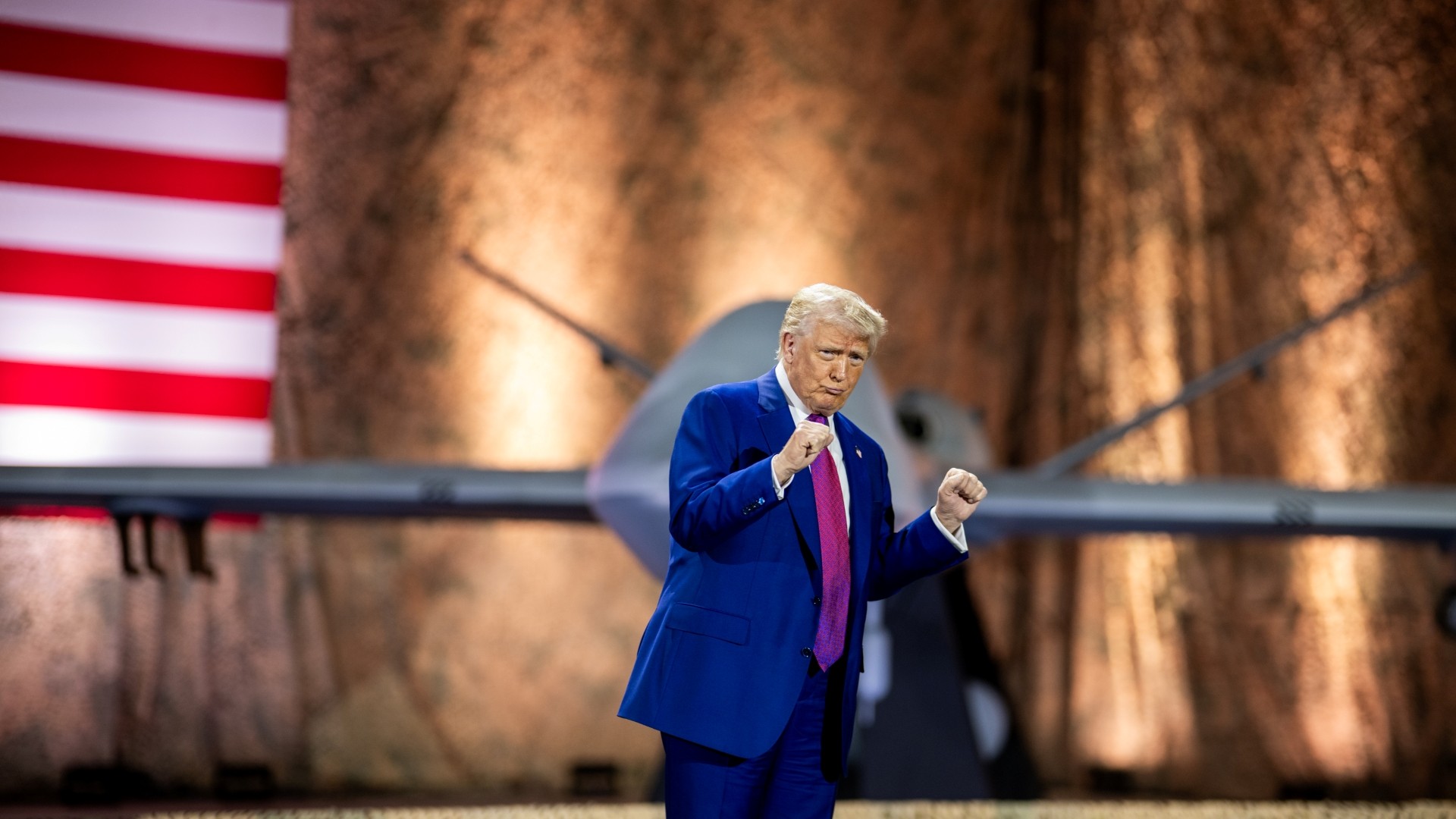
It can be difficult to conceive of the American voter who spent most of the last year sitting resolutely on their hands, or perhaps with their fingers in their ears, ignoring everything going on in the second Donald Trump administration, only to now, 10 months later, acknowledge that the man has somehow lost their support. Infuriating as it may be, however, that theoretical person absolutely exists, and Trump’s anemic overall approval numbers tell the tale. After months of staid inaction, where the bottom line numbers seemed to be incredibly resistant to movement despite the administration’s numerous faceplants, the last few weeks have seen markedly more activity as he reaches new lows for his second term. There’s no denying at this point that Trump’s approval is in the process of cratering; the question is how many more of his most deluded supporters still have the plasticity in their mental and emotional states to admit that they’ve been duped, betrayed, or were just plain incorrect about what Trump’s return to the White House might deliver.
At this point, any statistically significant decline is notable, given that from roughly June through October, Trump’s overall approval numbers seemed firmly anchored in place, varying by only 1% or so overall in each direction. Since mid-October, however, a few weeks into the recent and record-setting federal government shutdown, the decline in Trump’s approval has been much easier to register on the major polling aggregators. Via Nate Silver’s Silver Bulletin aggregator, Trump’s overall approval declined from 44.3% to 41.3% in the last month and change, while his disapproval rate rose even more sharply in the same time frame, from 51.9% to 56.2%, suggesting fewer polling respondents sitting on the sidelines without a concrete opinion. Via Real Clear Politics’ aggregate of polls, meanwhile, the same overall pattern has been playing out, with Trump’s approval declining from 45.6% in mid-October to 42.7% now, with disapproval spiking from 51.9% to 55.9% in the same period. As ever, there’s a very wide range of recent, individual polling outcomes here, all the way from an American Research Group poll putting Trump’s approval at 35%, his overall approval underwater by a massive -27 points, to Trump-friendly pollsters like RMG Research pegging his approval at 46% (but still declining). One thing that is consistent is the decline of the last month.
These may not seem, at a glance, like terribly impressive declines, but in our era of hyper political polarization and rigid partisanship they’re still a pretty big deal, especially if they continue to slide or even hold at these levels. An approval number approaching 40% is often in “wave election” territory, as Presidential approval numbers are strongly correlated overall with the number of U.S. House of Representatives seats lost in midterm elections. This current number for Trump is actually a bit lower than his approval standing leading into the 2018 midterm elections, when Democratic candidates picked up 40 seats in the U.S. house, although Trump will have a ways further to go if he wants to match the absolute nadir of his first term approval, which RealClearPolitics pegs as 37.3% approval in Dec. 2017. If Trump is down in that territory when the midterms roll around in a year, we could be looking at a red seat bloodbath. Notably, as Trump’s own approval rating has declined, Democrats have also been making gains in polling on generic Congressional ballots–a new Emerson College poll puts Democratic candidates at a four-point edge over Republicans, at 44% to 40%, the widest the advantage has been in Trump’s second term.
Which begs the question: Which issues have been powering Trump’s slip in popularity? And the simplest answer is, “pretty much all of them,” at least to some degree. Trump is underwater and slipping even on his prior strongest polling issues such as immigration (44.9% approval), while approval on specific economic issues such as the continuing effects of inflation/cost of living are as low as a particularly brutal 30.5%, according to new polling from Reuters/Ipsos. The lingering government shutdown also seemed to be providing enough pain points to eat away at Trump’s formerly immobile approval rating, lending support to the notion that Senate Democrats may have been foolish to spinelessly fold on protecting Affordable Care Act subsidies when they did. There are also the numerous detrimental effects of Trump’s tariffs and trade wars to consider, which have disproportionately hurt his own voters, leading to as many as 58,000 lost manufacturing jobs in particular since the April “Liberation Day” when many tariffs were first announced (and then repeatedly and confusingly instituted, withdrawn and restarted). And finally, the Trump admin’s handling of the Epstein Files has been deeply unpopular even within his own party, with only 44% of Republicans saying that they approved of how Trump has handled the case, shockingly low when taking partisan affiliation into account.
Trump approval on handling of economy
Approve 36%
Disapprove 64%— Poll Tracker 📊 (@polltracker.bsky.social) Nov 23, 2025 at 9:39 AM
Most recently, this has led to Trump seemingly casting around for any kind of positive news cycle he might be able to get his hands on, from suddenly pretending that he’s always been in favor of releasing the Epstein Files when it became clear that Congress would defy him, to this week’s newest ultimatum with Ukraine as he looks to be able to take credit for an end to the four-year Ukraine-Russia war prior to the holidays. You know, the conflict that he said he would end on “day one” of taking office, dozens of times.
Second Presidential terms and lame duck periods are historically a fraught time for Presidential approval ratings, and that may well end up being the case in the second Donald Trump administration. Even if this level represents a new baseline, it could imply an incoming blue wave in 2026 midterm elections, particularly if states like Texas do end up failing in their efforts to gerrymander their Congressional districts. If, however, the U.S. should slip into some new crisis, such as deepening inflation or an actual recession, or the bursting of the AI tech bubble, there’s perhaps no telling how low these approval numbers could go. We believe in Trump’s frequently demonstrated ability to record a historically embarrassing outcome, regardless.
 Keep scrolling for more great stories.