

In the Four Years Since Dobbs, Telehealth Abortions Have Been on the Rise
“While bans continue to be harmful and undermine reproductive care in a myriad of ways that still deserve policy change and public attention, it’s also clear that the anti-abortion project is not working as intended,” Plan C Pills told Jezebel in a statement.
Photo: Getty Images Abortion Roe v Wade
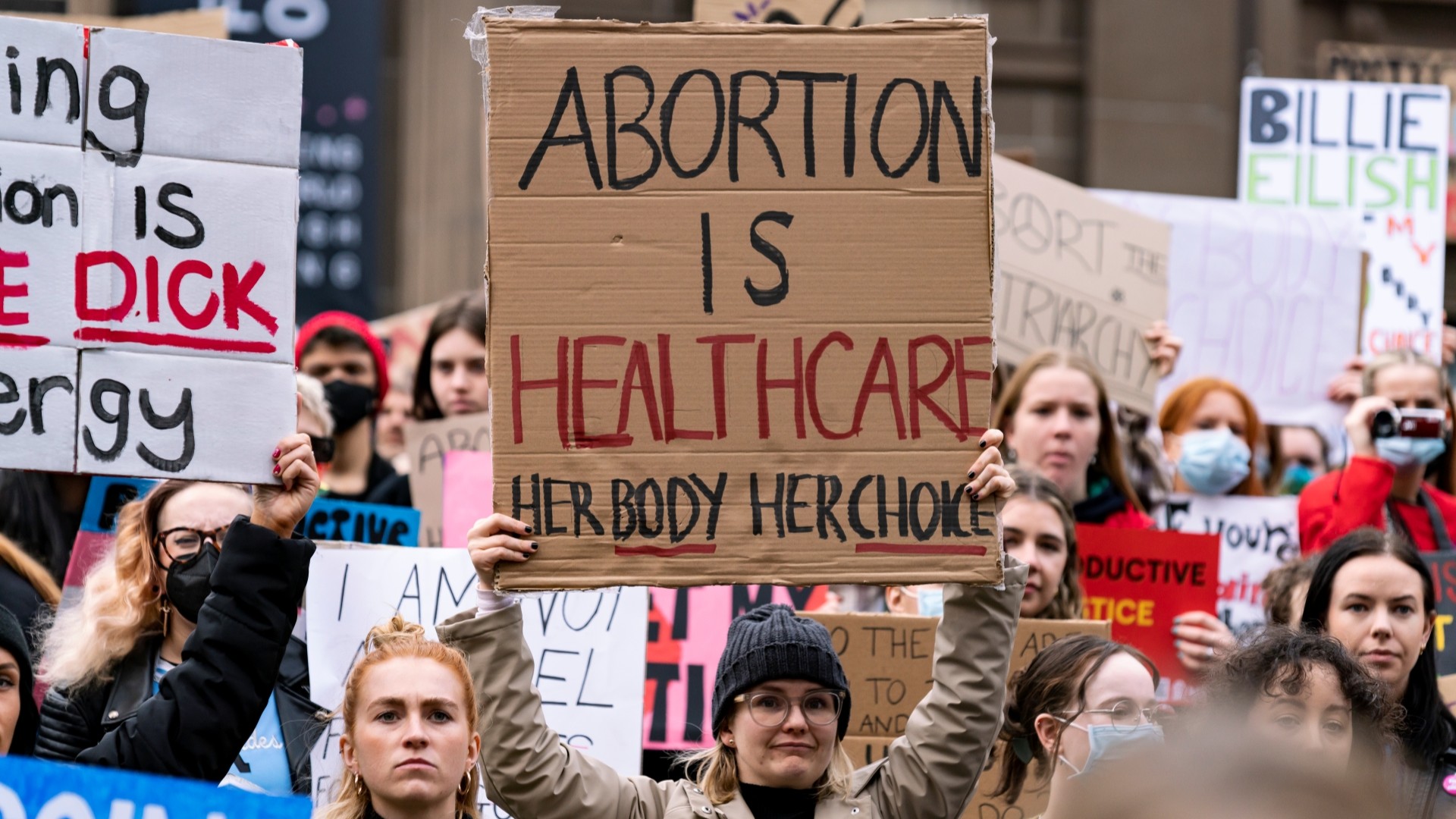
We’ve now made four ghastly laps around the sun since the Supreme Court overturned Roe v. Wade with its 6-3 decision in Dobbs v. Jackson Women’s Health and—if you’ve been following along—it’s all but launched us into a nightmarish timeline with dystopian ramifications. Since 2022, hundreds of pregnant people have been subject to surveillance, policing, and criminalization; maternal and infant mortality rates in abortion-banned states have steadily risen; and GOP lawmakers have consistently tried introducing legislation to classify abortion as homicide, thus adding sway to the fetal personhood movement, which seeks to get fetuses and embryos recognized as separate, living people. (This is the ultimate end-goal of the anti-abortion movement.) Much of this was also happening before the Dobbs ruling.
But just as we told you last year, the year before that, the year before that, and even in the years before Roe was overturned, for as long as people have been getting pregnant, they have needed—and have found ways—of getting abortions. Per new data from #WeCount, an ongoing project by the Society of Family Planning which tracks abortions in the country, the number of abortions is not only higher today than before the Dobbs decision—but telehealth abortions are also, inevitably, on the rise.
“Telehealth is a safe, effective option for people to get timely care without having to go in person to a health center. It has become critical for people navigating abortion bans, long travel distances, clinic closures, and financial barriers,” #WeCount Director Leah Koenig, PhD, MSPH, told Jezebel. “The #WeCount findings show that people across the country are increasingly relying on telehealth to access abortion care. Efforts to restrict telehealth abortion are not grounded in science and are designed to push abortion care out of reach.”
According to the data, there were nearly twice as many abortions in the U.S. in 2025 compared to that of 2021, or the year before Roe was overturned. And while the majority of abortions still took place in person, about 29% were performed via telehealth—a rise from last year’s estimates, which accounted for about 1 in 4.
Much of the trend can be attributed to shield laws, which allow providers from states without bans to prescribe the medication in the 13 states where abortion is totally banned. Currently, 22 states and Washington D.C. have some kind of shield law in place, and by 2025, #WeCount projects that nearly 15,000 abortions took place because of shield laws. Earlier this year, the Guttmacher Institute also found that while the estimated number of abortions performed in 2024 versus 2025 were about the same, one standout difference was that telehealth abortions became much more common in states with near-total bans, accounting for 72,000 abortions in 2024 and 91,000 in 2025.
And even in states where abortion is permitted, the number of telehealth abortions has steadily gone up, a trend Koenig attributes to it being a “safe, effective option.” “While the proportion of abortions provided via telehealth in states without abortion bans varies—from 10% of abortions in New York to 44% in Nevada in 2025—it’s clear that telehealth has become an important way for people to access abortion care in all states.”
Regarding telehealth abortions, the most common regimen is through mifepristone, the first of two pills taken in a medication abortion, and the subject of a needless FDA study into its safety. After Sen. Josh Hawley (R-Mo.), spent pretty much all of last year amplifying a bogus study published by a far-right think tank claiming the pill had “adverse effects”—the administration officially launched this “re-review” in September, a project we’ve known little about, and which has been the subject of at least two FOIA lawsuits for being so overtly obscure.
Naturally, here’s your regular reminder that mifepristone is safe—safer than Tylenol and Viagra—and that a JAMA study published early this year reveals the years of FDA study affirming its efficacy was based on nothing other than real, hard science. Soon after, the medical journal also revealed that all things considered, there’s no reason that it also shouldn’t be an over-the-counter medication. Well, if the anti-abortion movement wasn’t making its life mission to set us back another quarter century, that is.
“While bans continue to be harmful and undermine reproductive care in a myriad of ways that still deserve policy change and public attention, it’s also clear that the anti-abortion project is not working as intended,” Plan C Pills, which provides information on how people can provide abortion pills, told Jezebel in a statement. “Four years after the Dobbs decision, data shows that abortion pills by mail has become a central feature of the US abortion access landscape, and that legal restrictions have not ended abortion (as predicted when Dobbs happened) but have instead catalyzed a new nationwide network of telehealth, virtual care and peer support.”
 Keep scrolling for more great stories.