

Trump’s Anti-Trans Agenda Is Hurting Veterans With Male Breast Cancer
“Breast cancer doesn’t care what gender you are,” the co-founders of HIS Breast Cancer Awareness told Jezebel.
Photo: iStockphoto Politics
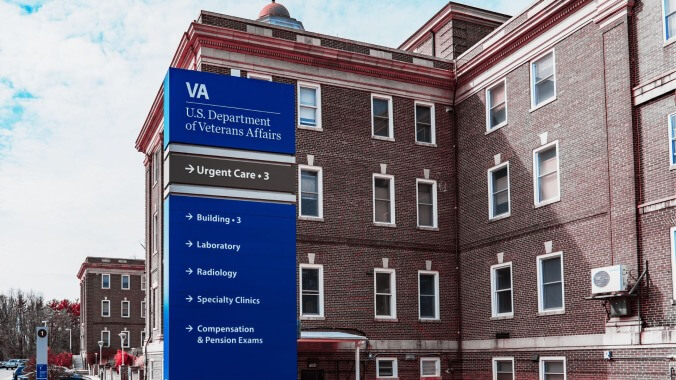
This week, ProPublica wrote about Jack Gelman, a retired Navy fighter pilot who learned in 2024 that his long-inactive breast cancer had relapsed. Worse yet, the 80-year-old veteran recently found out that under the Trump administration, it’s now much more difficult to get the care he needs through the Department of Veterans Affairs.
According to a new memo obtained by the outlet, the VA has removed male breast cancer from a predetermined list of presumed service-connected diseases that qualify veterans for health care coverage. The reason? To comply with Trump’s anti-trans executive order to eliminate “gender ideology,” which he issued on his first day in office.
Male breast cancer is rare. According to the CDC, about one in every 100 breast cancers diagnosed in the U.S. is found in a man. Still, research suggests that rates are increasing, that the disease is deadlier for men than for women, and that veterans are disproportionately affected.
The VA’s new rule reverses part of a Biden-era policy, the Promise to Address Comprehensive Toxics (PACT) Act, which passed in 2022 and gave the VA more power to expand healthcare and benefits. In 2024, the PACT Act allowed the VA to add three cancers. Among them was male breast cancer, which was categorized as a reproductive cancer, since science has proven “marked similarity” between men’s and women’s breast cancers. But science doesn’t fly in the Trump administration, and the VA memo states: “The Biden administration falsely classified male breasts as reproductive organs.”
Donald Trump’s sick fixation on people’s personal body parts means that the PACT Act has now been rolled back, and many male veterans who get breast cancer will no longer be allowed treatment at the VA. Should they die of it, their death is on Trump and the GOP’s hands. #PACTAct pic.twitter.com/YyYIjtJK2j
— VoteVets (@votevets) October 29, 2025
A VA spokesperson confirmed the rule change to ProPublica: “As of Sept. 30, the department no longer presumes service connection for male breast cancer.” They said that any veteran who was already covered is fine, but nearly 100 veterans are diagnosed with male breast cancer every year. The new rule means they’ll now have to prove a connection between their service and the disease—a herculean task that PACT was supposed to eliminate.
“I’m astonished,” Gelman told ProPublica. “This is really nickel and diming a very small group of people who should be taken care of.”
In Trump’s sweeping federal cuts and political crusades, veterans have been caught in the middle. In February, VA Secretary Doug Collins gutted the department with two rounds of layoffs, firing several veterans and going back on his promise that there’d be “no cuts.” In August, the department reallocated nearly 5% of its total budget to private care, a controversial move for the nation’s largest integrated healthcare system. And last month, more than 150 doctors and health care workers sent a letter to Collins and Congress, raising concerns that the Trump administration was threatening health care access for veterans. A VA spokesperson responded to the letter by telling NPR that the “VA is serving veterans much better under the Trump administration than it was under the Biden administration, and the numbers prove it.”
“Breast cancer doesn’t care what gender you are—men deserve the same attention, the same protections, and the same urgency when facing this disease,” Vicki Wolf and Harvey Singer, co-founders of HIS Breast Cancer Awareness, an organization that focuses on male breast cancer support, told Jezebel in a statement. “Every veteran, every man, every person deserves health care that acknowledges risk and treats it seriously.” Instead, this administration continues to politicize healthcare at the expense of those who served.
Like what you just read? You’ve got great taste. Subscribe to Jezebel, and for $5 a month or $50 a year, you’ll get access to a bunch of subscriber benefits, including getting to read the next article (and all the ones after that) ad-free. Plus, you’ll be supporting independent journalism—which, can you even imagine not supporting independent journalism in times like these? Yikes.
 Keep scrolling for more great stories.