

We Love Ilia Malinin, But Surya Bonaly Landed a Backflip at the Olympics When It Was Banned
This is the first Olympics in 50 years where the move hasn't been illegal—and Malinin’s backflip has long been known as the “Bonaly flip.”
Screenshot: Olympics Milan Cortina OlympicsSports
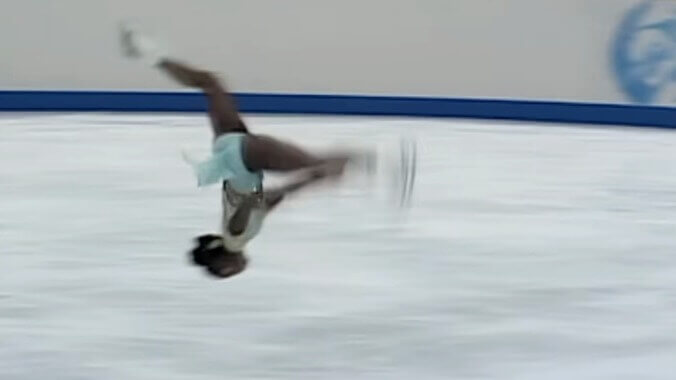
USA figure skater Ilia Malinin—the “Quad God” and second man named Ilia I’ve become obsessed with in two months—has already delivered two awe-inspiring performances this Olympic Games, helping secure Team USA’s first figure skating gold on Sunday.
While he’s yet to attempt his quadruple axel (he’s the only figure skater in the world who’s ever landed one in competition), he’s already performed two backflips. It’s impressive! It looks cool! But it barely earns him any points—and he’s allowed to perform one.
Headlines have hailed Malinin as making history for landing these backflips. But with the men’s individual figure skating competition beginning this afternoon, it’s important we take a moment to note that it’s only technically history-making, as this is the first Olympics since 1976 in which the backflip hasn’t been banned.
For the real history-making moment, we have to travel back to the 1998 Nagano Olympics, where French figure skating trailblazer Surya Bonaly performed a backflip, landing on one foot, knowing full well the move was banned and she’d be deducted points. Going into her free skate program, she was in sixth place, and after falling on a triple salchow, knew she wasn’t going to medal. So she added in the backflip at the last second, using the opportunity to make a statement about unfair Olympic scoring—and cementing her legacy as one of the greatest figure skaters of all time
“She’s doing this to get the crowd,” then-commentator Scott Hamilton (who won gold at the 1984 Sarajevo Winter Olympics and is also known for performing non-competition backflips) said after she landed it. “She’s gonna get nailed.”
Bonaly ultimately finished 10th at the Nagano Olympics due to the backflip deduction, and soon after retired from competitive skating. In an interview with the Associated Press this week, Bonaly said she was “born too early.” Malinin’s backflip, in fact, has long been known as the “Bonaly flip.”
The International Skating Union, the sport’s governing body, first banned the backflip after Terry Kubicka performed one at the 1976 Innsbruck Winter Olympics, deeming it too dangerous. And while they lifted it two years ago, the rule still seems designed to discourage future skaters from turning their programs into gymnastics routines on ice.
Figure skaters receive two scores: the Technical Element Score (TES), which measures the execution and difficulty of jumps and spins, and the Program Component Score (PCS), which evaluates artistry, performance, and choreography. The backflip—despite its difficulty—counts only toward a skater’s PCS, meaning Malinin gets a small bump because it looks sick, but it barely affects his overall score. Before 2024, a handful of figure skaters would perform them in exhibition shows.
“I broke ice for other skaters,” Bonaly told the AP. “Now everything is different. People welcome anyone as long as they are good and that is what life is about.”
Malinin will perform the men’s short program this afternoon (and will likely be battling tooth-and-nail for gold with Japan’s Yuma Kagiyama), so while you cheer on his inevitable backflip, make sure you send a cheer back in time to Bonaly, too!
 Keep scrolling for more great stories.